
Dr. Alexandra Görgens: reproductive medicine between specialisation, responsibility and animal welfare
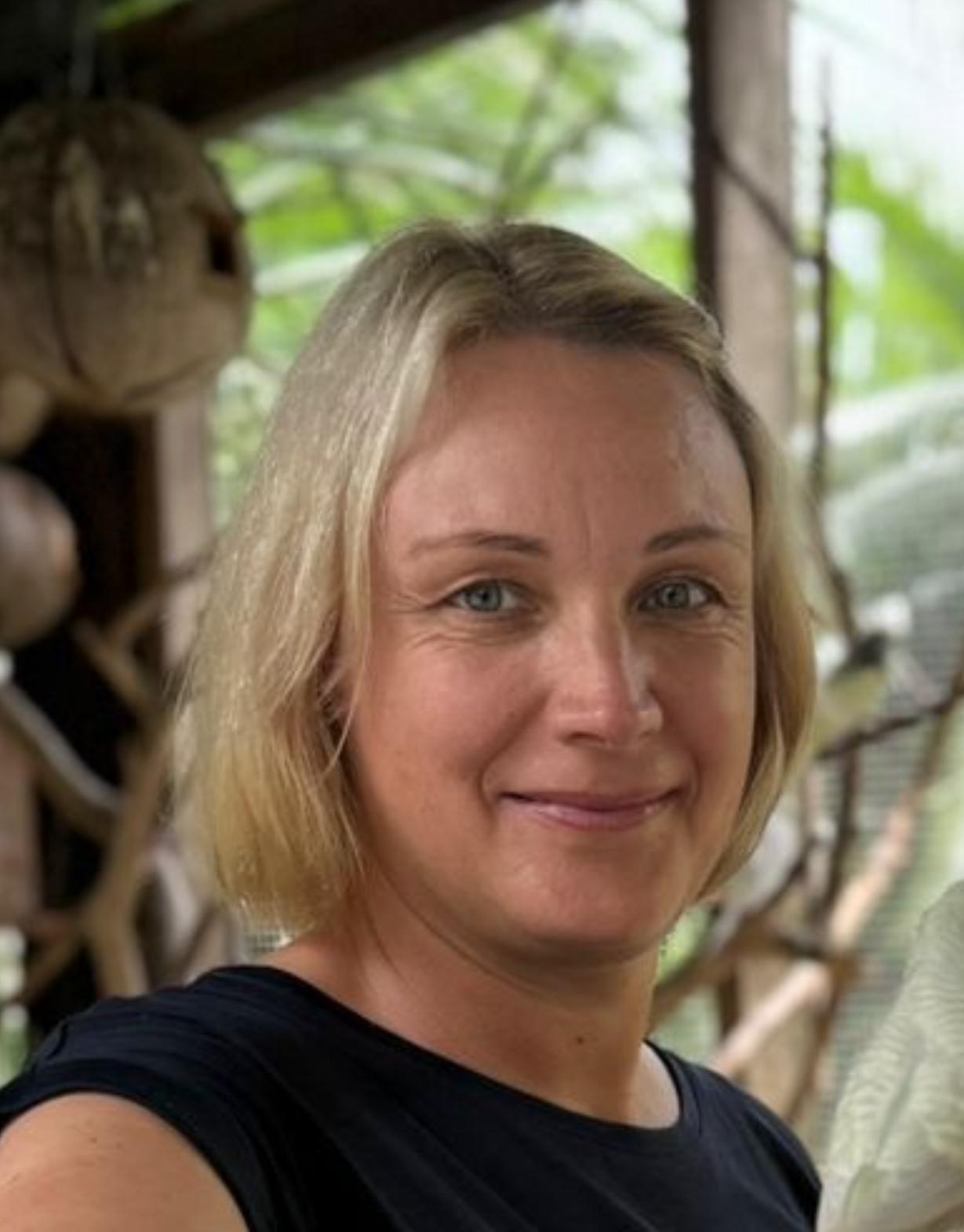
That the centre today ranks among the most highly specialised reproductive medicine facilities is no coincidence. For Dr Alexandra Görgens, this development is the result of a long journey—shaped by regional breeding traditions, increasing specialisation, and a conscious decision to apply modern reproductive technologies within clearly defined boundaries.
A breeding region as the foundation
“When I started working here after completing my studies, the basic idea was already in place. This region has a deeply rooted breeding tradition. You were almost considered abnormal if you didn’t own a broodmare. In the past, there were horses in every garage, every garden, every outbuilding. Unfortunately, that is gradually becoming less common today, but that mentality has always existed—and it has shaped this centre.”
During her studies, Görgens first came into contact with the clinic, where Dr Gunilla Martinsson from the State Stud of Celle was working at the time. “I completed my internship here, and towards the end of my studies it became clear that there was simply too much work—they needed another person. I actually agreed to join while I was still studying and started working here immediately after graduating. That was in December 2001.”
Studies, doctorate and parallel development
From the very beginning, her work followed a dual track: hands-on clinical practice alongside academic advancement. “I worked together with Gunilla while at the same time writing my doctoral thesis—in cooperation with the University of Hanover and Gestüt Lewitz, as well as the cattle clinic in Hanover. The original plan was to work three quarters of the time and dedicate one quarter to my PhD. In reality, it became full-time work—with a bit of doctoral research on the side.”
As the workload increased, not only did the team grow, but so did the level of expertise. New techniques were introduced, particularly the use of frozen semen, which was becoming increasingly important at that time.
Change in leadership and structural growth
A turning point came with structural changes in Hanover and Celle. “Professor Klug from the equine clinic in Hanover retired, Professor Sieme took over the chair, and as a result the State Stud in Celle also had to be reorganised. Gunilla moved to Celle—and that meant the responsibility for this centre fell to me.”
Since then, the centre has continued to develop steadily. “Today we work with five and a half veterinarians exclusively in gynaecology—at least during the spring—supported by four assistants who also work solely in gynaecology. During the breeding season, that brings the team to around ten people. From March to August, we are practically completely detached from the regular clinic operations and focus entirely on gynaecology—from morning until night. That alone shows how large this operation has become.”
Seasonal logic and the focus on OPU
As the centre continued to grow, the rhythm of work changed as well. While classical gynaecological care dominates in spring, the focus shifts noticeably during the winter months. “In recent years, I often worked with South American veterinarians—usually one or two, currently only one. They work on a seasonal basis, roughly from February to October or November, and then return to their home countries. With the remaining team, we concentrate mainly on OPU during the winter.”
The workload is deliberately spread across the year. “In spring we accumulate extremely long working hours; August and September are somewhat quieter, and from October onwards we increasingly focus on OPU again—usually until March or April, depending on how the season develops.”
A well-coordinated team and clear procedures
For Görgens, OPU is not an individual task but a team effort with clearly defined roles. “My core team consists of two people: I work on the mare and the ovaries, and my colleague Steffi, Dr Stefanie Harland, handles the needle. We always perform the procedure together. If one of us is unavailable, no OPU is carried out—or it is postponed.”
This duo is supported by additional fixed roles. “I always have someone positioned at the mare’s head, administering a continuous drip. We do not work with occasional re-sedation, but with continuous maintenance medication, a method we partly adapted from dentistry. Usually, there is also someone managing the syringe and another person assisting with the mare. In most cases, we are a team of four. It is an extremely well-rehearsed team—very few words are needed, everyone knows exactly what to do.”
OPU/ICSI: opportunities — and limits
For Görgens, OPU/ICSI is a tool, not an end in itself. “For me, there are two major advantages. The first is access to exceptional stallions that would otherwise no longer be available—such as Chacco-Blue, Baloubet du Rouet and Heartbreaker. The second advantage relates to mares: mares that have not conceived for years, that repeatedly resorb, or that for physical reasons should no longer carry a pregnancy.”
At the same time, she draws clear boundaries. “I do not have clients who keep mares exclusively for OPU. Our philosophy is very clear: OPU/ICSI should be an exception, used when nothing else works, and for special stallions perhaps once, twice, or even three times a year if necessary—but not every four weeks over a period of years. That is something we do not support.”
Market responsibility instead of overproduction
This stance is driven not only by medical considerations, but also by economic responsibility. “I increasingly see breeders undermining their own market. A four-year-old mare with proven athletic ability, from the best bloodlines, produced via ICSI—out of a dam that competed at 1.60 m—already placed herself and now in foal, yet the highest bid is only €5,000 because there are already 30 or 40 offspring from that line. That is simply sad.”
Earning money is legitimate, she emphasises—but excess is not. “Of course, selling embryos and making money is acceptable, especially when someone has devoted a lifetime to performance and breeding. But moderation and responsibility are essential.”
Avantea as a reference point
Within this field of tension, Avantea plays a central role for Görgens. “For me, Avantea is quite clearly the non plus ultra. I first came into contact with the method around 2011, when a mare went to Cesare Galli and the first embryos were produced there.”
She observed the development for years before starting herself. “I visited Galli, I went to Utrecht twice, and I looked at everything in detail. If I have a choice today, I work with Avantea because I know that when things become difficult—when the starting conditions are not ideal—Avantea is the team that can rescue both me and my clients.”
A personal connection to the technique
Her view on OPU/ICSI is also shaped by her own life experience. “My husband and I had difficulties having children. We were told that OPU/ICSI was our only option. One of our three children was conceived using this method. That is why I will not tolerate criticism of this technique lightly. I know what it is capable of, and on a personal level I am very grateful that it exists.”
Protocols, Sedation and Animal Welfare
For consistent results, honesty and diligence are essential. “The method has to be properly explained to the owners and also to the referring veterinarians, who quite often advise mare owners against OPU/ICSI. If the groundwork is not done properly, all the technology in the world will not help—you can still fail.”
Görgens places particular emphasis on sedation and pain management. “We deliberately work with higher dosages and a continuous drip. Every mare is weighed, every medication is documented. The goal is for the mares to stand calmly and experience as little stress and pain as possible. It is a delicate balancing act, but with experience and a structured approach, it works.”
Biotechnology and the future
Görgens sees significant potential in the targeted use of performance-tested mares. “The broodmare has an enormous influence. Successful sport mares often pass on performance, attitude and character. In the past, these mares were often bred very late—or not at all. Combined with performance-proven stallions, this can represent real progress.”
Training, specialisation and limits
OPU/ICSI, she emphasises, is not a sideline. “This field is so specialised that it cannot be learned on the side. I only pass on my knowledge when someone is truly certain that they want to pursue this path. Many have tried and then given up again, because the organisational effort involved is enormous.”
Animal Welfare as the Ultimate Boundary
In the end, Görgens has one clear priority. “Animal welfare is the absolute limit for me. We no longer perform OPU on very young mares—two-year-olds in particular—under any circumstances. With very old mares, I also look extremely carefully. Selection, responsibility and fairness towards the horse always come first for me.”
Adriana van Tilburg
© Rights Reserved.