


Garmin enters the equestrian world: Blaze and the future of training the equine athlete
Garmin is a company that has built its identity on continuous innovation, anticipating the needs of those who live sport and the outdoors as a true passion. From GPS navigation to wearable devices, the brand has successfully evolved over time, entering a variety of markets that may appear far removed from one another, while always keeping performance, reliability and data analysis at the core of its philosophy.
Today, Garmin takes a further step forward, officially entering the equestrian world with Blaze , a device designed to monitor the activity and wellbeing of the equine athlete. This move is far from accidental; it is the result of a process of listening, experimentation and adaptation of technological know-how already well established in human sports.
We discussed this with Mr. Severino Forini, Garmin Italy Product Manager, who explained how Blaze came to life, which needs within the equestrian sector guided its development, and why today , more than ever , technology, prevention and welfare represent an inevitable direction for equestrian sports as well.
Garmin has a long history behind it. Today, however, we are talking about Blaze, the product with which you officially enter the equestrian world for the first time. How did this decision come about?
Severino Forini: Garmin has been around for many years and has gone through numerous evolutions. Blaze marks the first time we have truly set foot in the equestrian world, but it is not the first time we have tackled a sector that was new to us.
At Garmin, we like to experiment, and one of our strengths lies precisely in our ability to operate across many different fields. Those with a few more years behind them will remember that in the early 2000s Garmin was synonymous with in-car GPS navigators , the ones suction-cupped to the windscreen. Today no one uses those devices anymore, yet Garmin is still here, unlike many competitors from that era, because over the years we have been able to reinvent ourselves by anticipating market needs.
When, about ten years ago, people started talking about GPS devices for cycling and running, many said: “What do I need that for? I already know where I’m going.” Today, practising sport without a device on your wrist or handlebars is almost impossible to imagine. This is our strength: exploring markets, testing, learning. Something may work today, who knows about tomorrow , you have to be ready to change.
That mindset creates solidity and continuity. You need a strong foundation, and you build it by facing challenges that can be very far apart: every time, we must learn a new language, engage with different communities, and earn credibility. It’s the same with horses, and that’s exactly what makes our job exciting: constantly embracing new challenges. The latest is equestrian sport. We have started with a first product and are now seeing how the market responds. Who knows, one day it could even become a significant business.
Is a product like this developed with a “global” approach, or do you test it in specific markets before distributing it?
Severino Forini: Products are primarily designed and engineered at our US headquarters. Our production facilities then take care of assembly.
Usually, the initial idea stems from passion, because our products are meant to serve passions: they are tools that allow people to do more in their sport or activity. Garmin has tens of thousands of employees, and sooner or later someone raises their hand and says, “Why don’t we do this?” From there, analyses and market research begin.
Once a project takes shape, we generally distribute it worldwide: if it makes sense in one country, it’s worth testing it elsewhere and seeing how different markets respond.
Let’s talk about Blaze. When did the idea emerge, and what prompted you to enter this sector?
Severino Forini: In truth, the idea dates back even before the 2000s. From there, it took about two years of development, because we aim to bring products to market that are as “mature” as possible. A lot of time was needed to identify a truly differentiating element compared to what already existed, and to integrate Blaze into the Garmin ecosystem.
In Italy, we also took our time: Fieracavalli was approaching, and we preferred to arrive there with a listening-oriented approach, to understand people, customers, retailers and enthusiasts. We wanted first to fully grasp the needs of the market and then build an appropriate path.
For a company that had never previously entered equestrian sport, engaging with those who live this world must have been essential. How did you identify the needs of riders, trainers and veterinarians?
Severino Forini: We didn’t start from scratch, because Blaze is derived from the heart-rate sensors we already use for “two-legged” athletes. We took that know-how and adapted it to the horse, which is, after all, a four-legged athlete.
We analysed what already exists on the market , the strengths and weaknesses of similar products , and then gathered feedback from industry professionals: veterinarians, trainers, and also enthusiasts who ride in their spare time. Development takes place in the United States, where hundreds of people were probably involved: prototypes, tests, feedback, corrections. And development never truly ends , our products remain “open” to continuous software and hardware updates.
Today, our main focus is on horse health and more conscious training management. Over time, new needs will undoubtedly emerge.
Let’s move on to the technical side: what is Blaze made of and how does it work?
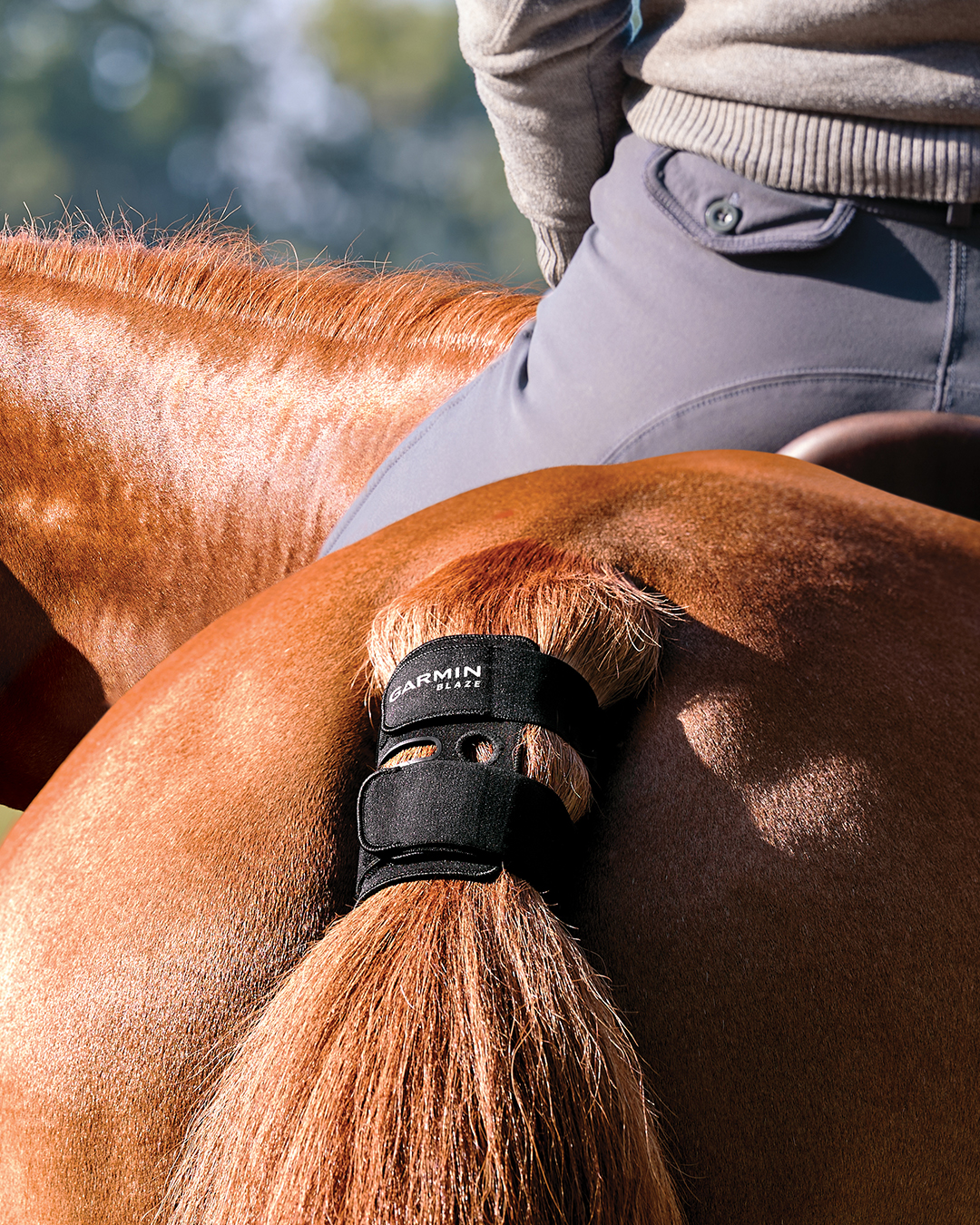
Severino Forini: Blaze consists of a neoprene Velcro strap and a small optical sensor (based on the same principle used in our smartwatches). The sensor slots into the strap, which is applied at the base of the tail.
This is one of the most important design choices: there is an artery there that allows heart rate to be read very effectively, often better than in other locations. In addition, the optical sensor does not require gel or water, you apply it and it works. Above all, in that position the strap is stable and does not slip, which can happen with chest straps.
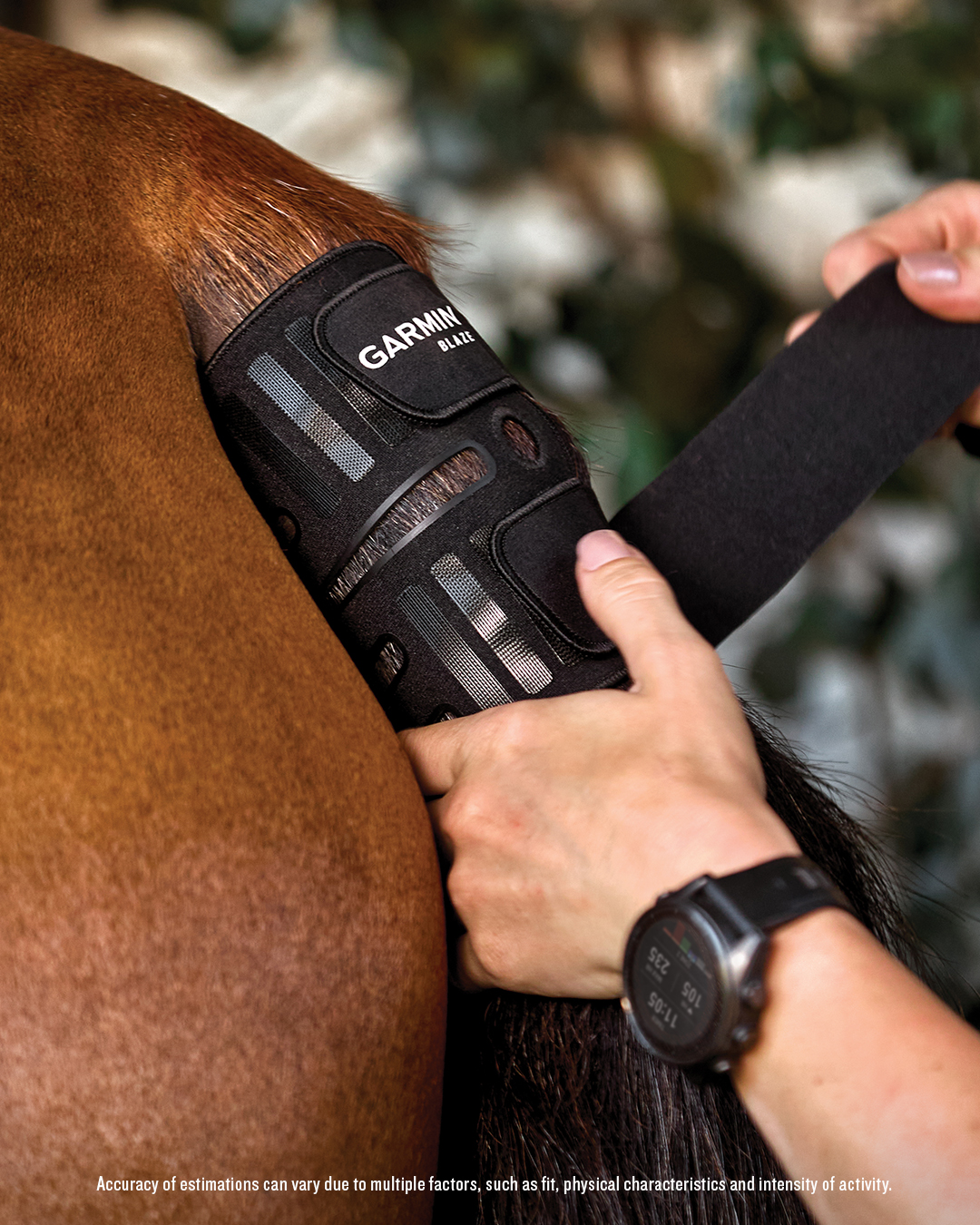
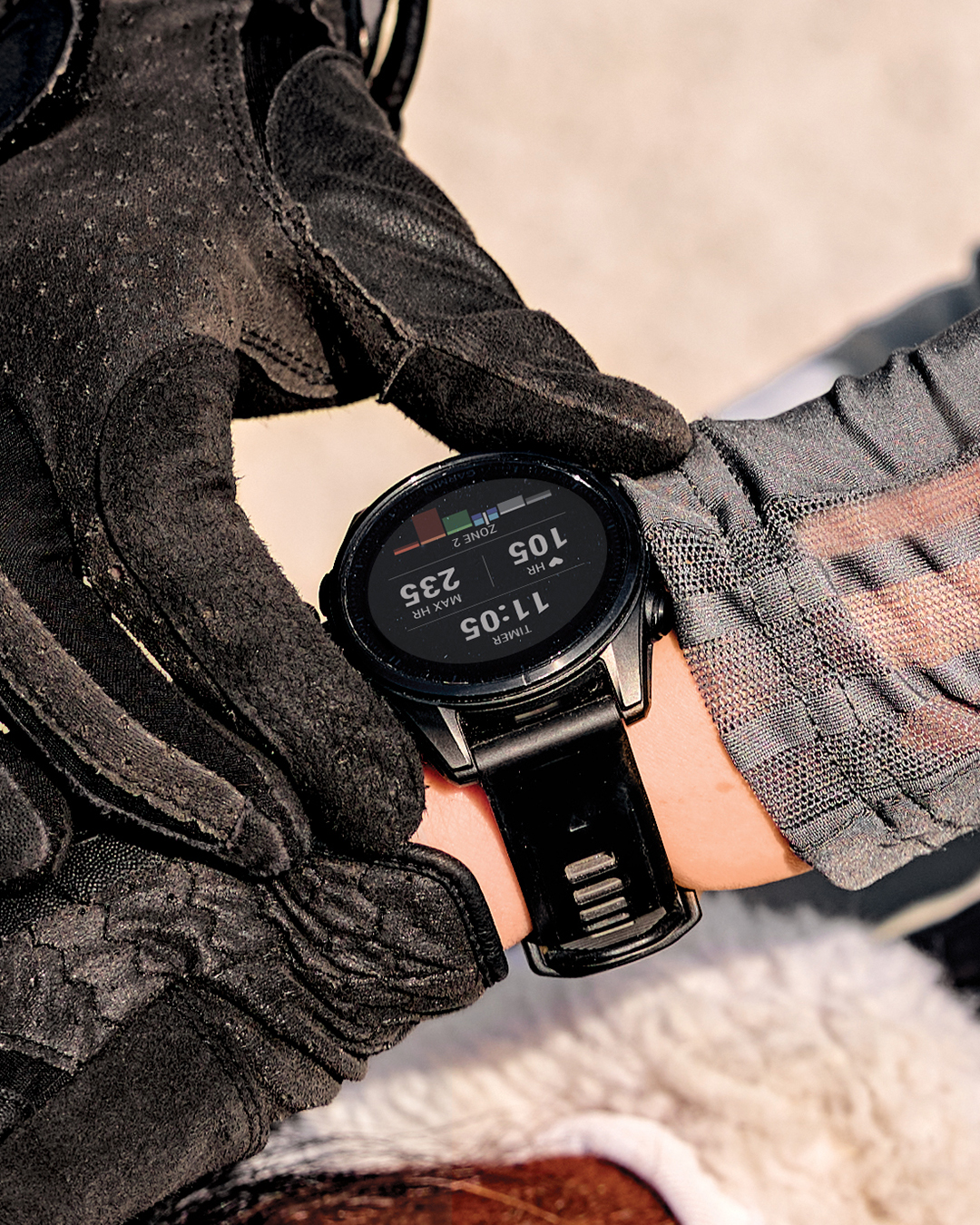
The sensor records heart rate moment by moment, from which heart-rate zones are calculated. These zones help determine training intensity and set objectives: lower zones for warm-up or rehabilitation, higher zones for developing endurance and performance , consistently grounded in sound judgement and control.
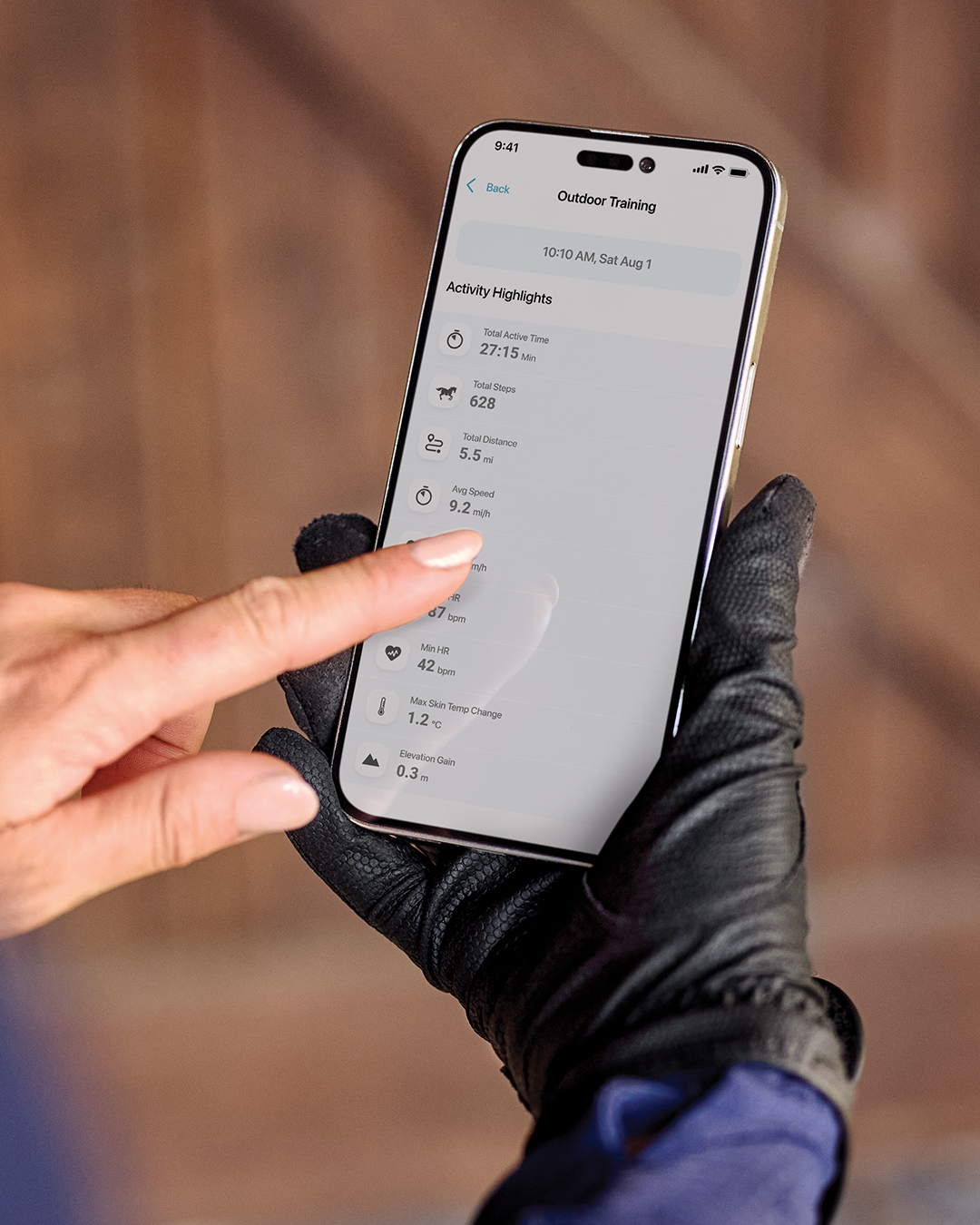
All data are then downloaded to an app: the device truly comes to life through the app, creating a history that allows training to be planned in a more “scientific” way.
Another key parameter is heart-rate recovery: by observing how long it takes for the heart rate to drop after exertion, a veterinarian can identify signs of stress, pain or imbalances that may not be immediately visible externally.
In the equestrian world, there is often some resistance to technology. How did you work to make it accessible? Can the data be viewed by multiple users?
Severino Forini: Yes. We always aim for maximum simplicity, because we don’t know who will be using the product: a young rider, a trainer, or a highly experienced veterinarian. The goal is to reach a broad audience , from basic use to highly professional applications.
The initial setup is simple: you download the app and pair the device via Bluetooth. From there, the system is intuitive.
Why can a tool like this be useful across all equestrian disciplines?
Severino Forini: Because behind one minute of competition lie hours and hours of training. Even in show jumping, for example, it’s important to understand how much continuous work you can ask of a horse, how it responds to effort, and how it recovers.
For disciplines like endurance, the benefits are obvious: constant monitoring, stages, veterinary checks. But the concept applies everywhere , even in Western riding disciplines, where the horse is a spring of power, explosiveness and speed. Ultimately, the goal is always the same: train well and ensure the horse is well. They sound like simple principles, but they make all the difference.
Blaze also integrates an accelerometer, which allows movement to be interpreted and provides data such as time spent in different gaits and stride count. This is extremely useful during rehabilitation: when a veterinarian prescribes “10 minutes of trot per day”, it is often done by feel. Here, instead, it can be measured precisely.
There is also a temperature sensor, designed not only to help prevent heat stress during activity, but especially during transport. In summer, this can make a real difference: you can read the temperature on your smartphone and receive alerts (even on your wrist) if something is wrong, allowing you to stop, hydrate and manage the situation.
We did not include a GPS in the sensor itself, but GPS is often already available via a smartphone or Garmin smartwatch. The data are combined within the app, adding speed, distance and track information.
Why is Blaze so innovative?
Severino Forini: We start from a need and provide a solution. The major innovation lies in the optical tail sensor , more stable and practical , and in the full Garmin experience: reliability, ecosystem integration, compatibility with apps and devices, and our approach to athletes , in this case, a four-legged one.
From daily training to injury prevention, from heart-rate monitoring to stress and recovery management, Blaze aims to translate into objective data what, in the equestrian world, is often left to individual experience and sensitivity. Not to replace them, but to support them, offering a more informed understanding of the horse’s health and level of preparation.
Garmin’s approach is clear: to bring into the equestrian world the same culture of performance and wellbeing that has already been successfully applied to human athletes, adapting it to the specific needs of a different, yet equally complex, athlete.
It is a step that looks to the future of equestrian sport, increasingly oriented towards prevention, sustainable workloads and the protection of the equine athlete.
Blaze therefore represents not only a new product, but a shift in perspective: an invitation to consider training and horse health in a more scientific, accessible and shared way, opening up new possibilities for riders, trainers, veterinarians and enthusiasts alike.
A challenge that Garmin has chosen to embrace, fully aware that innovation, even in equestrian sport, comes from listening and from the ability to evolve alongside one’s market.
Visit www.garmin.com
Rita Leo Verheyden
© Rights Reserved.