
How to Obtain Foals from Mares Still Competing: Alessia Costalla’s Experience with Advanced Equine Reproduction
Breeding sport horses today requires carefully considered technical choices that combine genetic quality, economic sustainability, and efficient management timelines. One of the most common questions among enthusiasts and breeders is precisely how to obtain foals from mares still competing, without having to stop their careers or retire them from sport.
A concrete answer to this challenge comes from the experience of Alessia Costalla, a young rider and breeder who found an effective solution through her collaboration with Avantea, a center of excellence in equine reproductive biotechnology.
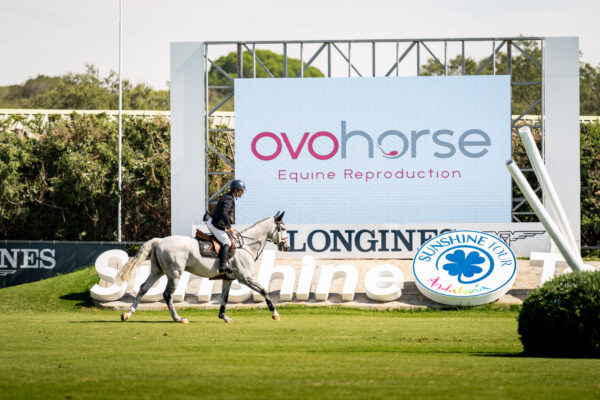
The Horseshowjumping.tv team met Alessia during the third leg of the FISE Young Horses Circuit, sponsored by Avantea. The young rider shared her experience, highlighting the importance of the services provided by the Cremona-based company, which proved to be both a valuable resource and a decisive support for the development of her breeding project.
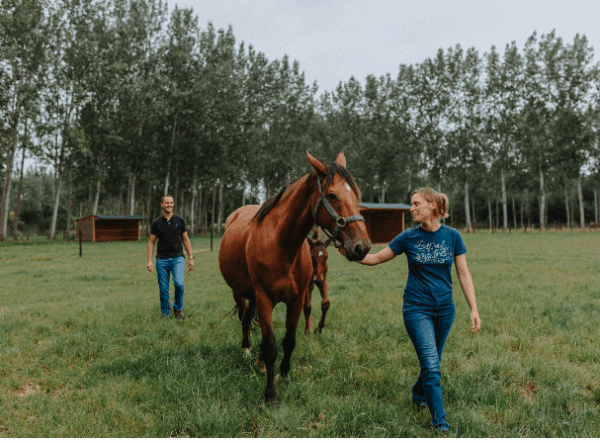
Together with her family, Alessia manages a small breeding operation: only a few foals each year, all carefully selected and personally followed from birth to the first stages of training under saddle.
“The greatest satisfaction is watching a horse born at home grow up and then taking it to competitions,” she explains. What truly makes her project sustainable, however, is the use of OPU-ICSI, a technique that makes it possible to obtain embryos from mares that are still actively competing. This opportunity has revolutionized the way sport horse breeding is conceived, opening new possibilities for those who do not want to choose between athletic performance and reproduction.
How to Obtain Foals from Mares Still Competing
Today, the answer to the question how to obtain foals from mares in competition increasingly lies in the use of the OPU-ICSI technique (oocyte retrieval followed by in vitro fertilization). This technology is becoming increasingly widespread among sport horse breeders both in Italy and abroad, as confirmed by the results of recent analyses presented in the article “OPU-ICSI: the biotechnology that is revolutionizing sport horse breeding.”
Alessia describes her experience:
“My mares continue to compete regularly, and at the same time I can obtain their foals thanks to Avantea,” she says.
This represents a significant change compared to the past, when reproduction necessarily required mares to be withdrawn from competition. The procedure involves collecting oocytes from the mare, fertilizing them in the laboratory using frozen semen, and transferring the resulting embryos to recipient mares that will carry the pregnancy.
“I only use frozen semen,” Alessia adds. “This allows me to choose stallions from all over the world and to plan everything with great precision.”
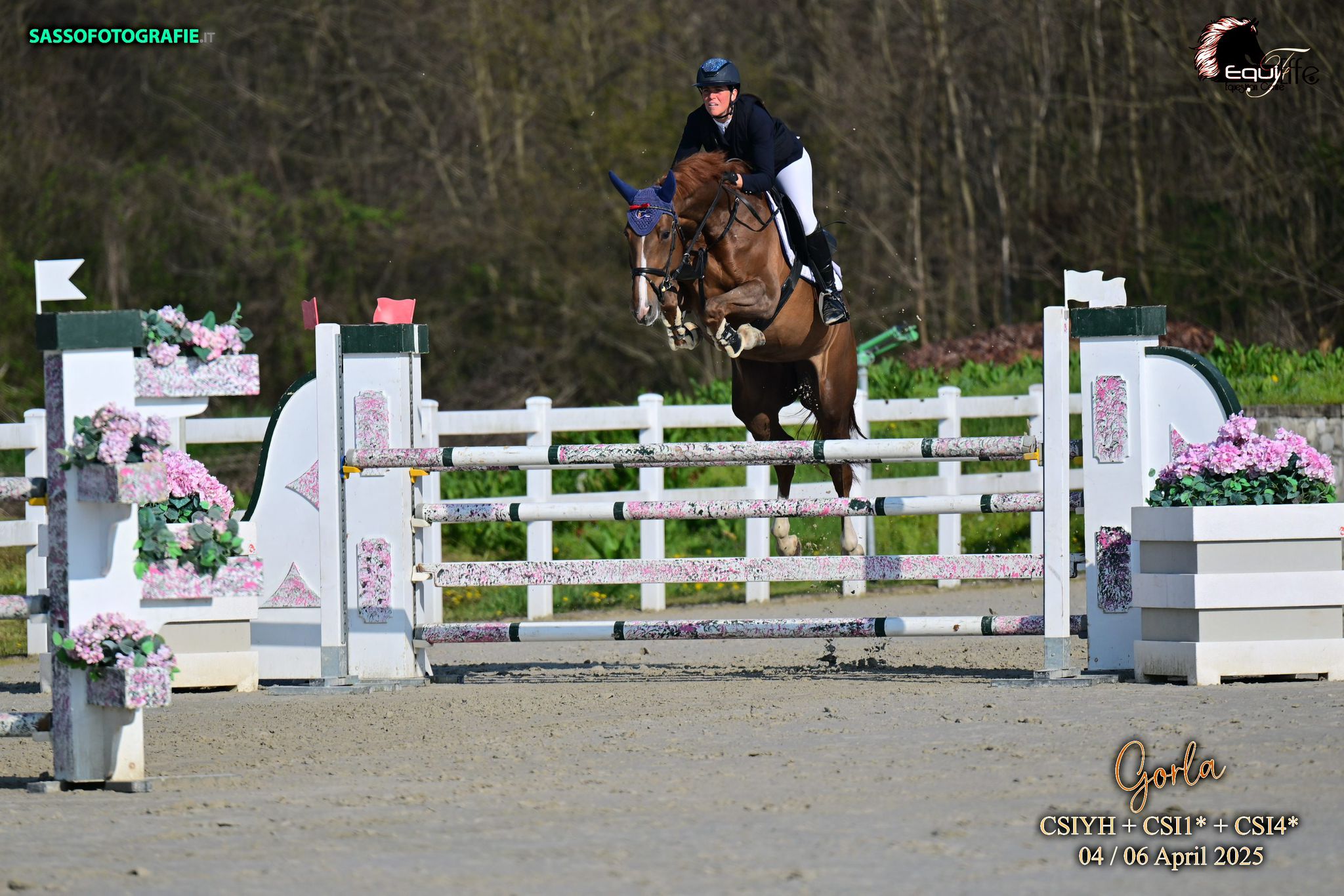
The advantages are clear: the sporting potential of the competing mares is preserved without sacrificing their reproductive value. Through this approach, Alessia has already obtained foals from two of her best mares while continuing to compete with them. It is a strategy that successfully combines planning, genetics, and intelligent resource management.
The Importance of a Technical and Personalized Approach to Sport Horse Breeding
Alessia has chosen a breeding model in which each horse is followed with great attention and every decision results from careful planning.
“We produce two or three foals a year so we can manage them in the best possible way, from birth to their first training under saddle.”
The real added value, however, lies in the ability to optimize genetic selection without interfering with the competition schedule.
“It’s not just an economic matter—although breeding your own horses is certainly more sustainable—but above all it’s an incredible satisfaction to raise your own horses from foals.”
For those wondering how to obtain foals from mares still competing, the key lies precisely in this synergy between advanced reproductive technologies and modern sport horse management.
Alessia’s experience with Avantea proved decisive:
“They have always been punctual and extremely precise. For someone like me, who manages everything within the family, this makes all the difference.”
Collaborating with a leading center such as Avantea ensures technical support at every stage—from oocyte retrieval to the selection of recipient mares—guaranteeing reliable results even for smaller breeding operations, as demonstrated by the data reported in the article “Avantea: excellence in numbers and science – a benchmark in assisted equine reproduction.”
Avantea and OPU-ICSI: An Ideal Solution for Sport Horse Breeders
Within the field of assisted reproduction in horses, Avantea represents a benchmark for breeders seeking concrete and customized solutions. Alessia Costalla’s experience clearly demonstrates how these technologies can be successfully applied even within a family-run breeding program.
“With Avantea I was able to obtain embryos from mares that are still competing today. It has truly been a turning point for my breeding program.”
For anyone wondering how to obtain foals from mares still competing, OPU-ICSI currently represents one of the most efficient solutions available. It is not only suitable for large breeding farms but also for smaller breeders who work with a limited number of horses yet aim to maintain high quality.
“Having foals without interrupting the sporting careers of my mares is a huge advantage. It allows you to build the future of your breeding program while you are still active in competition.”
Thanks to advanced reproductive technologies, Alessia Costalla can already see both the mares and their offspring in the arena—continuing a long-term vision built on passion, planning, and informed decisions. Her story is a concrete example of how innovation, when applied effectively, can make sport horse breeding more accessible, strategic, and sustainable.
By A. Ceserani
Photos: Sassofotografie.it
© Rights Reserved.