

Interview with Michele Leone Schettino D’Acquarone: “Polo as a Passport to the World”
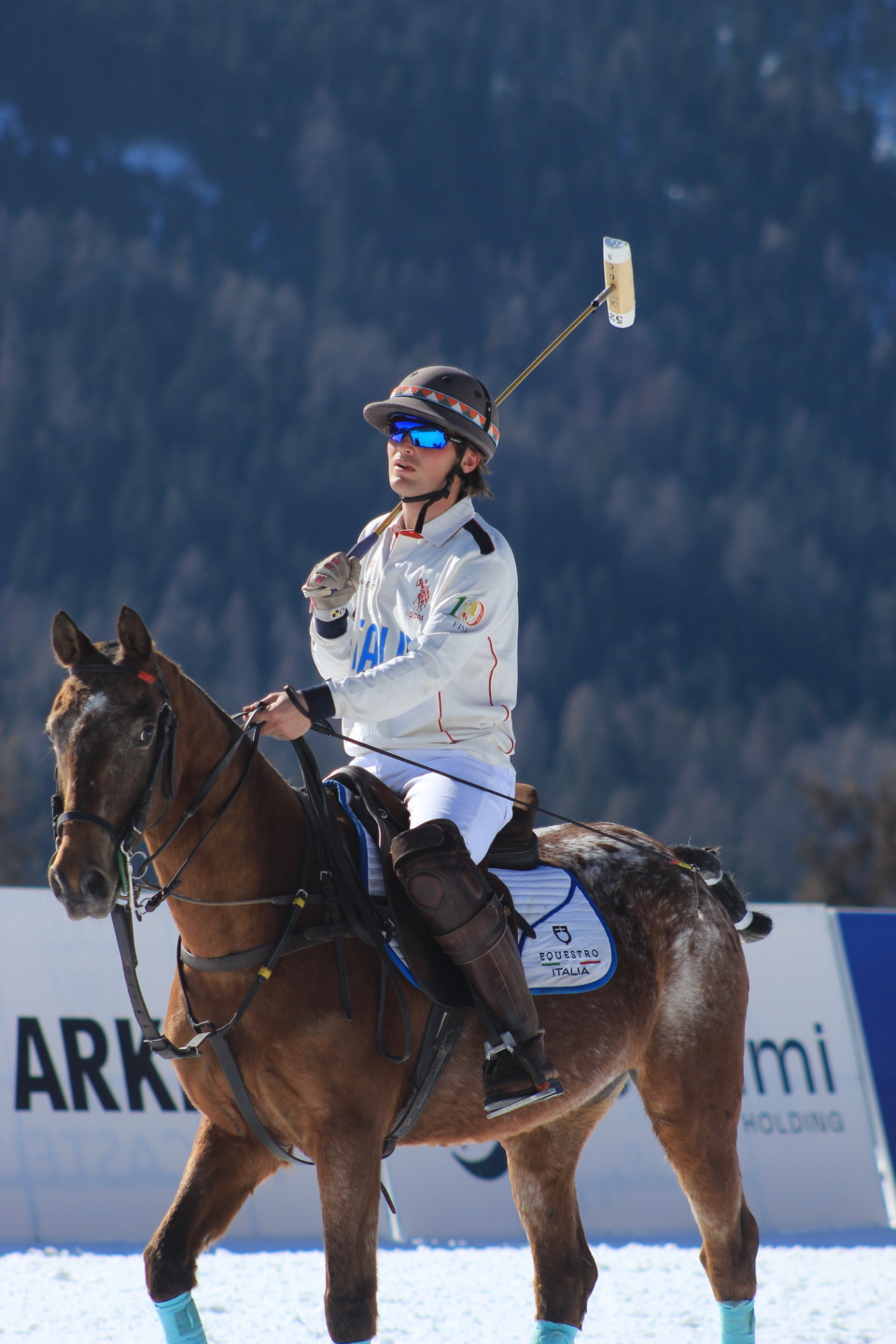
On the snow-covered field of Valcastello Polo Club, framed by the breathtaking Dolomites, Michele Leone Schettino D’Acquarone experienced an emotion that went far beyond the sporting result. The 4–4 draw against France at the Valcastello Snow Polo Showcase was only the final moment of an intense and thrilling day: what remains is a powerful signal from a discipline that looks to the future and dreams of returning to the Olympic stage.
Young, determined, and raised in a family where polo is a tradition passed down through generations, Michele represents a new wave of Italian polo players. We met him during the event organized in synergy with FISE to talk not only about the match, but also about his journey and the future prospects of this fascinating sport.
Snow Polo Showcase: Polo on Snow Looking Toward the Olympics
Polo has not been part of the Olympic Games since 1936, but the international polo community is working to bring it back into the spotlight. Within this context, the Valcastello Snow Polo Showcase stands out as a demonstration event designed to highlight how snow polo could represent a more sustainable and logistically accessible alternative to traditional grass polo.
“Wearing the Italian jersey is always a unique honor,” Michele explains. “Playing at home, on a field I know well and alongside teammates such as Stefano Giansanti and Giordano Magini, made the experience even more special.” The atmosphere was exceptional: perfect snow, brilliant sunshine, and a crowd captivated by a discipline that is fast, technical, and spectacular.
Compared to traditional polo, snow polo is played on a more compact field and with fewer players. This means reduced logistical requirements: fewer horses, fewer movements, and simpler organization. “At a time when sustainability and practicality are central issues, this format could represent an important key to relaunching polo internationally,” Michele adds.
Buenos Aires 2018: The Youth Olympics in the Homeland of Polo
Representing Italy is nothing new for Michele. In 2018 he took part in the Youth Olympic Games in Buenos Aires, an experience he describes as “unique.” Playing in Argentina, the homeland of polo, means confronting the highest technical and cultural expression of the sport.
The competition took place in Pilar, one of the world’s main polo hubs, and above all on the famous Palermo field, widely considered the most prestigious stadium in the world for polo. “I breathed in an atmosphere comparable to a ‘San Siro of polo.’ For a young athlete, stepping onto that field is a milestone that leaves a lasting impression,” Michele recalls.
The Argentine experience was not only sporting but also deeply formative: competing with high-level players, living the Olympic environment, and representing Italy in a discipline that is part of his family heritage strengthened his determination to build a solid path in international polo.
A Polo Family: Between Technical Guidance and Shared Passion
For Michele, polo was never a random choice. His grandparents played, his parents Chicco Schettino and Chantal D’Acquarone still play today, as does his sister. Growing up in such an environment means breathing polo from early childhood.
His father, an experienced player, is a key technical reference for him, almost like a coach. “He knows the dynamics of polo, its strategies and rules inside out, and he never hesitates to correct me when necessary, always supporting me.” His mother, on the other hand, comes from show jumping, so she advises him mainly on style, posture, riding technique, and precision in the saddle. “Two complementary approaches that have contributed greatly to my development.”
One of the most fascinating aspects of polo is the possibility of forming teams based on players’ handicaps. “The handicap system, which ranges from -2 to 10, allows tournaments to be balanced so that competitions remain fair,” Michele explains.
In tournaments, the sum of the players’ handicaps must respect a predetermined limit: in Valcastello’s case, it was a 6-goal tournament. This mechanism also allows family combinations, making it possible to play together with athletes of different levels—something rather rare in other team sports.
Grass Polo and Arena Polo: Two Souls of the Same Discipline
Within both Italian and international polo, two main forms coexist: traditional grass polo and arena polo, which can be played on sand or snow.
“The traditional field is very large, about three times the size of a football pitch, with four players per team. The game is fast and based on long trajectories and powerful shots that can cover considerable distances. The ball is smaller and the pace is extremely high, but for less experienced spectators it can sometimes feel a bit dispersed,” Michele explains.
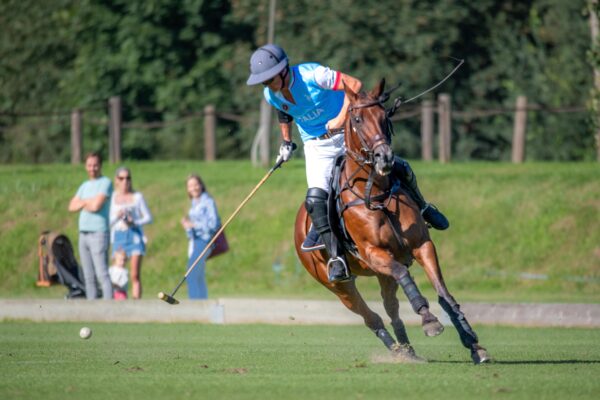
“Arena polo, on the other hand, is played on a smaller field. Teams may consist of two or three players, and sideboards are often present, making the game more dynamic and tactical. Here technique prevails over speed: the game relies on sudden stops, rapid changes of direction, and precise ball control. The ball itself is different from the one used in grass polo—it is larger, made of leather, and travels less far.”
Michele admits that he prefers arena polo. Accustomed to the Valcastello field, he values the agility of his horses and the possibility of “having fun with the horse more than with the ball,” reproducing match situations during training to strengthen the partnership between horse and rider.
The Central Role of Horses in Polo
Polo is an equestrian sport in every sense, and the horse is as much a protagonist as the player. Unlike many other disciplines, a match requires several horse changes: at each chukker—each period of play—the rider switches horses. Typically, a player uses between four and eight horses in a single match.
The logistical management can be complex. In tournaments far from home, players often rent horses locally. This requires great adaptability: every horse has different characteristics, and the rider must adjust quickly. Michele explains that he always tries the horses the day before a match to avoid surprises and establish at least a basic connection before the competition.
This flexibility, combined with technical preparation, is what distinguishes a good polo player: it is not enough to strike the ball well—you must also understand the horse and anticipate its reactions.
Study and Sport: Discipline On and Off the Field
Alongside his sporting career, Michele is completing a master’s degree in Milan. His daily routine consists of university classes, training sessions, and traveling between clubs. Fortunately, he can rely on facilities relatively close to the city, something that is not always common in polo.
He manages to train three times a week and play matches on weekends, carefully organizing his time. Michele admits he is an anxious person, both in his studies and in sport, but he has learned to manage pressure through two simple and practical elements: good sleep and a good breakfast.
“I always joke about it with my father,” he says with a smile. “The more prepared I feel, the easier it is to stay calm—especially when I find myself playing against stronger opponents.”
Polo as a Passport to the World
“Polo is a passport to the world,” Winston Churchill once said. Michele is living proof of that.
Beyond Argentina, he has played in England and in Punta Cana, in the Dominican Republic, where he also worked and studied.
The polo community is international and welcoming. Wherever there is a club, it is possible to find a field, horses, and a team to play with. Whether on grass, sand, or snow, the common language is the language of the game.
Between Olympic dreams, summer tournaments in Valcastello, and new experiences abroad, Michele Leone Schettino D’Acquarone embodies a generation that looks far ahead without forgetting its roots.
For him, polo is not just a sport: it is family tradition, personal growth, and an opening to the world.
Perhaps, thanks also to young players like him, this sport will one day write a new chapter in its international history.
AC
HSJ X FISE
Ph Horseshowjumping.tv | Sophia Ronga
© Rights Reserved.