

The Evolution of Showjumping, Italy’s Influence on Style and Technique
Origins of Showjumping in Europe
Showjumping began in the late 19th century as a test of skill between horse and rider. Early techniques were rigid, with heavy use of the reins and a backward-leaning posture. This limited the horse’s natural movement and reduced efficiency over jumps.
Over time, riders sought smoother, faster ways to clear obstacles. Italy played a central role in this transformation.
Federico Caprilli and the Forward Seat Revolution
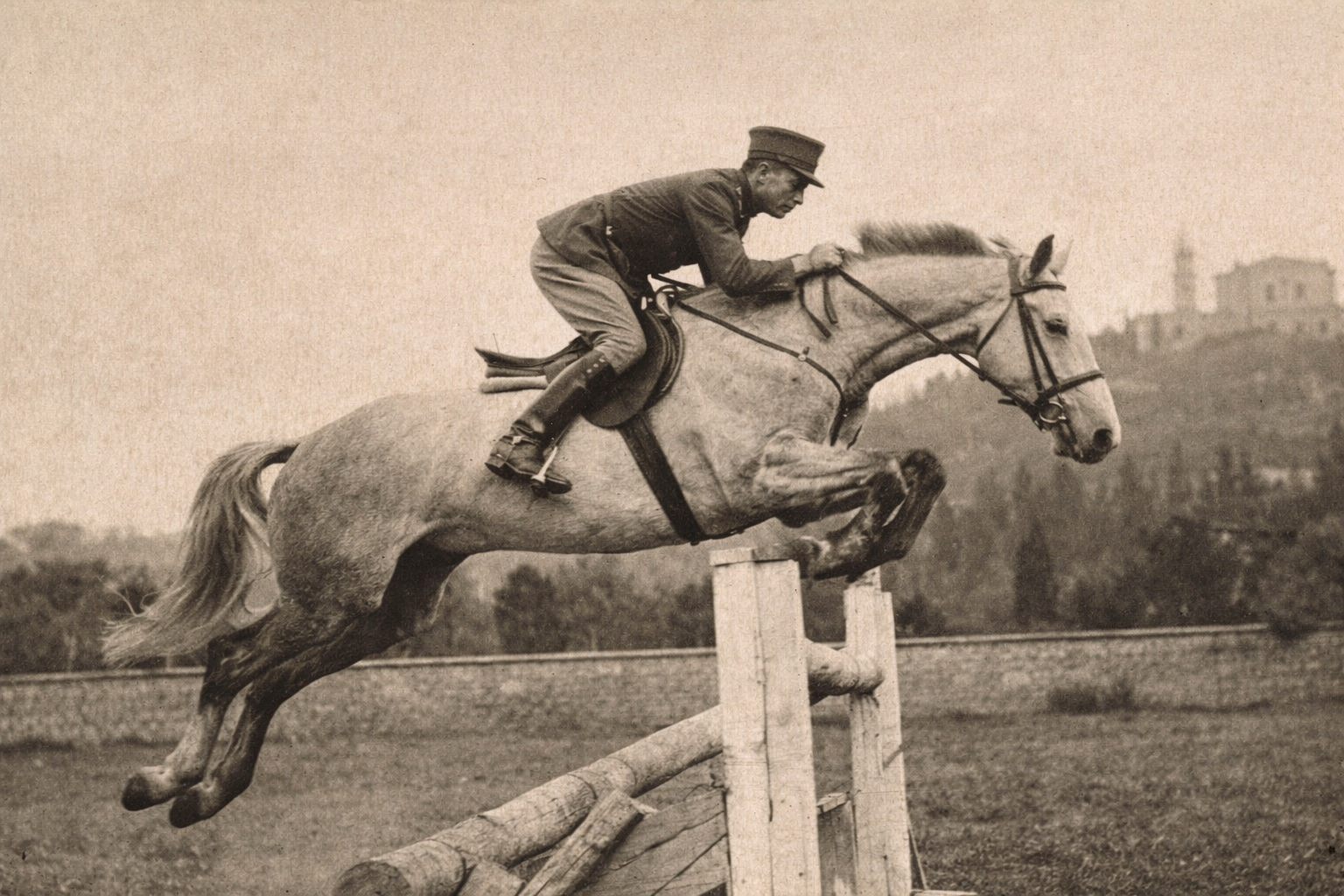
At the start of the 20th century, Federico Caprilli changed riding technique by studying horses in natural movement and applying it to jumping.
He introduced the forward seat, which involves:
- Leaning the torso slightly forward
- Using soft, independent hands
- Allowing the horse to stretch its neck freely
This method immediately improved performance. Horses jumped more naturally, riders maintained balance without interference.
Caprilli’s approach became the foundation of modern jumping and remains a standard today.
Italian Riding Style and Training Philosophy
Italy developed a precise style focused on balance and simplicity. The goal is harmony between rider and horse.
Key traits include:
- Light contact with the horse’s mouth
- Consistent rhythm between obstacles
- Emphasis on balance
Training centers like Tor di Quinto helped spread these principles. Instruction focuses on quality of riding over force.
Growth of International Competitions
After World War II, showjumping expanded worldwide. The Fédération Équestre Internationale introduced standardized rules and international competitions.
Italian riders continued to excel, including top competitors who won multiple Olympic medals. Their success demonstrated the effectiveness of the Italian style on a global stage.
Horse Breeding and Training Advances
Showjumping progressed with improved horse breeding. European warmbloods became the standard for strength, agility, and temperament.
Italian breeders contributed by refining bloodlines and focusing on performance traits. Training evolved to include:
- Grid exercises to refine jumping technique
- Conditioning programs for stamina
- Video analysis for performance
These tools raised technical standards and competition levels.
Showjumping Today
Today, showjumping is a global sport with high visibility. Events like the FEI World Equestrian Games and the Olympics attract the world’s top riders.
Some countries dominate rankings, but Italian influence is still evident in style, rhythm, and technique.
Caprilli Tests, the Basis of Modern Training
Caprilli Tests remain a practical way to apply Federico Caprilli’s principles. They assess rider balance, position, and harmony with the horse.
Tests combine flatwork and small jumps. Judges evaluate:
- Rider stability and posture
- Correct use of aids
- Smooth transitions between exercises
- Rider-horse harmony
These tests are widely used in Italy to build solid foundations for all levels of riders.
Modern Examples and Continuity of Italian Style
Italian influence is clear in modern competition. On technical courses, riders maintain a steady rhythm, letting the horse use its neck freely over jumps. At higher levels, light hands and minimal intervention between obstacles are common. Even in timed events, efficient lines and smooth gallop make a measurable difference.
These practices show that Caprilli’s principles, developed over a century ago, remain central to success in modern showjumping.
© Rights Reserved.