



The Importance of Sustainability in Horse Footings
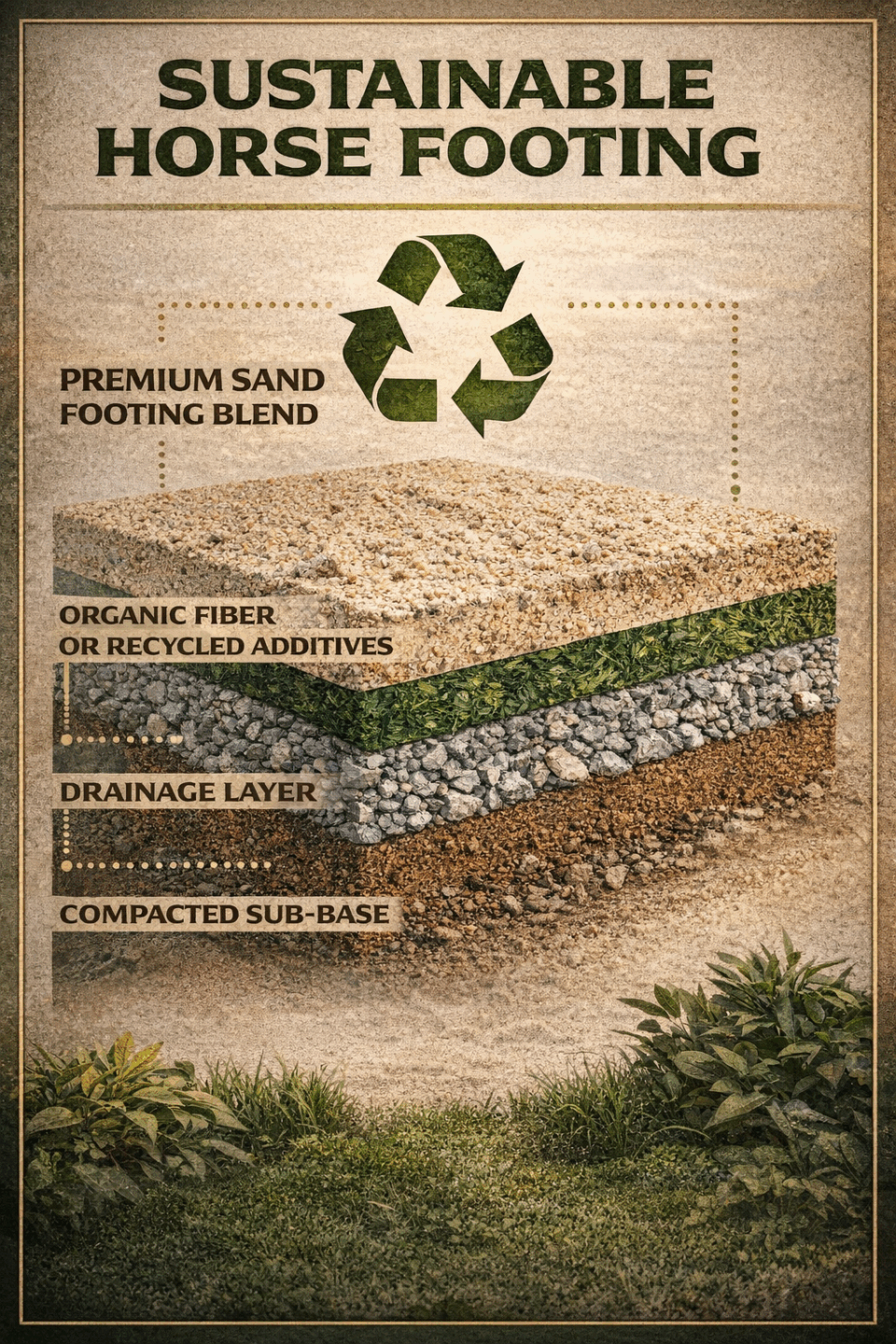
Sustainability in horse footings is becoming an essential consideration in modern equestrian facility design. Whether for private barns, riding schools, or competitive venues, arena footing plays a critical role in horse health, performance, environmental responsibility, and long-term cost efficiency. As awareness grows around environmental stewardship and animal welfare, sustainable footing solutions are no longer optional—they are a necessity.
1. Protecting Equine Health and Performance
The primary purpose of arena footing is to provide a safe, consistent surface that supports a horse’s movement while reducing stress on joints, tendons, and ligaments. Poor footing can contribute to lameness, soft tissue injuries, and long-term soundness issues.
Sustainable footing systems focus on:
- Shock absorption to reduce concussion
- Energy return for efficient movement
- Stability and traction to prevent slips and strain
- Dust reduction for respiratory health
Dust management is especially important in enclosed arenas. Excessive dust can irritate horses’ airways, contributing to inflammatory conditions that affect performance. Sustainable materials—such as responsibly sourced fibers or dust-controlled sand blends—help create healthier breathing environments for both horses and riders.
2. Environmental Responsibility
Traditional footing materials, when poorly sourced or maintained, can negatively impact the environment. Unsustainable sand mining, improper disposal of synthetic materials, and excessive water use for dust control all contribute to ecological strain.
Sustainable horse footing addresses these concerns by:
- Using locally sourced sand to reduce transportation emissions
- Incorporating recycled or repurposed materials where appropriate
- Designing arenas with proper drainage to prevent runoff contamination
- Reducing water dependency through advanced footing blends
For example, innovative arena systems used at major equestrian events such as the FEI World Equestrian Games have highlighted how engineered, responsibly managed footing can combine elite performance with environmental consideration. These events set standards that influence facilities worldwide.
3. Water Conservation and Drainage Efficiency
Water is often heavily used to control dust and maintain consistency in traditional arenas. However, overwatering wastes resources and can degrade footing quality.
Sustainable arena construction includes:
- Engineered base layers for optimal drainage
- Subsurface irrigation systems for precise moisture control
- Footing blends designed to retain moisture longer
Proper drainage not only conserves water but also prevents surface erosion, reduces mud formation, and extends the life of the footing material.
4. Long-Term Cost Effectiveness
While sustainable footing systems may require higher upfront investment, they typically reduce costs over time. Benefits include:
- Lower maintenance frequency
- Reduced need for material replacement
- Decreased veterinary expenses due to improved horse soundness
- Lower water and dust-control costs
Facilities that prioritize sustainability often see improved operational efficiency and increased property value.
5. Responsible Material Innovation
Modern footing options now include advanced fiber blends, wax-coated sands, and hybrid organic-inorganic mixes designed for durability and performance. When responsibly manufactured and installed, these materials can significantly reduce waste and extend arena lifespan.
The key is thoughtful selection. Not all synthetic additives are environmentally friendly. Sustainable decision-making requires evaluating:
- Material origin
- Manufacturing practices
- Recyclability or disposal impact
- Longevity under heavy use
Transparency from suppliers is essential in ensuring that innovation aligns with environmental ethics.
6. Aligning with Industry Standards and Public Expectations
Equestrian sport is increasingly scrutinized regarding animal welfare and environmental impact. Organizations such as the Fédération Équestre Internationale emphasize horse welfare, which includes safe and appropriate footing standards.
Riders, boarders, and event participants are also more environmentally conscious. Facilities that demonstrate sustainable practices enhance their reputation and attract clients who value ethical and responsible management.
7. Sustainability as a Holistic Approach
True sustainability in horse footings goes beyond material choice. It involves:
- Proper arena design and base construction
- Routine, educated maintenance practices
- Monitoring moisture levels and compaction
- Periodic surface testing for consistency
When footing is treated as part of a complete system—rather than simply a top layer—both horses and the environment benefit.
Sustainability in horse footings is not merely an environmental trend; it is a fundamental component of responsible equestrian facility management. By prioritizing horse health, environmental stewardship, water conservation, and long-term efficiency, sustainable footing systems create safer arenas and stronger businesses.
As the equestrian industry evolves, facilities that invest in sustainable footing solutions position themselves at the forefront of welfare, performance, and environmental responsibility—ensuring that both horses and the land they train on remain healthy for generations to come.
Valentina Sozzi
© Rights Reserved.