



The Science Behind Thrusts: Understanding What They Are and Why We Use Them
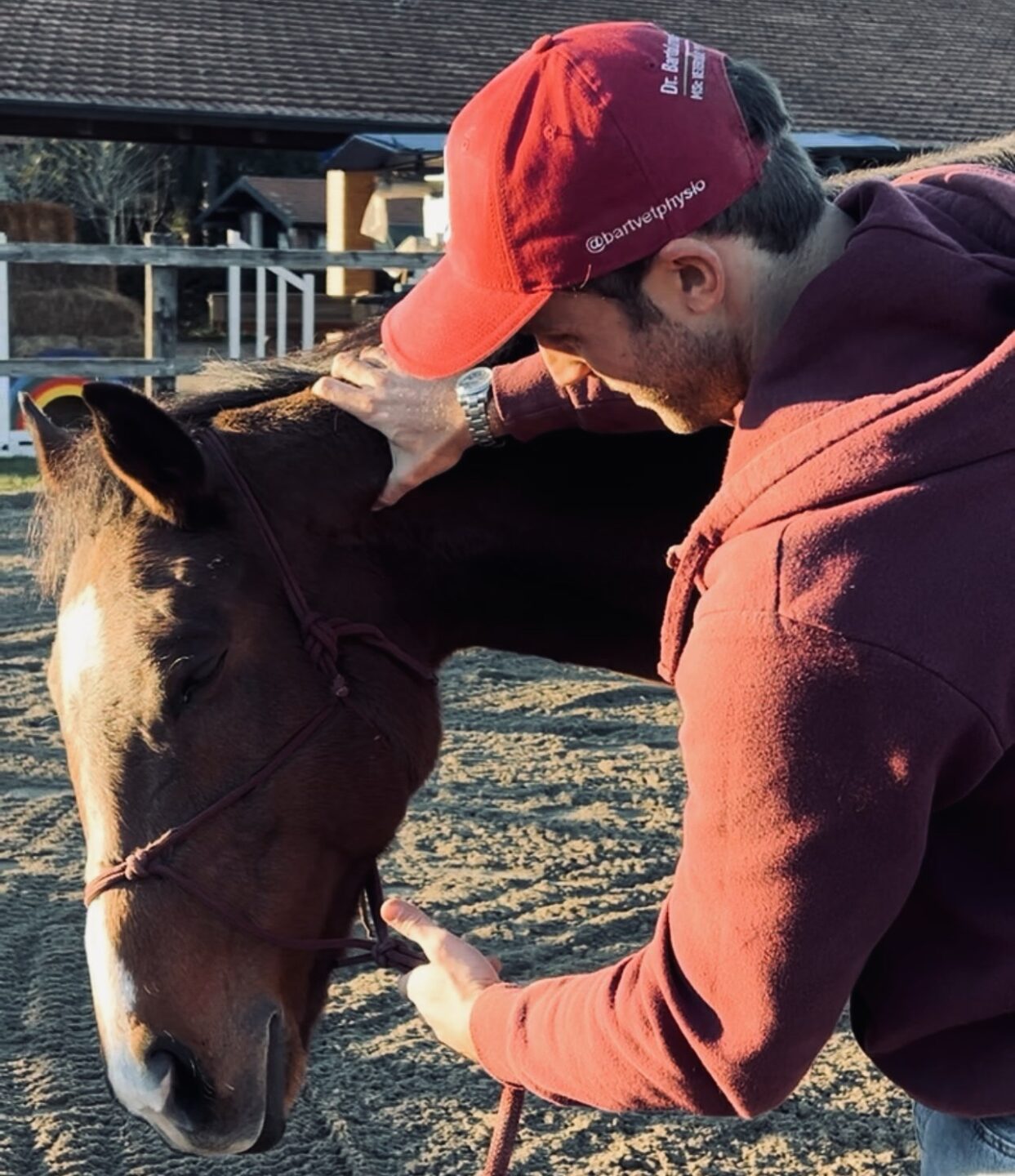
Why Talk About Thrusts?
Among manual techniques used in rehabilitation and musculoskeletal care, thrusts are probably the most recognisable—and the most misunderstood.
For riders and owners, a thrust is often associated with a sudden movement, an audible “pop,” and the idea that something has been forcefully “put back into place.” For professionals, it is a technique that raises questions and controversy, particularly when explained using outdated or overly simplistic models.
Yet thrusts remain part of modern, evidence-informed care in both human and veterinary practice when used by trained professionals. The issue is rarely the technique itself, but how it is explained and interpreted.
The aim of this article is not to teach how to perform thrusts, nor to promote them as a universal solution. Instead, it explains what thrusts are from a scientific point of view, why they sometimes produce an audible sound, and why practitioners may choose to use them within a broader rehabilitation or performance-support plan. Improving understanding helps reduce unnecessary fear, unrealistic expectations, and confusion among both professionals and riders.
What Is a Thrust, Scientifically Speaking?
In clinical and scientific literature, a thrust is described as a high-velocity, low-amplitude (HVLA) movement applied to a joint or spinal segment.
High velocity refers to the speed of the movement, not the amount of force used. Low amplitude means that the movement is small and remains within the joint’s normal anatomical limits. A thrust relies on precision, timing, and control—not strength.
Importantly, thrusts do not aim to push joints beyond their range or to “realign” bones. In healthy joints, bones are not displaced in the way this metaphor suggests. Ligaments, joint capsules, and muscular control maintain joint integrity under normal conditions.
From a modern perspective, thrusts are best understood as a mechanical stimulus to the nervous system. The rapid movement stimulates mechanoreceptors in joints, muscles, and connective tissues, generating sensory input that is processed at spinal and supraspinal levels.
As a result, the primary effects of a thrust are neuromuscular and neurophysiological rather than structural. Changes observed after thrusts more commonly involve muscle tone, motor control, reflex activity, and movement perception, rather than any lasting change in joint position.
Why Does a Thrust Make the “Pop” Sound?
One of the most recognisable aspects of a thrust is the audible “pop” or “crack” that may accompany it, often leading to misconceptions about what is happening inside the joint.
Synovial joints are sealed capsules filled with synovial fluid, which contains dissolved gases, primarily carbon dioxide. When a thrust is applied, the joint surfaces are separated rapidly. This sudden separation increases the volume inside the joint capsule, causing a rapid drop in pressure. As a result, gases are pulled out of the fluid and form a bubble within the joint.
The audible “pop” is the sound of this bubble forming—not bursting. It is a purely physical event, often compared to the sound produced when a suction cup detaches from a wet surface.
After this occurs, the joint enters a refractory period, typically lasting around twenty minutes, during which the gas gradually dissolves back into the synovial fluid. During this time, the same joint cannot produce another pop, even if similar movements are applied.
Crucially, the presence or absence of this sound is not a marker of therapeutic effectiveness. Research shows that the neurophysiological responses associated with thrusts—such as pain modulation and changes in muscle tone—occur whether a pop is produced or not. The sound is therefore a byproduct of joint mechanics, not the goal of the technique.
Why Do Practitioners Use Thrusts?
In both human and veterinary practice, thrusts are not used routinely. They are chosen selectively, based on assessment findings, clinical reasoning, and the individual needs of the patient.
Practitioners may consider thrusts when a joint or region shows reduced mobility, altered neuromuscular control, or persistent protective patterns that do not respond sufficiently to slower or more conservative techniques. These presentations often develop in the context of overload, compensatory movement strategies, previous injury, or prolonged restriction.
Current research suggests that the value of a thrust lies less in mechanical joint effects and more in its ability to rapidly influence the nervous system. The high-speed input strongly stimulates joint and muscle mechanoreceptors, leading to short-term changes in spinal reflex activity and central motor processing. Clinically, this may translate into altered muscle tone, improved coordination, or a temporary reduction in protective neuromuscular responses.
For veterinary physiotherapists and animal osteopaths, this approach is particularly relevant, as animals cannot verbally report discomfort. Subtle changes in posture, movement quality, or willingness to perform tasks often guide the decision to include a thrust within treatment.
Thrusts are never used in isolation. They are integrated into broader plans that may include exercise therapy, other manual techniques, load management, training advice, and collaboration with veterinarians and other professionals.
How Can Thrusts Help Patients (Humans and Animals)?
The effects of thrusts are best explained through a neurophysiological framework.
When a thrust is applied, the rapid movement generates a strong sensory signal from mechanoreceptors in joints, muscles, fascia, and surrounding tissues. This input is processed by the nervous system, influencing motor output, reflex sensitivity, and movement organisation.
In humans, research has demonstrated short-term changes following thrusts in muscle activation, pain sensitivity, motor control, and cortical excitability. Although direct research in animals is more limited, the fundamental mechanisms of neuromuscular control are shared across mammals, making similar responses plausible in veterinary patients.
Clinically, this may present as improved ease of movement, reduced protective muscle tension, greater willingness to use a previously guarded region, or improved response to exercise and training following treatment.
It is important to remain realistic. The effects of thrusts are often short-term and context-dependent. They do not replace conditioning, rehabilitation exercises, or management changes. Instead, they may create a temporary window in which other therapeutic interventions can be more effective.
Benefits, Limitations, and Risks
Like any clinical tool, thrusts have both benefits and limitations.
When appropriately indicated and performed by trained professionals, thrusts are non-pharmacological and can produce rapid neuromuscular effects. They may facilitate movement and functional change and can be a useful complement to rehabilitation and performance programmes.
However, thrusts are not a cure-all. Their effects may be transient, not all patients respond, and current evidence is heterogeneous. Long-term outcomes depend heavily on follow-up care, exercise, training, and management.
In terms of safety, thrusts are considered low-risk when applied within appropriate clinical frameworks. Risks increase when assessment is inadequate, contraindications are ignored, techniques are applied forcefully rather than precisely, or practitioners lack appropriate training. For this reason, thrusts should only be performed by professionals with formal education, anatomical knowledge, and sound clinical reasoning.
Bartolomeo Cavina, MSc Veterinary Physiotherapist
Mail: info@bartolomeocavina.com
Phone: +39 339 600 3572
Web Site: www.bartolomeocavina.com
References
Alanazi, M.S., Degenhardt, B., Kelley-Franklin, G., Cox, J.M., Lipke, L. and Reed, W.R. (2025). Neuromuscular Response to High-Velocity, Low-Amplitude Spinal Manipulation: An Overview. Medicina, 61(2), p.187.
Bialosky, J.E., Bishop, M.D., Price, D.D., Robinson, M.E. and George, S.Z. (2009). The mechanisms of manual therapy in the treatment of musculoskeletal pain: a comprehensive model. Manual Therapy, 14(5), pp.531-538.
Elder, B. and Tishkowski, K. (2022). Osteopathic Manipulative Treatment: HVLA Procedure – Cervical Vertebrae. [online] StatPearls. Available at: StatPearls Publishing. Updated Oct 3, 2022.
Evans, D.W. (2022). Why is the prevailing model of joint manipulation (still) incorrect? Chiropractic & Manual Therapies, 30 (1), p.51.
Galindez-Ibarbengoetxea, X., Setuain, I., Andersen, L.L., Ramírez-Velez, R., González-Izal, M., Jauregi, A. and Izquierdo, M. (2017). Effects of Cervical High-Velocity Low-Amplitude Techniques on Range of Motion, Strength Performance, and Cardiovascular Outcomes: A Review. The Journal of Alternative and Complementary Medicine, [online] Volume 00 (00), pp.1-9.
Haussler, K.K., Martin, C.E. and Hill, A.E. (2010). Efficacy of spinal manipulation and mobilisation on trunk flexibility and stiffness in horses: a randomised clinical trial. Equine Veterinary Journal, 42, pp.695-702.
Kawchuk, G.N., Fryer, J., Jaremko, J.L., Zeng, H., Rowe, L. and Thompson, R. (2015). Real-Time Visualization of Joint Cavitation. PLOS ONE, 10(4), e0119470.
LaPelusa, A. and Bordoni, B. (2023). High-Velocity Low-Amplitude Manipulation Techniques. [online] StatPearls. Available at: StatPearls Publishing. Updated June 4, 2023.
Pickar, J.G. (2002). Neurophysiological effects of spinal manipulation. The Spine Journal, 2 (5), pp.357-371.
Rehman, Y., Kirsch, J., Wang, M.Y-F., Johnston, R., Will, M., Gibson, E., Spencer, D., Garcia, C. and Snider, K.T. (2025). Osteopathic manipulative treatment in the management of headaches associated with musculoskeletal dysfunction: systematic review and meta-analysis. Journal of Osteopathic Medicine. [Ahead of print].
Sánchez-Romero, E.A., et al. (n.d.). Beyond the ‘Crack’: Reframing Thrust Manipulation Through Neurophysiology, Perception, and Context. SSRN Electronic Journal.
Unholz, A., et al. (2010). Reduction of the refractory period of the metacarpophalangeal joint. Journal of Manipulative and Physiological Therapeutics.
© Rights Reserved.