


Twelfth Night in the UK: Tradition, Folklore, and Midwinter Celebration
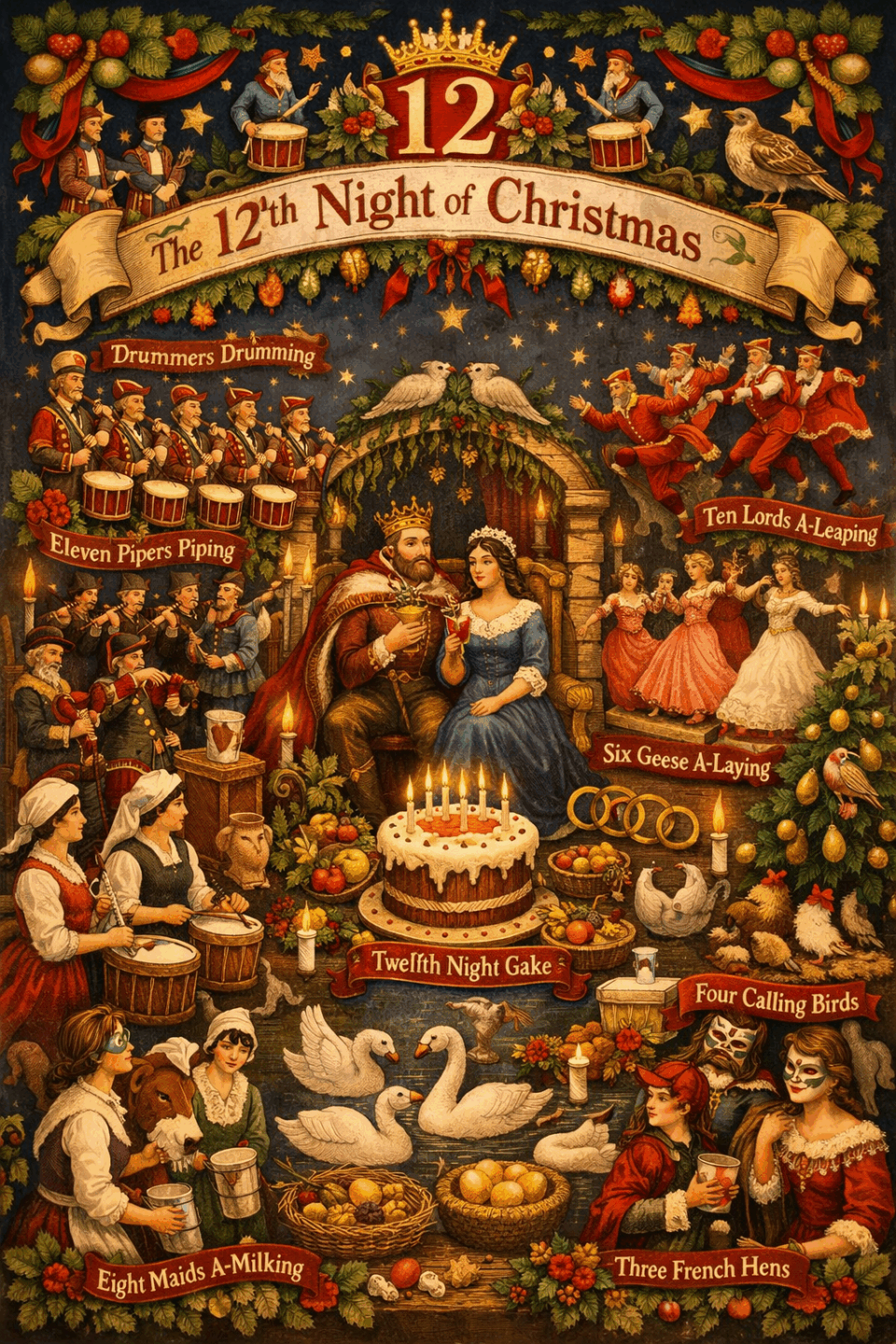
Twelfth Night is a traditional celebration in the United Kingdom that marks the end of the Twelve Days of Christmas. It is most commonly observed on 5 January, although some people celebrate it on 6 January, which coincides with the Christian festival of Epiphany. Historically, Twelfth Night was an important moment in the winter calendar, bringing the Christmas season to a close with feasting, music, and long-standing customs rooted in both religion and folklore.
The Origins and Timing of Twelfth Night
Twelfth Night takes its name from its position as the twelfth evening after Christmas Day. While the date varies depending on tradition, its purpose remains the same: to signal the formal end of the festive season and the beginning of the new year’s working life.
Traditional Celebrations and Festivities
In past centuries, Twelfth Night was one of the liveliest evenings of the year, celebrated across towns, villages, and households.
Feasting and the Twelfth Night Cake
A central feature of the night was the sharing of a Twelfth Night cake. Hidden inside the cake were tokens such as a bean or a pea, and whoever found them was named the King or Queen of the evening. This temporary role reversal reflected the playful spirit of the occasion, where normal social rules were relaxed and humour took centre stage. Singing, dancing, and games often continued late into the night.
Folklore and Rural Traditions
Twelfth Night was closely tied to agricultural life and seasonal belief, particularly in rural communities.
Wassailing and the Orchard Rituals
In cider-producing regions such as Somerset and Herefordshire, people practised wassailing. Groups gathered in orchards to sing to the apple trees, make loud noises, and pour cider onto the roots or hang cider-soaked toast from the branches. These rituals were believed to protect the trees and encourage a good harvest, blending ancient nature-based beliefs with Christian symbolism.
Horses and Animal Symbolism in Twelfth Night Customs
Animals, especially horses, featured in some Twelfth Night and midwinter traditions, often as symbolic figures in folk rituals.
The Mari Lwyd of Wales
One of the most distinctive horse-related customs is the Mari Lwyd, a Welsh tradition often performed around Twelfth Night. It involves a decorated horse’s skull mounted on a pole and carried by a group from house to house. Through songs and playful rhyming contests known as pwnco, the group sought entry into homes. When welcomed inside, food and drink were shared. The Mari Lwyd is believed to symbolise protection, fertility, and good fortune during the darkest part of the year.
Decorated Horses and Winter Processions
In parts of England, horses were sometimes dressed with ribbons, greenery, or bells and included in village processions during the Twelfth Night period. These rides reflected the importance of horses in farming communities and their association with strength, prosperity, and continuity. While not widespread, such customs highlight the close relationship between animals, folklore, and seasonal celebration.
The End of Christmas and Seasonal Change
Twelfth Night marked a clear turning point in the festive calendar.
Taking Down Decorations
It was widely believed that leaving Christmas decorations up beyond Twelfth Night would bring bad luck. Evergreen decorations such as holly, ivy, and mistletoe were carefully removed and disposed of, often burned or returned to the earth. This ritual symbolised the official end of Christmas and a return to ordinary life.
Twelfth Night in Literature and Culture
The celebration is famously reflected in William Shakespeare’s play Twelfth Night. Although the plot is not directly about the holiday, its themes of disguise, mistaken identity, and social inversion echo the playful disorder traditionally associated with the night.
Twelfth Night in Modern Britain
Today, Twelfth Night is no longer widely celebrated in everyday British life. However, it continues to survive through revived folk customs, theatre performances, and local events. For many, it offers a connection to Britain’s cultural past and a reminder of how communities once marked time, seasons, and shared identity through ritual and celebration.
Valentina Sozzi
© Rights Reserved.