
OPU-ICSI and Elite Genetics: Wim Degeneffe’s Scientific Approach and His Collaboration with Avantea
Hof Ter Leeuwe has long been a benchmark for breeders and owners of sport horses seeking advanced, scientifically proven reproductive solutions. Founded in 1990, the clinic is now led by the second generation of the Degeneffe family, while preserving the core values of precision, expertise, and long-term vision that have defined the practice since its very beginnings.
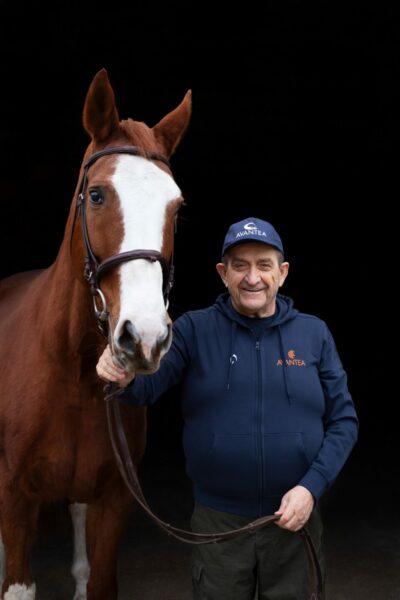
At the heart of this journey is Dr. Wim Degeneffe, a veterinarian specialized in equine reproduction. His professional path began with an academic interest in assisted reproductive technologies, was enriched through international experience, and ultimately took shape within a family practice deeply rooted in veterinary medicine. Guided by a clear philosophy that prioritizes quality over quantity, Hof Ter Leeuwe has built a reputation for excellence over the years, becoming a trusted partner for some of Europe’s most renowned sport horse breeders and beyond.
In this interview, Dr. Degeneffe shares his professional story, the strengths of the clinic’s reproductive program, and the motivations behind the collaboration with Avantea. The discussion also provides a clear, science-based perspective on the use of OPU-ICSI in modern sport horse breeding, drawing on real cases, strategic choices, and future prospects for international equine genetics.
Could you please tell our readers about your professional journey and how you came to specialise in equine reproduction at Hof Ter Leeuwe?
I graduated in 2010 from Ghent University as an equine veterinarian. During my final year, my master’s thesis focused on Intracytoplasmic Sperm Injection in horses, which sparked my fascination for assisted reproduction techniques in the equine industry.
I began my career almost immediately at Hof Ter Leeuwe, an equine reproduction centre founded in 1990 by my father, dr.Erik Degeneffe. Being immersed in this environment from the very start gave me a unique opportunity to build deep expertise in advanced reproductive technologies, embryo transfer and fertility management in sport horses and breeding stock.
Early in my professional journey, I spent six weeks in São Paulo, Brazil, working alongside Professor Marco Alvarenga. This hands-on internship allowed me to gain extensive practical experience and sharpen my clinical and laboratory skills within similar local breeding settings as our clinic in Belgium.
Since then, I’ve made it my mission to continuously expand my knowledge by staying up-to-date with emerging research, scientific publications and innovative fertility techniques. I also regularly attend international congresses and training courses dedicated to equine reproduction.
Thanks to this commitment — shared with our team of veterinarians — Hof Ter Leeuwe has grown into a trusted partner for many highly recognised breeders. By combining innovation, evidence-based practice and a strong vet team, we’ve been fortunate to support a loyal clientele of renowned sport horse producers and equine genetic programs across Europe and beyond.
What are the key strengths of your breeding programme and clinic, and which recent achievements are you most proud of?
Our key strength is our focus on excellence, not scale. We are not the largest ET centre in Belgium — and we prefer it that way. Our ambition is to deliver the highest quality in equine reproduction and consistently strive for the best possible pregnancy rates. We manage a surrogate pool of ±500 recipient mares, supported by a family-driven veterinary team led by myself, together with my wife dr. Berdien Boelens my father dr. Erik Degeneffe, and our close collaborator dr. Marieke Hermans, all veterinarians. Quality over quantity is our guiding principle.
We are also very proud to welcome our clients to our new modern clinic facilities in Zoutleeuw, completed in 2022, which allow us to further optimise mare care, lab workflow and biosecurity. Looking ahead, we continue to expand our recipient mare infrastructure with an additional new stable — always driven by the same goal: stronger care, higher pregnancy success, and client trust.
How did the collaboration with Avantea begin, and what has motivated you to integrate their services into your business model?
The collaboration began through a technical and strategic evolution in our clinic. During my final year of veterinary studies, I worked extensively on a master’s thesis on equine ICSI, which inspired our clinic founder, my father, to explore advanced assisted reproduction techniques such as OPU and ICSI. Shortly after my graduation in 2010, we successfully launched OPU and started performing ICSI procedures ourselves. However, it quickly became clear that operating an in-house ICSI laboratory alongside high-volume daily clinical reproduction work was not realistically sustainable without compromising efficiency and focus.
This led us to seek collaboration with a laboratory partner that could demonstrate consistent, repeatable and high pregnancy results in equine ICSI. Given their scientific reputation and proven expertise, Avantea naturally became our first choice. Integrating their services was motivated by a clear goal: allowing our clinic to fully concentrate on precision OPU work, while partnering with a lab that ensures reliable embryology outcomes for our clients.
The OPU-ICSI (Ovum Pick-Up + Intracytoplasmic Sperm Injection) technique is increasingly used in sport horse breeding. Could you explain how you apply this at your centre and the benefits it brings to breeders?
OPU-ICSI is one of the most valuable tools in modern sport-horse breeding. At our centre, we apply it by performing highly precise ovum pick-ups (OPU) directly on the mare, then partnering with an expert embryology lab to create embryos using ICSI. The biggest benefit is efficiency: instead of long and unpredictable fertility pathways involving repeated inseminations, uterine inflammation or suboptimal transplant timing, breeders can fast-track results by producing embryos in a controlled and repeatable way through a single OPU session combined with ICSI.
This technique is not only excellent for infertile or medically complex mares, but also for elite sport mares with only short recovery windows in their intensive training schedules. Another major advantage is genetic access — ICSI makes many highly exclusive stallions available to breeding again, even when semen doses are limited. This has opened the door to significant genetic progress in sport horses, giving breeders the ability to produce high-quality offspring more reliably, with fewer cycles and less strain on the mare, and access to the very best bloodlines.
Could you share a concrete case (while preserving client confidentiality) in which you’ve successfully leveraged OPU-ICSI with Avantea – what were the objectives, challenges and outcomes?
A case I’m most proud of involved a high-value sport mare that unexpectedly passed away. With the breeder’s approval, we retrieved oocytes directly from the ovaries post-mortem — a time-critical and technically demanding procedure. These oocytes were then sent to Avantea, where embryos were successfully produced using ICSI. The objective was clear: preserve the mare’s exceptional genetics despite her sudden loss.
The main challenge was the narrow window to collect viable oocytes after death, combined with the emotional pressure of it being the breeder’s last chance to secure the bloodline. The outcome, however, made it all worthwhile: multiple embryos were created, preventing the loss of irreplaceable genetics. Today, several offspring from these embryos are competing at the highest level of sport, proving that OPU-ICSI can safeguard elite genetics even in the most extreme and delicate circumstances.
For sport horse breeders in show-jumping or dressage, what criteria would you suggest when choosing between conventional insemination, flushing/embryo transfer, or OPU-ICSI?
For fertile sport mares with enough time and no semen limitations, conventional insemination remains a solid first choice. When the mare is very fertile and breeders want multiple foals per season without impacting performance, flushing with embryo transfer is the logical step — though results still depend on natural cycle timing and can fluctuate.
OPU-ICSI delivers the highest return per veterinary handling. From a single controlled OPU session, multiple embryos can be produced with no hormonal and uterine manipulations, reducing physical strain and costs per embryo and ultimately per foal. It also restores access to genetically exclusive stallions when semen is limited.
Looking ahead, what innovations or investments are you planning at Hof Ter Leeuwe in order to enhance your reproductive-genetic offering and better serve the international sport-horse market?
Looking ahead, we strongly believe that the commercial availability of reliable equine sexed semen will be a key breakthrough. This innovation will allow breeders to make more targeted genetic choices by selecting the desired offspring gender with greater predictability. Whether applied in conventional insemination, embryo transfer, or OPU-ICSI, it has the potential to significantly accelerate genetic progress in the sport-horse sector.
We see sexed semen as a powerful way to shorten breeding pathways, increase embryo return per cycle, and maximise foal value.
Finally, what message would you like to deliver to breeders and owners considering embarking on an OPU-ICSI program with you and Avantea — what should they know to make the right, informed decision?
OPU-ICSI is a proven and transformative technique, so my message to breeders is simple: keep your decision science-led, not noise-led. Don’t be misled by extreme stories circulating on social media — every innovation has supporters and critics, and unfortunately, it is usually the loudest critics who dominate the conversation. The existence of debate doesn’t reflect the value of the technique, it reflects the nature of change.
If you’re interested in OPU-ICSI, seek advice from trustworthy and experienced clinical partners with real equine reproductive expertise. A breeder’s choice should be based on veterinary evidence, repeatable results, and transparent consultation — ensuring the program fits the mare’s welfare, the genetic strategy, and long-term breeding goals. An informed decision is always a strong decision, and the best foundation for that remains solid, scientific reproductive guidance.
In a sector where breeding decisions have a direct impact on a horse’s sporting future, genetic value, and economic potential, the experience of Hof Ter Leeuwe clearly shows how essential it is to rely on solid expertise and science-driven decision-making. Wim Degeneffe’s approach—grounded in veterinary evidence, responsible innovation, and close attention to the mare’s welfare—offers breeders a clear and practical understanding of the potential of OPU-ICSI and advanced reproductive techniques. In a field often influenced by trends and conflicting opinions, true differentiation lies in the quality of the work, transparency, and the ability to design tailored programs aimed at preserving and enhancing sport horse genetics over the long term.
© Rights Reserved.