
Bitless bridles and modern riding choices in today’s equestrian sport
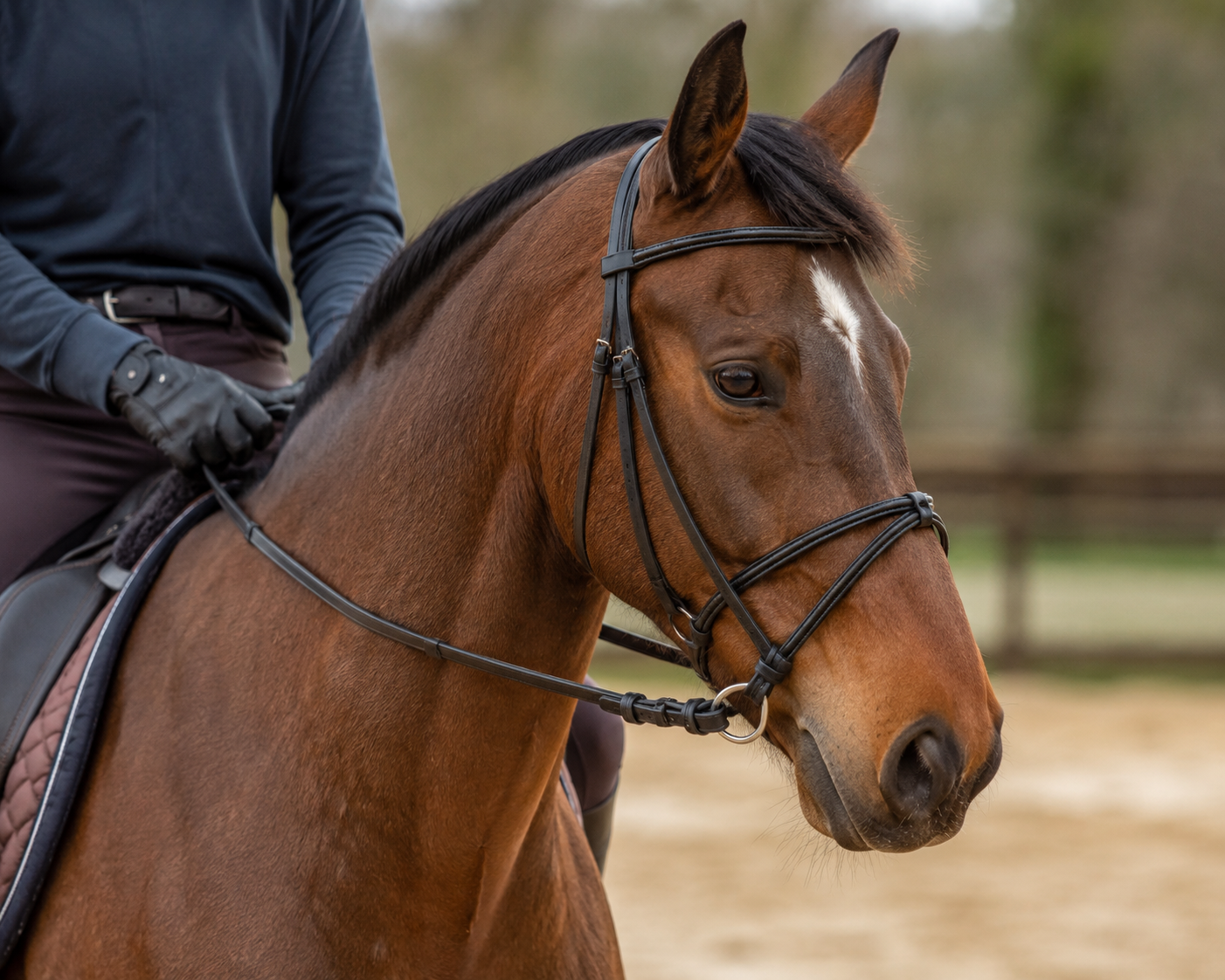
Interest in bitless riding has grown across social platforms, training barns, and competition discussions. Riders are asking a direct question: how much control do you need in the horse’s mouth, and how much can you shift to pressure on the nose, poll, and face?
Bitless bridles are not new. They have been used in endurance riding, western disciplines, and trail work for decades. What has changed is visibility. Short videos showing horses working in soft contact without a bit now reach large audiences, and that has pushed the topic into mainstream competition talk.
How bitless bridles work
In most bitless systems, pressure replaces metal. A cross-under design distributes rein pressure across the nose and cheeks. A side-pull applies direct lateral pressure similar to a halter. Mechanical hackamores use leverage, which can increase force quickly if the rider has unsteady hands. That detail sits at the center of the current debate.
Benefits reported by riders and trainers
Supporters of bitless riding point to horses that show lower oral tension, fewer mouth injuries, and clearer relaxation in the jaw. Veterinary dentists often report that bit-related lesions, such as bars bruising or tongue pressure marks, are real issues in some horses, especially those in intense training schedules or ridden with inconsistent contact. Riders working young or sensitive horses sometimes switch to bitless to reduce resistance during early schooling.
In dressage schools that allow bitless training, coaches often report improved forward movement in horses that previously braced against the hand. A common example is the horse that overbends behind the vertical when avoiding bit pressure. Removing the bit can sometimes reduce that avoidance pattern and allow a more natural neck position.
Concerns and performance limits
Skeptics focus on precision and safety. In show jumping and eventing, where speed and technical control matter, riders rely on subtle rein cues to adjust stride length and balance. A snaffle or double bridle can provide highly specific communication through the mouth. Critics argue that bitless systems can spread pressure more broadly, which may reduce clarity in fast decision moments, especially on technical courses with combinations at 350 to 400 meters per minute.
Competition rules add another layer. In many FEI disciplines, bitless bridles are still not permitted at higher levels. This limits their use to training, lower level classes, or specific national competitions. As a result, riders who train bitless often still transition back to bitted bridles before entering higher level arenas, which raises questions about consistency for the horse.
Training skill and rider influence
Rider education is another key factor. Studies in equine biomechanics and rein tension show that uneven hand pressure can create more discomfort than the presence of a bit itself. A strong, steady hand in a mild bit often produces a clearer response than an inconsistent hand in a bitless setup. This is why many trainers focus less on equipment and more on rider stability, core position, and independent seat.
Professional riders experimenting with bitless systems often describe a learning curve of several months. The main adjustment is timing. Without a bit, horses may initially lean into nose pressure or push through the noseband. Riders then need to refine half-halts through seat and body rather than relying on rein checks.
Horse individuality in training choices
Data from equine behavior studies also shows variation between horses. Some horses respond better to facial pressure, while others remain more stable with oral contact. Temperament, training history, and mouth sensitivity all influence outcome. A single method does not fit all horses in consistent work.
The current direction in many training barns is not replacement but selection. Trainers are increasingly choosing tools based on the individual horse rather than discipline tradition. A sensitive thoroughbred in early retraining might work in a side-pull for three months before transitioning to a loose ring snaffle. A seasoned schoolmaster in advanced dressage may remain in double bridle work due to the precision required in collected movements.
Where the discussion is heading
The discussion is likely to continue as more riders share daily training content online. What is clear is that bitless riding has moved from niche practice to mainstream consideration. The focus is shifting toward when and why a tool is used, rather than defending a single universal approach.
© Rights Reserved.