The Evolution of Eventing: From Battlefield Preparation to the Modern World Stage
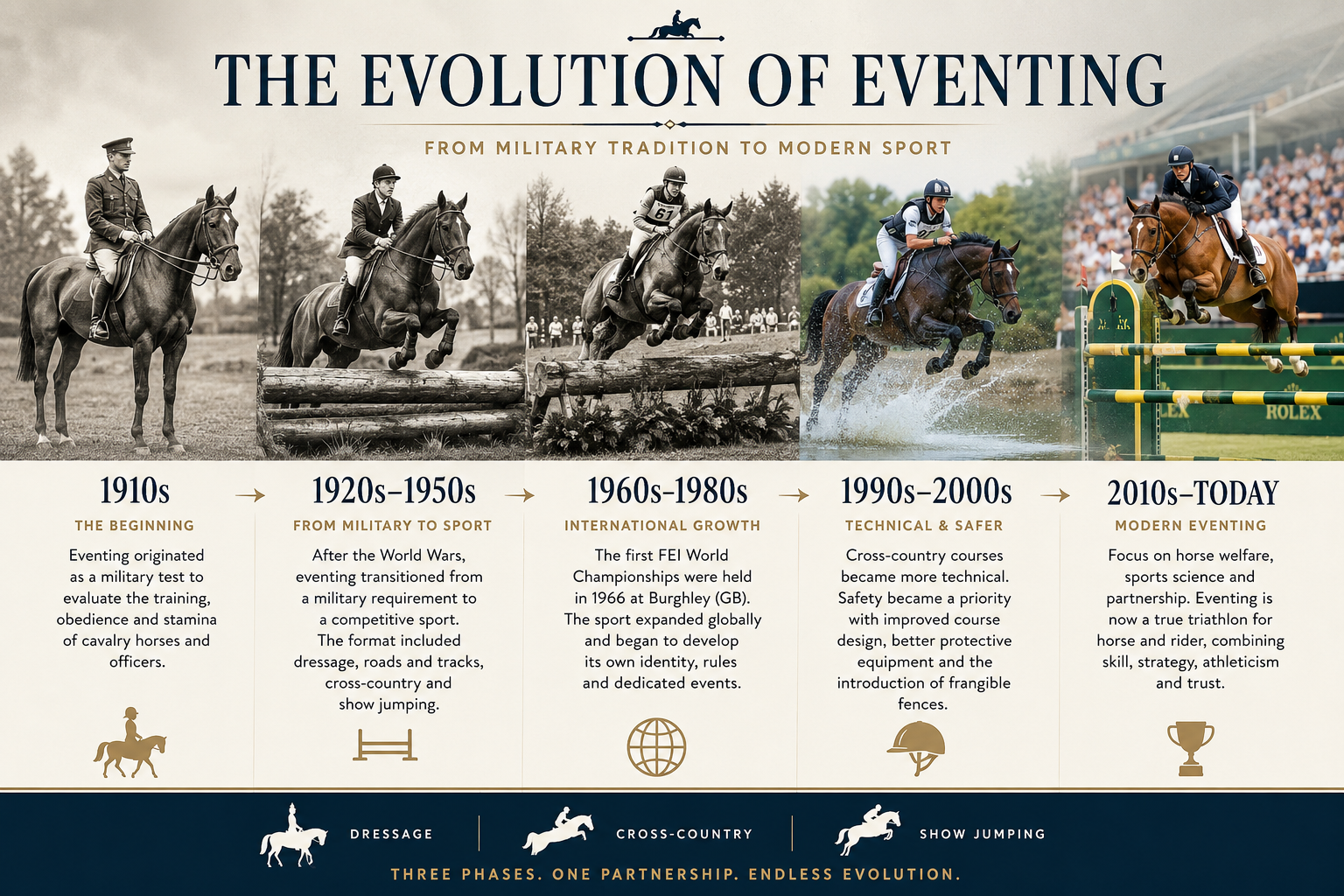
How more than a century of history transformed eventing into one of the most complete and demanding sports in the world
Eventing is often described as the ultimate test of the horse and rider partnership. Across three disciplines, dressage, cross-country and show jumping, it demands elegance, courage, athleticism, strategy and complete trust between two athletes.
Today, eventing is one of the most respected disciplines in international equestrian sport, with the FEI World Championships and Olympic Games representing the highest achievements a rider can reach. However, the modern sport looks very different from the competition that first appeared more than a century ago.
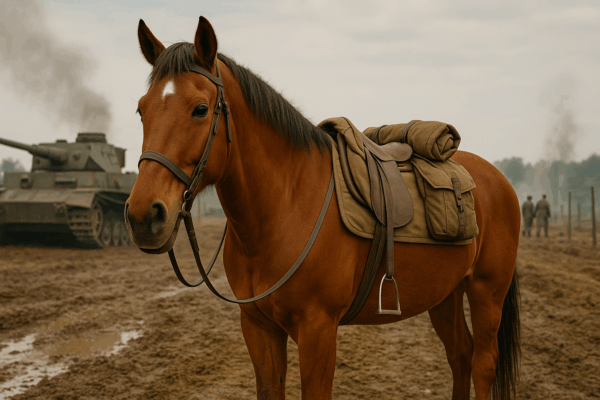
The eventing we know today was born from necessity rather than entertainment. Its roots are connected to military traditions, when horses were essential partners in warfare and needed to prove they could perform under every possible condition.
The Origins: A Test of the Complete Military Horse
At the beginning of the 20th century, cavalry forces relied heavily on horses. A military horse needed far more than a good gallop. It needed to remain obedient in formations, have the bravery to cross difficult terrain, the stamina to travel long distances and the athletic ability to jump obstacles encountered in the field.
Eventing was created as a way to identify the most complete horse and rider combinations.
The discipline made its Olympic debut at the 1912 Stockholm Games, originally under the name “Military”. The competition reflected the needs of cavalry rather than modern sport. Riders were military officers, and the horses were tested over several days through a demanding series of challenges.
The early format included dressage, endurance phases over roads and tracks, steeplechase and cross-country, followed by show jumping. The purpose was simple: to discover which horse could remain obedient, brave and physically capable after facing multiple challenges.
The event was not designed for entertainment. It was designed to prove reliability.
From War Horses to Sport Horses
After the First and Second World Wars, the role of cavalry began to disappear. As armies became more mechanised, eventing slowly changed direction.
The sport moved away from testing horses for military purposes and became focused on athletic achievement. Civilian riders entered the discipline, and the international eventing community began to grow.
The qualities required from the horse remained similar, but the reasons behind them changed. A horse no longer needed to survive battlefield conditions, but it still needed courage, intelligence, fitness and a strong partnership with its rider.
During this period, riders began to develop more structured training methods. Horses were no longer prepared only through experience and tradition. Conditioning, veterinary care and specialised coaching became increasingly important.
The Birth of the World Championships
A major turning point came in 1966 with the first FEI World Eventing Championships, held at Burghley House.
The creation of a dedicated World Championship confirmed eventing’s place as a global sport. Riders from different nations could now compete for the title of world champion outside of the Olympic Games.
During this era, eventing remained extremely demanding. Cross-country was often built around endurance, with long distances and significant physical challenges. The best horses were often those with tremendous stamina, courage and toughness.
Experience played a huge role. Riders developed a deep understanding of their horses and relied heavily on instinct, especially when navigating long cross-country courses.
The Rise of Professionalism
From the 1970s onwards, eventing began to enter a more professional era.
Training became more scientific, and riders started to understand that success depended on preparing the horse specifically for each phase of competition.
Dressage became more important because penalties earned in the first phase could determine the final result. Riders worked to improve suppleness, obedience and balance, rather than treating dressage simply as the opening stage before the “real” competition began.
Cross-country also became more technical. It was no longer only a test of speed and endurance. Riders needed to make careful decisions about pace, lines and combinations. The relationship between horse and rider became increasingly important, as successful combinations needed communication and trust at every fence.
At the same time, breeding programmes began to change the type of horse seen at the highest level. Traditional thoroughbred influence remained important for speed and stamina, but warmblood breeding introduced improvements in movement, jumping ability and rideability.
The modern event horse began to emerge.
Safety Becomes a Priority
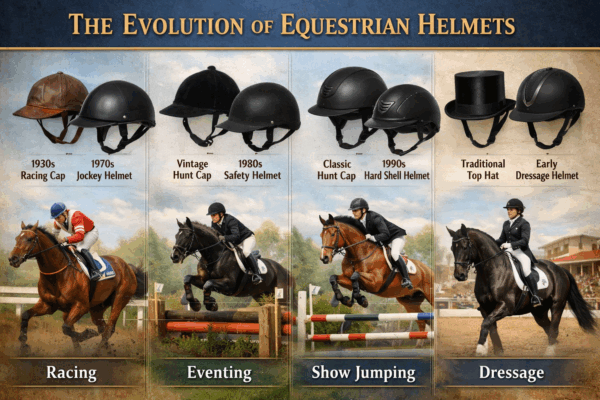
As eventing became faster and more competitive, concerns surrounding safety became increasingly important.
Cross-country has always been the defining phase of eventing, but the sport recognised the need to continue improving safety without removing the bravery and challenge that make the discipline unique.
During the 1990s and early 2000s, major changes were introduced in course design, fence technology and competition rules.
Courses became more technical rather than simply longer. Designers focused on creating questions that tested accuracy, balance and decision making rather than relying only on speed.
Safety technology also developed significantly. The introduction of frangible and deformable fence systems allowed certain obstacles to collapse under specific forces, reducing the risk of serious accidents.
The philosophy of modern eventing became clear: challenge the horse and rider, but respect their safety.
The Modernisation of Competition
One of the biggest changes in recent decades has been the transformation of the competition format itself.
Historically, eventing included long endurance sections with roads and tracks before the cross-country phase. These phases reflected the original military purpose of the sport, testing whether horses could travel long distances and remain competitive.
Over time, these sections were removed from Olympic and championship formats.
The modern competition became shorter and more intense. Instead of testing endurance over many kilometres, cross-country began testing precision, technical skill and strategic thinking.
This created a different type of event horse. The successful modern horse must still have stamina and bravery, but it must also have exceptional balance, careful jumping technique and the ability to recover quickly between phases.
The Role of Science and Technology
Modern eventing has embraced advances in science.
Today, elite riders work with teams that include veterinarians, physiotherapists, nutritionists and performance specialists. Training programmes are carefully planned around each horse’s physical condition and individual needs.
Technology has also changed preparation. Riders use video analysis, fitness monitoring and detailed performance records to understand their horses better than ever before.
The focus has shifted from simply producing a tough horse to creating a complete athlete capable of competing safely and consistently at the highest level.
The Changing Event Rider
The role of the rider has evolved just as much as the horse.
Earlier generations often relied on experience, courage and instinct. Those qualities remain essential, but today’s riders must also be trainers, athletes and managers.
The modern event rider needs to understand biomechanics, conditioning, competition strategy and horse welfare.
The best riders are not only those who can ride a difficult cross-country course. They are those who can develop a horse from the early stages of training to the highest levels of international competition.
The Event Horses of Today
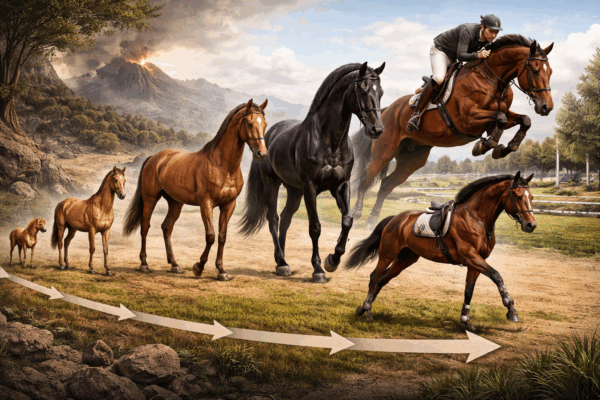
The modern event horse represents decades of careful development.
While early event horses were often selected primarily for toughness and stamina, today’s top horses are bred and produced as complete athletes.
They must have the movement required for high-level dressage, the bravery required for cross-country and the technique required for show jumping.
Some of the most famous event horses in history, including Charisma ridden by Mark Todd and La Biosthétique Sam FBW ridden by Michael Jung, represent the perfect combination of talent, trust and preparation.
Eventing Today and Tomorrow
More than 100 years after its creation, eventing continues to evolve.
The sport has moved from military necessity to international competition, from instinct-based preparation to scientific training, and from endurance-focused challenges to technical precision.
Yet the foundation remains unchanged.
At its heart, eventing is still about the relationship between horse and rider. It celebrates the ability to work together, overcome challenges and perform across completely different tests of skill.
From the first cavalry horses to today’s World Championship athletes, eventing has always represented the search for the complete partnership. The sport has changed with the times, but the connection between horse and rider remains the reason it continues to capture audiences around the world.
© Rights Reserved.