Sustainable Equestrian Sport: How Earth Day Highlights a Greener Future for Horses, Competitions, and Arena Footing
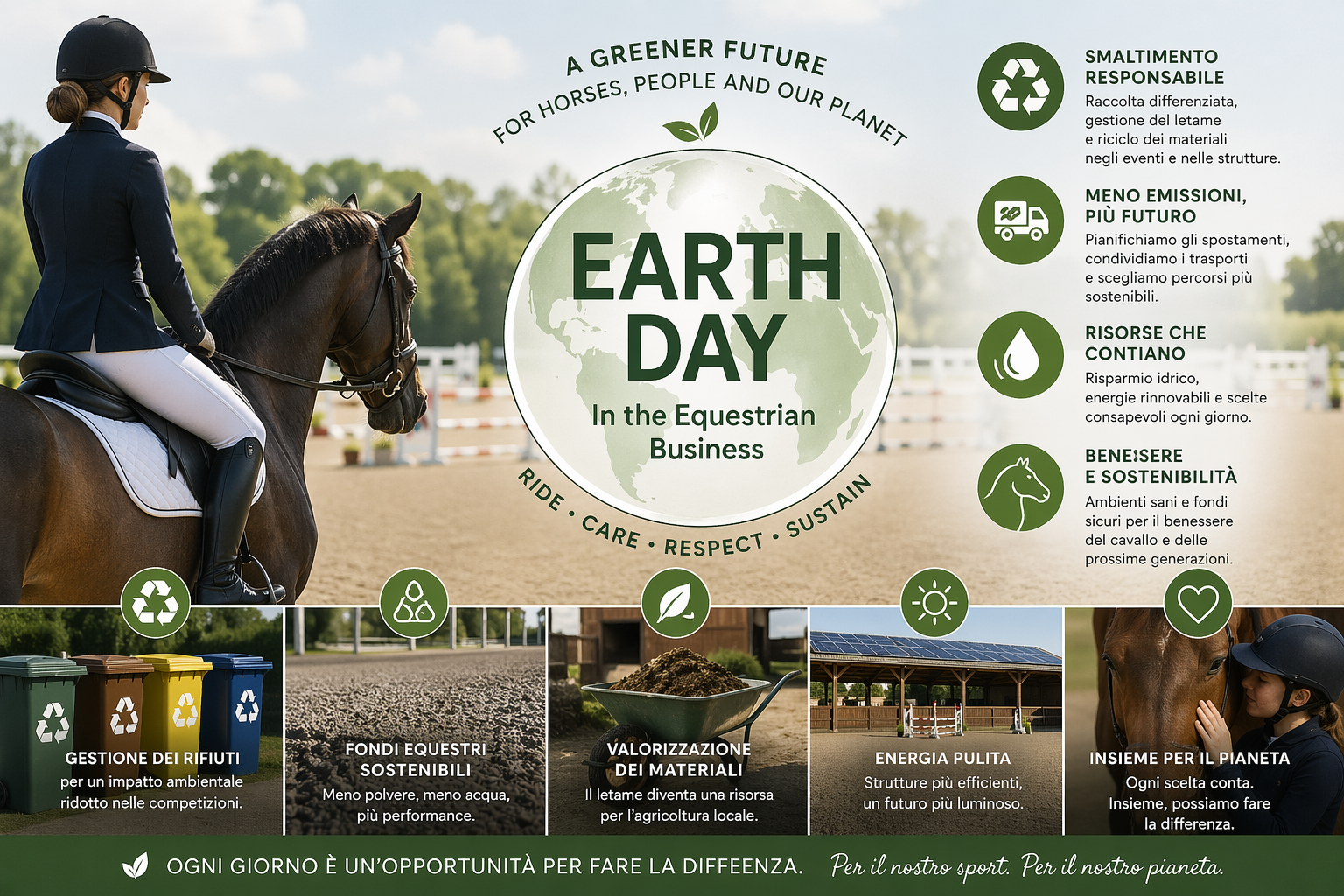
From smarter waste disposal and reduced transport emissions to sustainable horse footing, the equestrian world is reshaping its environmental impact. Earth Day brings focus to how industries adapt to environmental demands, and the equestrian world is no exception. Horses depend on land, water, and consistent care, so sustainability is not optional. Over the past decade, equestrian sport has moved toward more responsible practices that reduce environmental impact while maintaining performance standards.
Sustainability in Equestrian Competitions and Events
Equestrian competitions have traditionally produced high volumes of waste. Today, organizers are introducing structured systems for waste separation and recycling. Clear signage, designated disposal areas, and partnerships with local waste services help manage materials efficiently.
The concept of smaltimento, or proper waste disposal and treatment, has become central. Competitions now plan for manure management, recycling of plastics and packaging, and safe handling of hazardous materials such as veterinary waste. Many events also work with local farms to reuse manure, turning waste into a resource.
These measures reduce landfill use and support circular practices within local communities.
Reducing Transport Emissions in the Equestrian Industry
Transport remains one of the largest environmental challenges. Horses, riders, and equipment often travel long distances. To address this, riders are choosing regional competitions, sharing transport, and planning more efficient travel schedules.
Some equestrian organizations now promote local circuits, which reduce fuel consumption and lower emissions. Even small changes in travel planning can lead to measurable reductions in environmental impact.
Sustainable Stable Management Practices
Stable management has evolved with sustainability in mind. Water conservation is a priority, with many facilities installing automatic drinkers and rainwater collection systems. These systems can reduce water waste significantly, especially in large yards.
Feed sourcing has shifted toward local suppliers, which lowers transport emissions and supports regional agriculture. Bedding materials have also improved. Recycled paper, wood pellets from certified sources, and low-dust alternatives reduce waste and improve composting efficiency.
These practices create healthier environments for horses while lowering operational costs.
Sustainable Horse Footing and Arena Surfaces
Horse footing is one of the most important and technical aspects of equestrian sustainability. Traditional sand arenas require frequent watering, leading to high water usage and inconsistent surface quality.
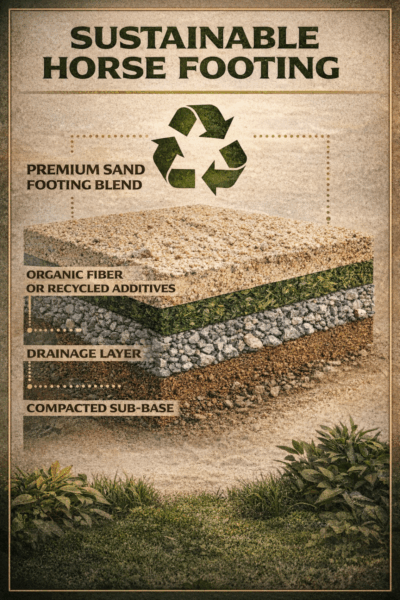
Sustainable horse footing systems are designed to reduce water consumption and improve durability. Many modern arenas use sand combined with stabilizing fibers or organic materials. Some include recycled textiles or wax-coated sand to bind particles and control dust.
These systems can reduce water use by up to 50 percent, depending on climate and maintenance. Proper base construction and drainage also play a critical role. A well-built foundation prevents material loss, extends surface lifespan, and reduces environmental impact.
Maintenance practices have also improved. Regular leveling, controlled watering, and moisture monitoring help maintain consistent footing conditions and reduce the need for frequent material replacement.
Recycling and Reuse of Arena Materials
Another key development is the reuse of footing materials. Instead of discarding worn surfaces, many facilities now recycle and repurpose them for secondary arenas or landscaping.
This approach reduces the need for new raw materials and lowers disposal costs. It also aligns with broader sustainability goals by minimizing waste and extending the life cycle of existing resources.
Horse Welfare and Environmental Responsibility
Sustainability in equestrian sport directly affects horse welfare. Poor footing and unstable environments increase the risk of injury. High-quality, well-maintained surfaces support soundness and reduce veterinary intervention.
By investing in sustainable materials and practices, facilities create safer conditions for horses and promote longer athletic careers.
The Future of Sustainable Equestrian Sport
The equestrian world continues to evolve with sustainability at its core. Digital tools reduce paper use through online entries and scoring systems. Energy-efficient lighting and renewable energy sources are becoming more common at major venues.
These changes show measurable results. Reduced water consumption, lower waste production, and longer-lasting materials all contribute to a more sustainable model.
Earth Day serves as a reminder that equestrian sport relies on natural resources. By adopting responsible practices across competitions, stables, and arena design, the industry is building a future that supports both performance and environmental care.
© Rights Reserved.