From Six Events to a Global Stage: The History of the Longines Global Champions Tour
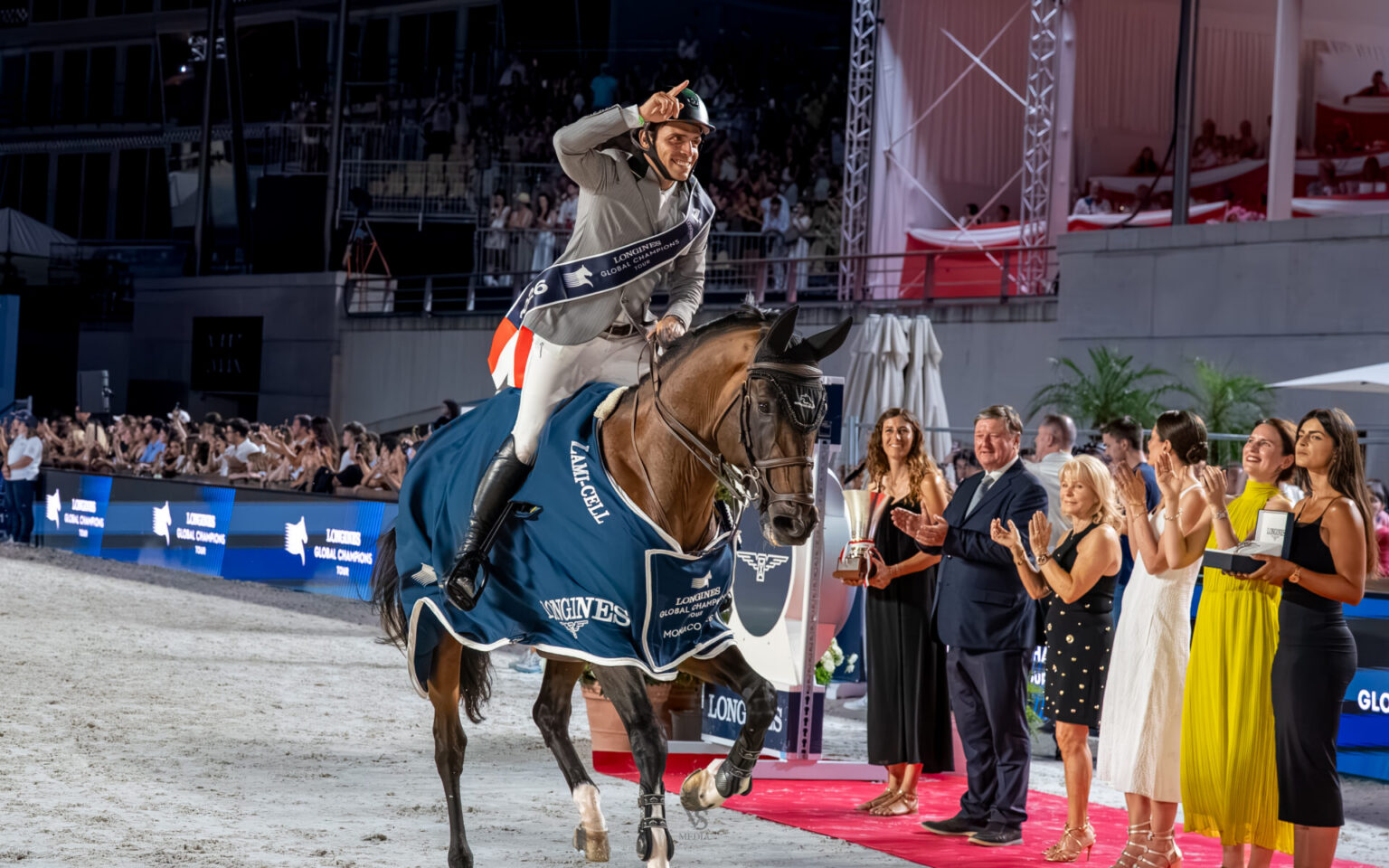
In 2006, an ambitious idea set out to change the landscape of international show jumping. Jan Tops envisioned a circuit that would bring together some of the world’s most prestigious competitions, creating a championship where the best riders and horses would compete across an international calendar. Twenty years later, the Longines Global Champions Tour has become one of the most recognisable series in equestrian sport. We look back at its origins, the first six destinations and the journey that transformed it into a global championship.
The vision of Jan Tops: A new direction for show jumping
The story of the Longines Global Champions Tour began in 2006, when former Dutch Olympic show jumper Jan Tops decided to bring a new vision to international show jumping.
Following a successful career at the highest level, highlighted by his team gold medal at the 1992 Barcelona Olympic Games, Tops had developed a deep understanding of the sport, both from a competitive and organisational perspective.
His ambition was to create a circuit that would bring together some of the most prestigious competitions on the international calendar, offering the world’s leading riders and horse owners new sporting and commercial opportunities.
At the time, show jumping already had a number of historic and highly regarded competitions, but there was no unified championship connecting them through a structured international series, with an overall ranking and a title to compete for at the end of the season.
Tops also recognised the potential to increase the commercial value of the sport, improve television coverage and introduce show jumping to a wider audience.
The idea was to develop a model inspired by international sports such as tennis and golf, with high-level competitions, significant prize money and a consistent presence in major international markets.
This was the beginning of the Global Champions Tour, with the ambition of connecting some of the world’s leading show jumping competitions into one championship.
2006: The first six destinations
The inaugural season officially began on 5 March 2006 in Wellington, Florida, where American rider Norman Dello Joio won the opening Grand Prix.
The original calendar featured six events across the United States and Europe:
- Wellington, USA.
- Cannes, France.
- Monte Carlo, Monaco.
- Estoril, Portugal.
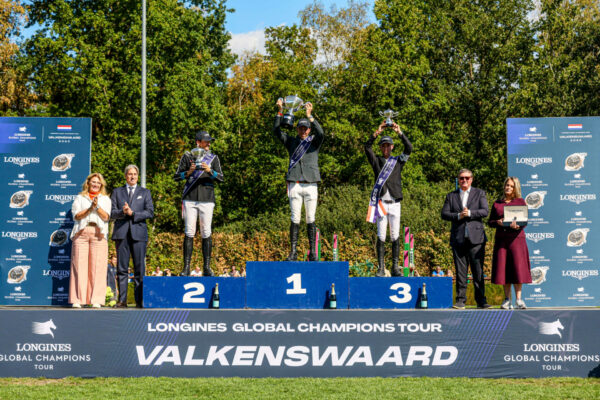
- Valkenswaard, The Netherlands.
- Lanaken, Belgium.
The choice of venues was carefully considered. These were already established competitions within the international equestrian calendar, with strong organisational foundations and the ability to attract some of the world’s leading combinations.
The circuit offered a total prize fund of more than €2.5 million, alongside an additional €600,000 bonus for the top eight riders in the overall championship standings.
The competition format was also designed with television audiences in mind. In the Grand Prix classes, the best 18 combinations qualified for a second round, creating an additional sporting highlight for spectators.
The first season concluded in Lanaken, where Belgian rider Ludo Philippaerts claimed the inaugural Global Champions Tour championship title.
That same year, the Grand Prix in Valkenswaard was won by Dutch rider Leopold van Asten aboard VDL Groep Fleche Rouge.
Valkenswaard would become increasingly important in the years that followed, establishing itself as the home of the circuit and a central location for Jan Tops’ project.
International expansion: Arezzo, Turin and new destinations
The success of the inaugural season quickly opened the door to an expanded calendar.
In 2007, the circuit grew from six to eight events, introducing new destinations and extending its international presence. Among them was Arezzo, Italy, which became one of the first Italian venues to host the Global Champions Tour.
The Arezzo Equestrian Centre welcomed the circuit for three consecutive seasons, from 2007 to 2009. During this period, the Italian venue hosted some of the world’s leading riders. Meredith Michaels-Beerbaum won the Grand Prix in both 2007 and 2008, while Marco Kutscher claimed victory in 2009 aboard Cash.
In 2010, the circuit returned to Italy, this time at La Mandria, in Venaria Reale near Turin. The event took place from 20 to 23 May, with the Grand Prix on 22 May once again going to Marco Kutscher aboard Cash.
These early Italian editions became an important chapter in the history of the circuit, preceding the return of Italy to the calendar with the arrival of Rome in 2015.
Meanwhile, the Global Champions Tour continued to explore new markets. Doha, Qatar, strengthened the circuit’s presence in the Middle East, while the addition of Shanghai in 2014 marked an important step into the Asian market.
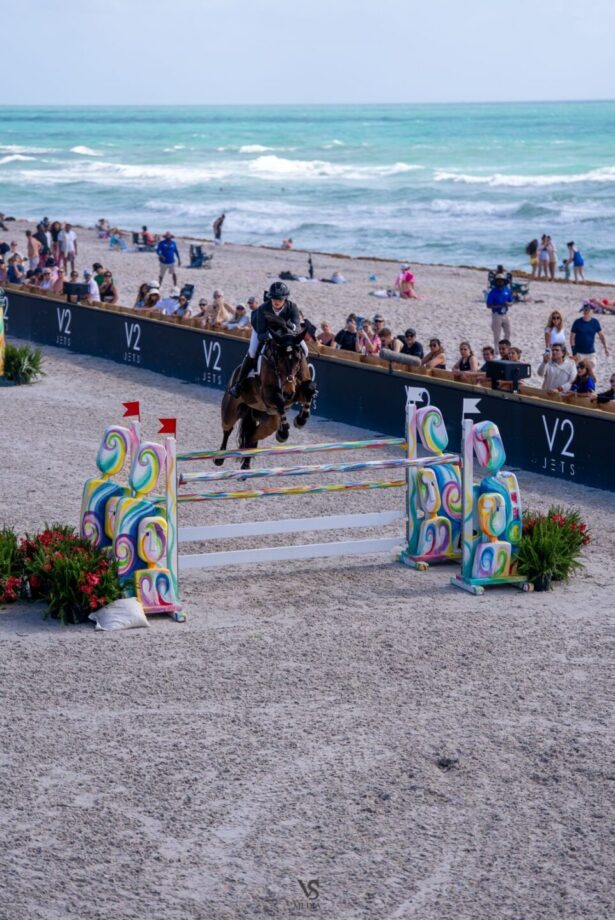
In 2015, Miami Beach joined the calendar, with an arena built directly on the beach, followed by Mexico City in 2016.
The choice of destinations gradually became one of the circuit’s defining characteristics. The ambition was to bring show jumping to locations recognised beyond the equestrian world, creating a connection between sport, cities and international audiences.
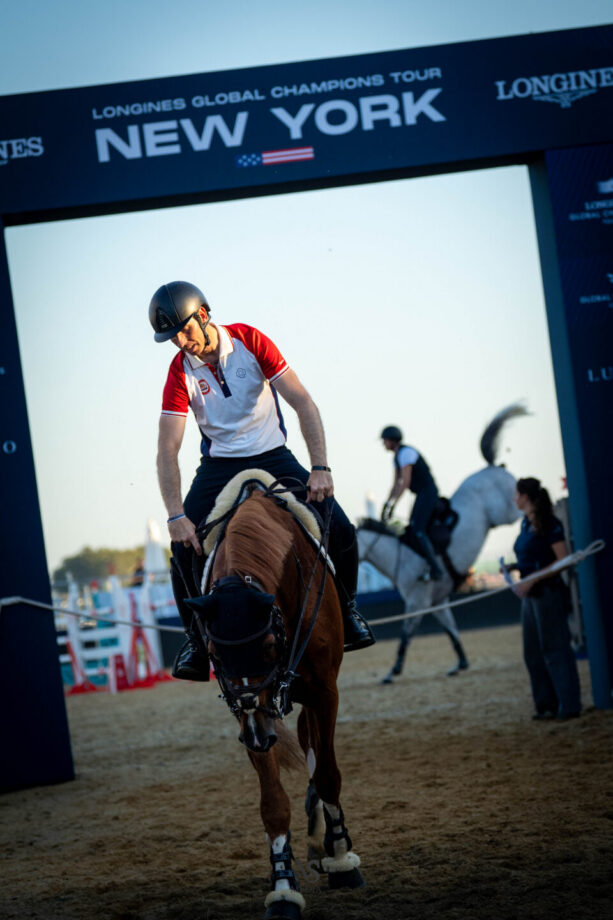
Paris, with the Eiffel Tower as its backdrop, Monaco with its famous harbour, as well as Rome, London and New York, became some of the most recognisable settings of the Tour.
Organising temporary arenas in these urban locations required an increasingly complex operation, involving horse transportation, stabling, arena construction, logistics and international television production.
The Global Champions Tour was developing into something new, with each destination becoming an integral part of the sporting experience.
2013: Longines becomes Title Partner
Another defining moment in the history of the circuit came in 2013, when Longines became its Title Partner and Official Timekeeper.
The partnership brought together two organisations with a long-standing connection to equestrian sport. For Longines, the Swiss watchmaker founded in 1832, the collaboration represented a natural continuation of its involvement in equestrian disciplines, which dates back to the nineteenth century.
From that moment, the circuit officially became the Longines Global Champions Tour.
The partnership helped strengthen the international profile of the championship, connecting the brand with a competition associated with sporting excellence, precision and prestigious international destinations.
Longines also became a central part of the Grand Prix prize-giving ceremonies, with watches from its collections presented to the winners.
The partnership continues today and has been renewed until 2032, confirming both organisations’ long-term commitment to the development of international show jumping.
2016: The creation of the Global Champions League
In 2016, Jan Tops’ project took another major step forward with the launch of the Global Champions League (GCL).
While the Global Champions Tour had originally been conceived as an individual championship, the new competition introduced an entirely different dimension: team sport.
For the first time, riders from different nationalities could compete together under a shared team identity, representing privately owned teams throughout the season.
The new format introduced another level of competition, with team rankings, points and a championship title decided across the international calendar.
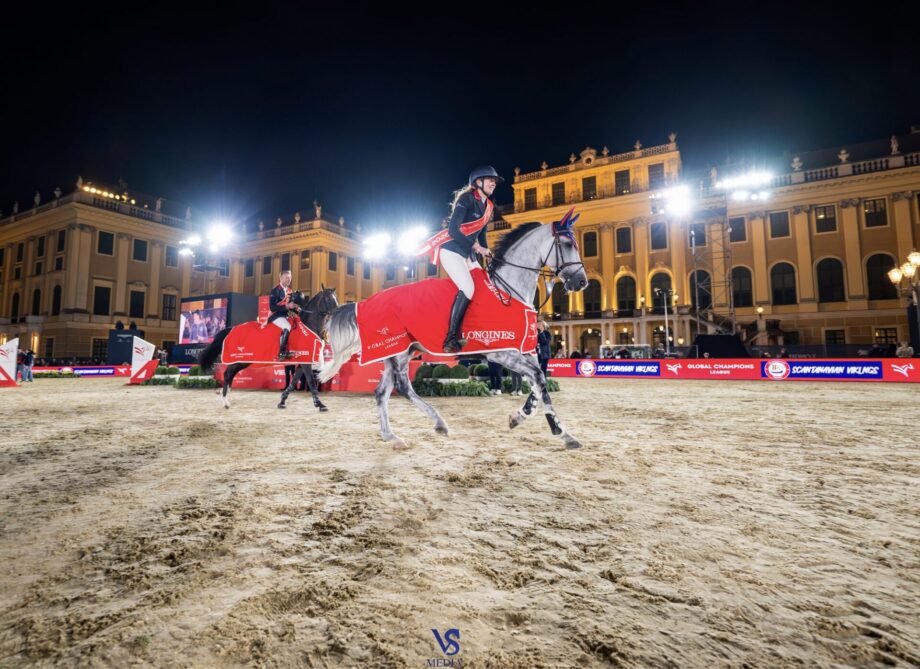
New sporting rivalries and recognisable team identities began to emerge, with names such as Valkenswaard United, Monaco Aces, Rome Gladiators and Scandinavian Vikings becoming part of the circuit.
The GCL also introduced a new commercial structure, involving team owners, investors, sponsors and team managers in a project that further expanded the opportunities available within international show jumping.
2018: The GC Prague Playoffs and a new season finale
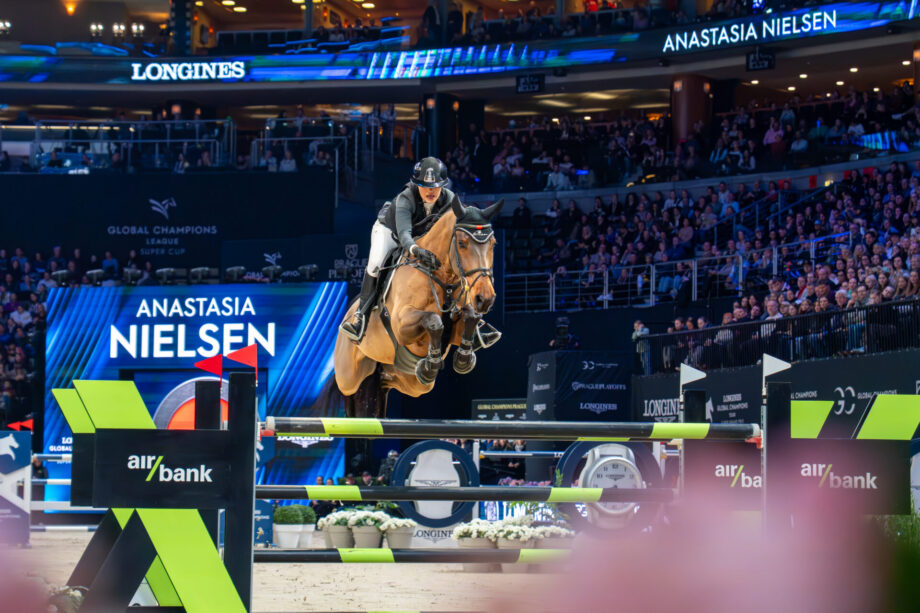
In 2018, another major development arrived with the introduction of the GC Prague Playoffs.
The event created a dedicated end-of-season destination for Global Champions competitions, bringing together the leading teams of the season and the winners of the Longines Global Champions Tour Grand Prix.
The ambition was to create a season finale that would bring together some of the year’s most anticipated competitions in one major event.
The choice of Prague’s O2 Arena also allowed show jumping to be presented in a completely different environment from the traditional outdoor venues of the circuit.
The Playoffs quickly became another defining element of the Global Champions identity, adding a major event to the international calendar.
The destinations: A defining part of the Tour’s identity
Over the years, the destinations have become one of the most recognisable features of the Longines Global Champions Tour.
The circuit has taken show jumping to some of the world’s most iconic locations, with temporary arenas built alongside historic landmarks, harbours, parks and city centres.
Paris has offered the Eiffel Tower as a backdrop, Monaco has brought horses to the shores of Port Hercule, while Rome has hosted the circuit at the Stadio dei Marmi and later at the Circus Maximus.
London, New York, Madrid, Cannes and St. Tropez have all contributed to a calendar in which every venue has its own identity.
Behind these settings is a complex organisational operation. Each event requires suitable facilities for horses and riders, arena construction, international transportation and services for spectators, sponsors and guests.
At the same time, the project has continued to invest in permanent facilities. Valkenswaard, in particular, has remained a central location, with the development of the Longines Tops International Arena, founded by Jan Tops and now one of the most important venues in the circuit.
2026: Twenty years of history and a global presence
In 2026, the Longines Global Champions Tour celebrates its twentieth anniversary.
From the original six competitions in 2006, the circuit has grown to include 17 destinations across 15 countries and four continents. Its development reflects the international growth of the project and its ability to reach new markets.
One of the most significant additions to the anniversary season is Cairo, Egypt, which joined the official calendar. From 22 to 24 October 2026, the world’s leading combinations competed in front of the Pyramids of Giza, one of the most recognisable historical landmarks in the world.
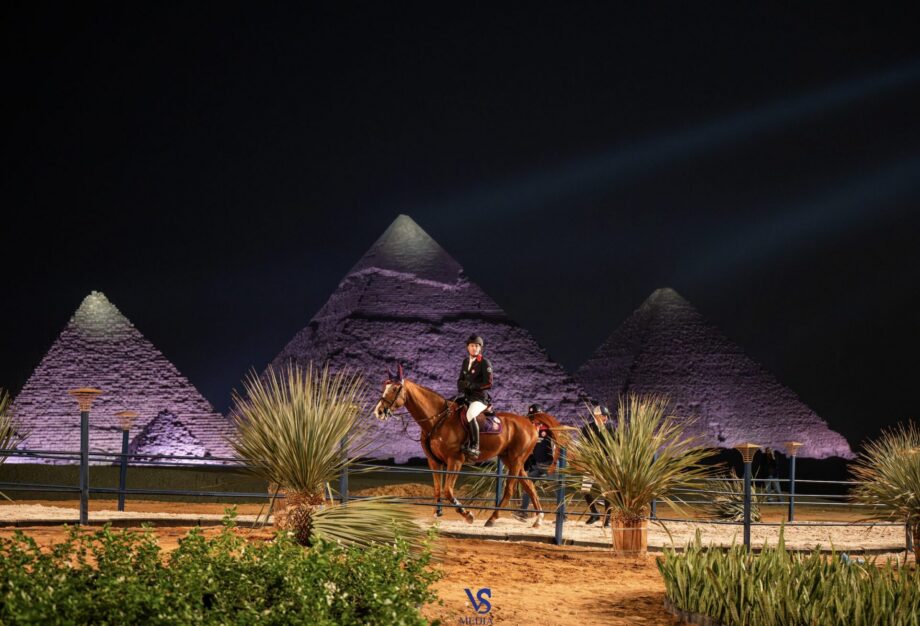
The new destination represents another step in the geographical expansion of the circuit and its ambition to bring show jumping to increasingly diverse settings.
The anniversary season also brought the circuit back to Valkenswaard, from 4 to 6 September, returning to the place where it all began twenty years earlier.
The 2026 calendar includes destinations such as Doha, Miami Beach, Mexico City, Shanghai, Madrid, Cannes, St. Tropez, Paris, Monaco, Riesenbeck, London, Valkenswaard, Vienna, Rome, Cairo and Rabat, before the GC Playoffs in Riy
ph VS media
© Rights Reserved.