The Importance of Hay Quality: Nutrition, Digestion and Respiratory Health in Horses
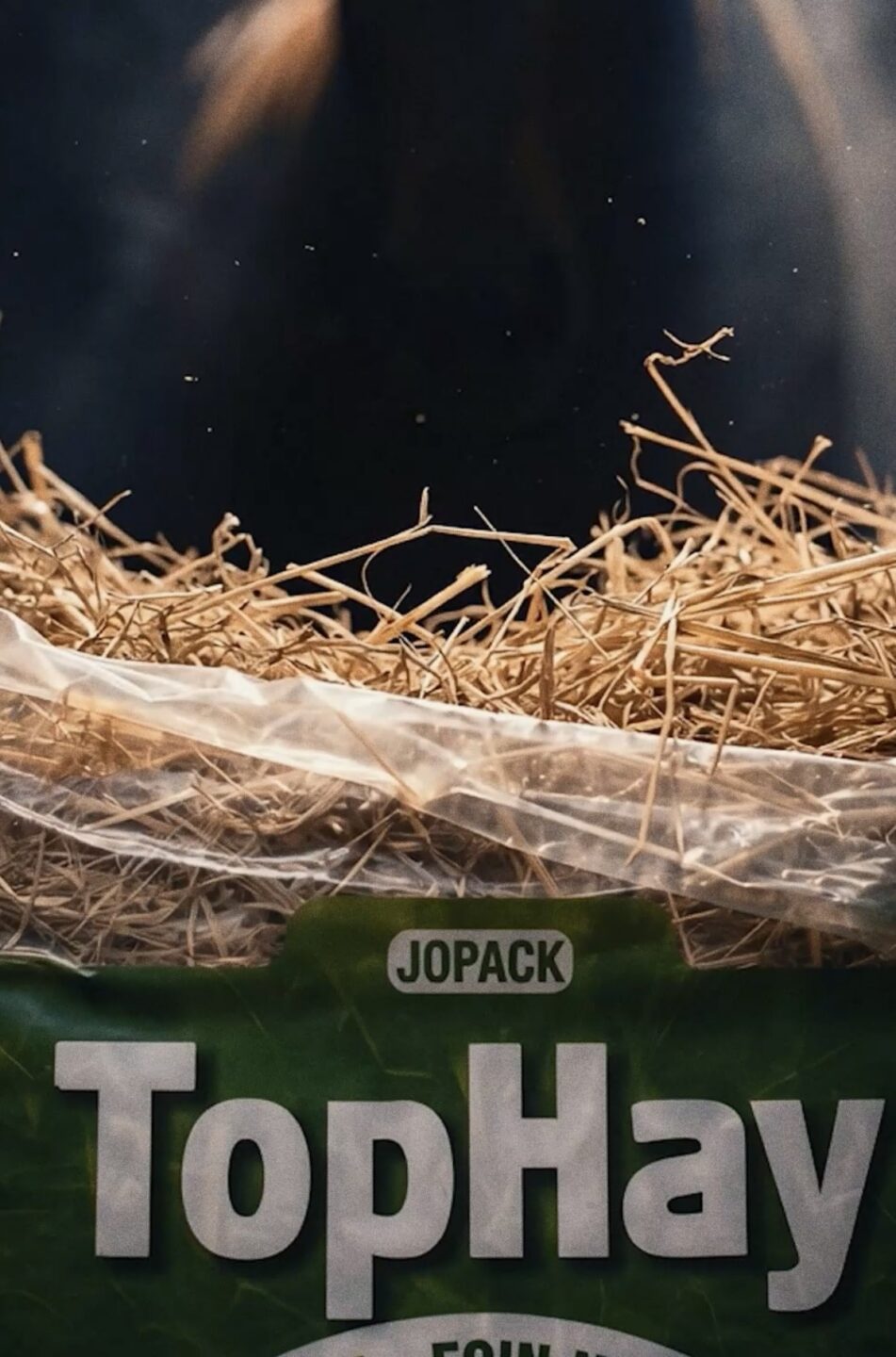
Hay is one of the foundations of equine nutrition. Its nutritional composition, fibre structure and hygienic quality influence everything from digestive function to respiratory health. We spoke with Bjorn Scheerling, Sales Manager at Jopack, about what makes good-quality hay, how it is produced and why choosing the right forage matters.
For most horses, hay represents a significant part of their daily diet. It provides essential fibre, supports normal digestive function and encourages natural chewing behaviour. Yet, the quality of hay can vary considerably depending on the grass, harvesting conditions, storage and processing methods.
While nutritional values are often the first thing considered when selecting forage, there is another factor that deserves equal attention: its hygienic quality. Dust, mould and other airborne particles can affect the respiratory system, particularly in horses spending long hours in stables.
To understand what goes into producing good-quality hay, we spoke with Bjorn Scheerling, Sales Manager at Jopack, a Belgian company specialising in agricultural products for animal nutrition.
More than just a source of fibre
The horse’s digestive system is designed to process fibrous plant material. Unlike humans, horses rely heavily on microbial fermentation in the hindgut to break down fibre and obtain energy.
This makes forage an essential part of their daily feeding routine. Long-stemmed hay encourages chewing, stimulates saliva production and helps maintain normal digestive activity.
As Bjorn explains, the selection of grass and the structure of the finished product are important considerations when producing hay for horses.
One example is long-fibre meadow hay. Its structure encourages prolonged chewing, which increases saliva production. Saliva helps buffer stomach acid and supports the digestive process.
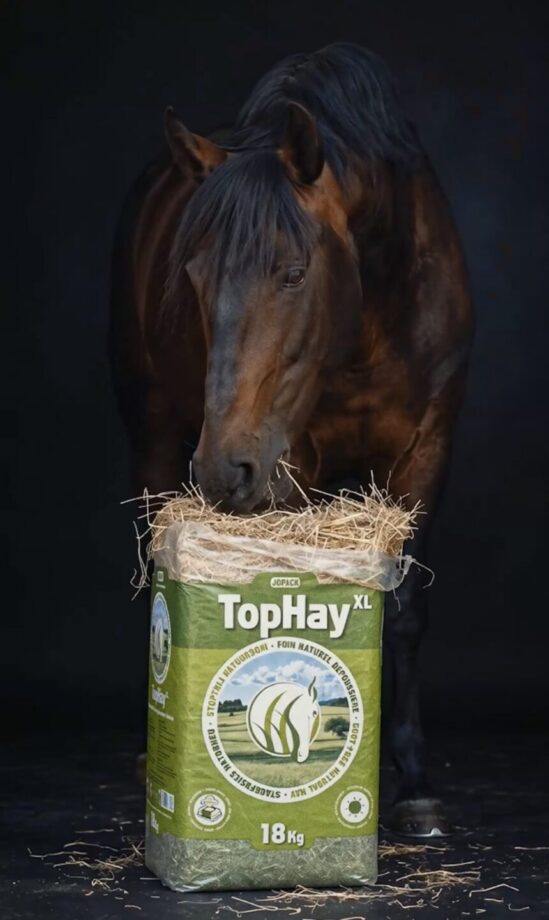
Jopack’s TopHay, for example, is made from 100% natural meadow hay, with a focus on long fibres and a relatively low protein content. Its published nutritional analysis indicates approximately 5–8% protein, 30% crude fibre and a dry matter content above 85%.
These values illustrate why understanding the nutritional composition of forage matters. The ideal hay depends on the individual horse, its workload, body condition and the rest of its diet.
The connection between hay and respiratory health
Respiratory health is another important consideration when selecting forage.
Dust and mould spores found in hay can become airborne during feeding. When inhaled regularly, these particles can irritate the respiratory tract and contribute to airway inflammation.
Horses affected by equine asthma or other respiratory sensitivities can be particularly vulnerable. Common signs include coughing, nasal discharge, increased respiratory effort and reduced exercise tolerance.
Reducing exposure to airborne particles is therefore an important part of respiratory management.
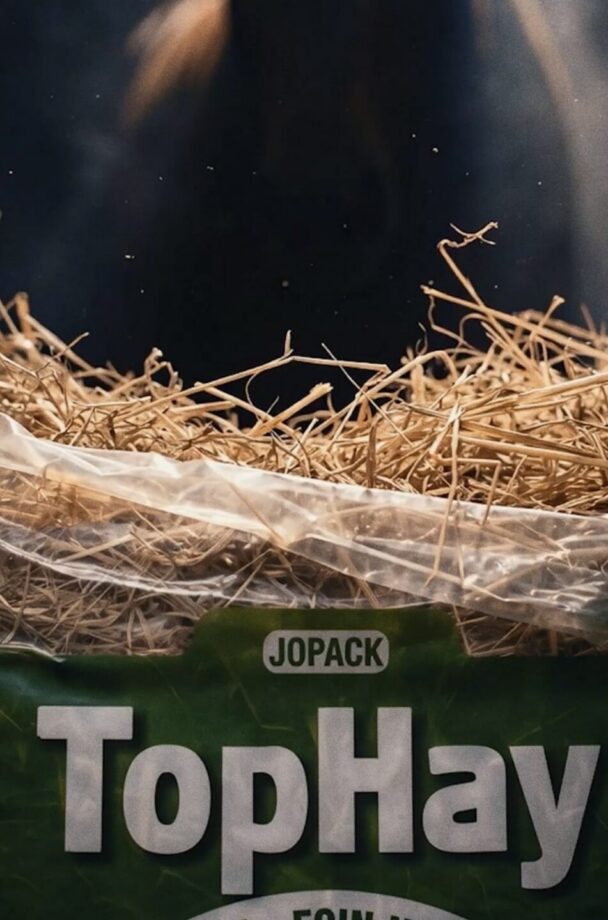
One consideration is mechanically dust-extracted hay. Through processing methods that remove dust and unwanted foreign materials, the amount of airborne debris associated with feeding can be reduced.
Bjorn explains that Jopack’s TopHay undergoes mechanical dedusting, with unwanted materials such as small stones also removed during processing.
The objective is to provide a cleaner forage product, particularly relevant for horses kept in environments where dust exposure is already a concern.
However, dust reduction should not be confused with treating respiratory disease. Horses with diagnosed respiratory conditions may require additional management measures, including soaking or steaming forage, improved stable ventilation and veterinary supervision.
It is also important to distinguish respiratory sensitivities from other types of allergies. Low-dust hay can help reduce exposure to airborne irritants, but it does not eliminate pollen-related or other allergic reactions.
What happens before the hay reaches the stable?
The quality of hay begins in the field. Grass selection, soil conditions, harvesting techniques and weather all influence the final product.
Jopack sources and harvests its hay in France, where its production currently covers more than 5,000 hectares annually.
For Bjorn, the weather remains one of the biggest variables in the process.
“This year has been particularly difficult because it has been far too dry. We love the sun, but this year we will definitely be praying for a little bit more rain,” he explains.
The harvesting season requires the right balance of weather conditions. Grass needs suitable growing conditions, while the hay must be sufficiently dry before baling to limit the risk of mould development during storage.
Once harvested, the processing stage becomes equally important. Proper drying, cleaning and storage all contribute to maintaining the hygienic quality of forage.
Understanding the nutritional profile
Not all hay offers the same nutritional composition. Protein, fibre, energy, minerals and sugar content can vary depending on the grass species, maturity at harvest and growing conditions.
For horse owners, these differences are important when adapting feeding programmes.
For example, horses in light work may have different energy requirements from those competing regularly. Horses prone to weight gain or certain metabolic conditions may also require particular attention to forage intake and nutritional composition.
Fructan content is another factor worth considering, especially when managing horses susceptible to pasture-associated metabolic problems.
Jopack’s published analysis for TopHay lists a fructan content below 5%, alongside its fibre and protein values.
Nevertheless, no single nutritional profile is suitable for every horse. Forage should always be considered as part of the complete ration, with adjustments based on the horse’s individual requirements.
Practical considerations: From the bale to the feeding routine
Beyond nutritional composition, the physical quality and presentation of hay influence everyday stable management.
Bale size, storage conditions and ease of handling can all make a difference, particularly in professional yards managing several horses.
During our conversation, Bjorn also highlighted the different packaging formats available, including 13 kg and 18 kg bales, as well as a newer 125 kg format intended to facilitate larger-scale distribution.
These formats reflect the different requirements of individual horse owners, breeding establishments and professional competition yards.
Once delivered, hay should be stored in a dry, well-ventilated area, protected from moisture and contamination. Even good-quality hay can deteriorate if stored incorrectly.
For horses with respiratory sensitivities, feeding practices also matter. Offering forage close to ground level, maintaining good stable ventilation and keeping dusty activities away from horses can help reduce exposure to airborne particles.
Five facts from the world of hay production
When asked to share five interesting facts about Jopack, Bjorn offered a glimpse into the agricultural side of the business.
The company is based in Belgium, while its hay production takes place in France, covering more than 5,000 hectares each year.
This year’s dry weather has made harvesting particularly challenging, highlighting just how dependent hay production remains on seasonal conditions.
The company also works with several bale formats, from smaller everyday packages to a larger 125 kg option.
Finally, there is a story behind the name itself. Jopack takes its name from its founder, Jose, who combined his name with the word “pack” to create the company name.
A daily choice with a long-term impact
Hay is often treated as a routine part of stable management, but its quality deserves careful consideration.
Fibre content, nutritional composition, dust levels, storage and feeding methods all contribute to the overall suitability of forage for an individual horse.
For horses with respiratory sensitivities, reducing exposure to dust and mould is particularly important. For all horses, providing appropriate fibre supports normal digestion and helps maintain a balanced feeding routine.
Ultimately, choosing hay should involve looking beyond its appearance. Understanding where it comes from, how it has been processed and what it contains can help horse owners and professionals make better-informed feeding decisions.
Because good equine nutrition starts with the quality of what goes into the feed bucket every day.
© Rights Reserved.