Building for the future at Ballypatrick with avantea
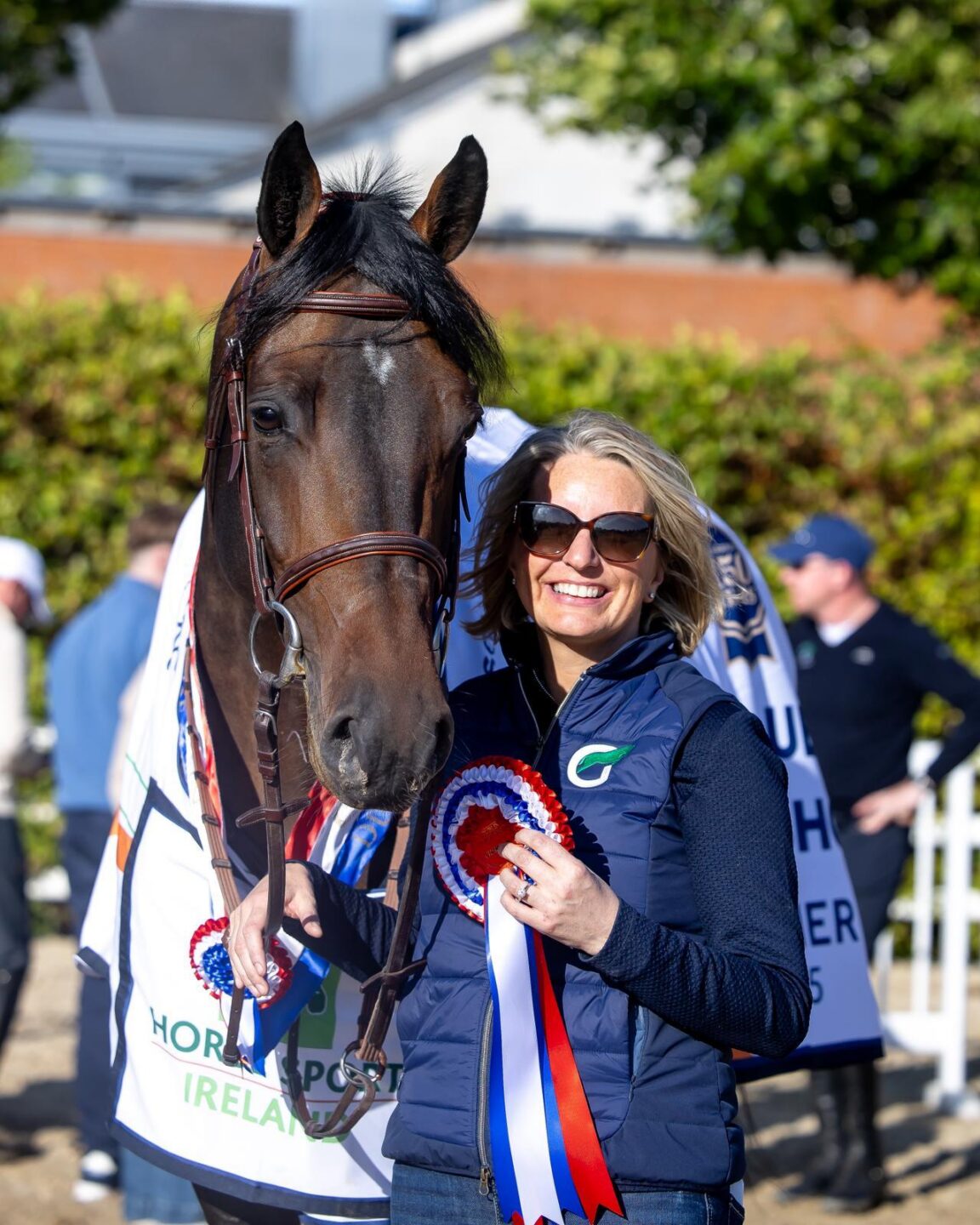
On the final day of the FEI WBFSH Jumping World Breeding Championship for Young Horses, Ballypatrick Stables achieved something exceptional: two of the three world titles went to the Irish stable. Sam Widger claimed the five-year-old championship with the BWP-bred Vintage van de Heyveldhoeve, while Niamh McEvoy won the six-year-old title aboard the Zangersheide-bred Easy Peasy Indebus Z. Both horses were purchased rather than bred at Ballypatrick, but their victories perfectly illustrate the philosophy of the Broderick family: identifying quality, developing young horses patiently and constantly seeking to raise the standard.
Alongside sourcing talented horses, Ballypatrick has built an increasingly ambitious breeding programme of its own. Cheryl Broderick is closely involved in this part of the operation and works alongside her brother Greg Broderick and the stable’s riders to breed the next generation of sport horses.
Five generations of horses
“There have been five generations of Brodericks on our farm in Ballypatrick, Tipperary, and horses have always been part of the farm,” Cheryl explains. “However, it was probably my father’s generation that began breeding horses in a more structured way. We had mares that were considered good at the time, although when you look back with the knowledge and standards we have today, they probably would not have been good enough anymore.”
The breeding programme began to evolve when Greg started competing at a higher level and rode several talented mares. Having those mares in the stable prompted the family to consider how they could preserve their genetics while continuing to develop Ballypatrick’s breeding operation. “We started asking ourselves why we should not make greater use of the good mares already in our yard. We wanted to improve the breeding programme, look for stronger dam lines and better stallions, and produce offspring from the mares Greg was competing. That was when we started using embryo transfer.”
This was especially important because Ballypatrick is also a commercial stable. Many of the successful mares ridden by Greg were eventually sold, meaning their valuable genetics could easily have been lost to the family. “Greg enjoyed a great deal of success in Ireland and internationally, particularly with mares. They were always very lucky for him. But because we are a selling yard, many of those mares were sold. We therefore needed to find a way to produce offspring from them and retain those lines. Embryo transfer gave us that opportunity.”
What began relatively modestly has since grown into a substantial operation, with Ballypatrick now breeding between seventy and eighty foals annually. OPU and ICSI have added another dimension to the programme.
Opening new doors through assisted reproductive technologies
“When we first started with embryo transfer, it seemed like a very big step, whereas today it has become second nature. It was similar with OPU and ICSI. You hear so many different opinions that it can make you hesitant. In the end, however, the only way to form your own opinion is to try it yourself. That is what we did, and honestly, I think it is brilliant.”
Ballypatrick also uses OPU on mares that are actively competing. Cheryl has not experienced this as a problem, provided the mares are given sufficient time to recover. “You have to allow them a little quiet time, but our experience has been very positive. One of the greatest advantages of ICSI is the freedom it gives you in selecting a stallion. You can use stallions that are exclusively available for ICSI or older stallions whose semen is no longer available for conventional artificial insemination. It gives breeders access to some of the best bloodlines in the world, and that is incredibly valuable.”
Among the stallions used by Ballypatrick are Heartbreaker, Ermitage Kalone, United Touch S and Mylord Carthago. Accessing these stallions through conventional artificial insemination would not always be possible from Ireland. “Through Avantea, we have been able to use stallions that would otherwise not have been available to us. I genuinely believe this is taking our breeding programme to an entirely new level.”
Cheryl is nevertheless realistic about the unpredictability that remains an inherent part of breeding. Not every mare produces the same number of oocytes, nor does every OPU session result in embryos. “That is simply nature. Not every mare will produce many oocytes or embryos. But some of the combinations we have been able to create look exceptional on paper. They are the kind of foals you look forward to for an entire year. Through ICSI, we hope to produce even better-bred horses for the future.”
Ballypatrick has its own facilities where the OPU sessions can take place, which Cheryl believes helps reduce the stress placed on the mares. When they first began using OPU at Ballypatrick, they benefited from valuable advice and support from Christophe de Brabander. The family is also assisted by Dr John Haughey, Ballypatrick’s leading veterinarian. “He is exceptional at what he does. We are very fortunate to be surrounded by good people who are helping us establish this programme properly. Hopefully, some genuine superstars will emerge from it.”
The first ICSI generation
Although Ballypatrick’s own ICSI breeding program is still relatively young, the stable already has extensive experience with ICSI-bred horses. Greg regularly purchases embryos and young horses at auctions, allowing the family to follow their development from an early age. The first foals produced through Ballypatrick’s own ICSI program were born last year, marking an important milestone for the stable. “We have bought many implanted embryos, brought the recipient mares to Ireland and followed the entire process, from gestation through foaling and the subsequent development of the young horses. Because we generally retain them, we can follow them all the way through the Ballypatrick system.”
Some of the older ICSI-bred horses are now reaching an age at which they can be assessed over fences. “We have started loose-jumping several of them at home, and they are genuinely exciting. While we were here at the World Breeding Championship, the team at home brought in all our three-year-olds, many of which are ICSI-bred. I was really looking forward to getting home and loose-jumping them together with Greg.”
Alongside these younger prospects, Ballypatrick has already celebrated international success with its homebred horses. One of the most memorable examples is BP Goodfellas, who became world champion at Zangersheide in 2022 under Ger O’Neill. “That was incredibly special because he was bred by us. I have a soft spot for all our homebreds. Those horses will always be particularly close to my heart.”
Breeding for sport rather than fashion
Rather than breeding primarily for the fashionable foal market, Ballypatrick aims to produce horses for sport. Most foals are retained until the age of three before moving into the riding and competition side of the stable. When young horses are sold, Ballypatrick sometimes remains involved through a partnership. “We generally do not breed specifically for the commercial market. If your main aim is to sell foals, you need to select the stallions whose offspring are most popular at that particular moment. We take a different approach because we want to produce and develop the horses ourselves.”
Every mating is discussed with Greg and the riders, whose practical experience provides Cheryl with invaluable information. Because Greg has ridden many of the mares himself, he understands their strengths and weaknesses in the arena. “We consider what each mare needs. Perhaps she requires a stronger canter, a better front end or greater rideability. We then try to find the stallion that complements her and can improve the next generation. I am very fortunate that I work so closely with the riders because they give me a tremendous amount of feedback.”
The exceptional young riders at Ballypatrick are another important part of the system. With riders such as Niamh McEvoy, Sam Widger, Harry Wood, Morgan Carthy, Adam Carey, Milan Morssinkhof and Cassie Gorsline in the stable, Cheryl sees it as her responsibility to ensure that a continuous supply of talented horses is coming through. “We need to keep good horses underneath them. My job is to produce the best horses we can, using the strongest dam lines and crossing them with the best possible stallions. Of course, retaining so many foals is expensive, but it also allows us to learn from every horse and every generation.”
No difference in health
Health has been one of the most frequently discussed topics surrounding ICSI-bred foals. Before starting the programme, Cheryl heard the familiar questions: Would OPU be hard on the donor mare? Would she recover properly? Would the resulting foals be weaker, more susceptible to illness or more likely to have abnormalities?“For me, the only way to understand it properly was to experience it myself. Based on what we have seen so far, I do not notice any difference between conventionally conceived foals and ICSI foals.”
Ballypatrick previously X-rayed its young horses at the age of three but now does so at two. With such a large population on the farm, earlier screening provides the team with useful information and allows any potential issues to be recognised sooner. “We have followed many of these horses from their time in the uterus until they were born and subsequently grew up in our system. We have not seen any difference, and I am delighted about that because health was such a major topic of conversation before we began.”
Cheryl remains positive both about the welfare of the donor mares and the development of the resulting foals. “The mares recover very well, and we are being given a fantastic opportunity to breed the best horses we possibly can. The availability of stallions is second to none. So far, our experiences have been extremely positive, and I fully support the use of ICSI.”
Preserving the legacy of the mares
For Cheryl, the technology is not simply about producing more foals. Its real value lies in preserving the best mares, accessing exceptional stallions and making carefully considered breeding decisions for the future. “I am proud of what we have achieved at home. I am also delighted that our mares are being given the opportunity to produce the best offspring they can. Hopefully, their legacy will continue successfully at Ballypatrick for generations to come.”
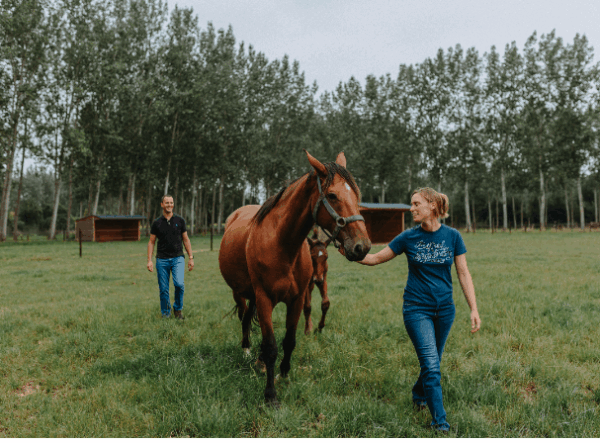
Photo courtesy by Cheryl Broderick
Adriana van Tilburg
© Rights Reserved.