
Pre-Competition Nutrition and Sports Performance: The Importance of Nutrition According to Sports Nutritionist Micaela De Maio

Sports nutrition is one of the most important aspects of athletic preparation. Nutrition, hydration, and energy management directly affect physical performance, mental focus, and recovery. We spoke with sports nutritionist Micaela De Maio, who works daily with athletes and patients to help them achieve their health and performance goals.
The professional journey of nutritionist Micaela De Maio
“I was not always passionate about sports and nutrition. This interest developed gradually alongside my academic journey.
During my Bachelor’s degree in Biological Sciences and Technologies, I became interested in sports, starting with CrossFit and later practicing amateur powerlifting. That was when I realized how closely connected physical activity and nutrition are, and how essential they are for a healthy lifestyle. This belief still guides my work today, and it is something I constantly try to share with my patients.
This awareness led me to continue my studies with a Master’s degree in Applied Biology and Nutritional Sciences, where I immediately chose to attend specific sports nutrition courses as part of my academic program. During my final year, I completed a 8 month internship alongside a sports nutritionist.
When I talk about a healthy lifestyle, I mean both movement, whether structured physical activity or small daily habits such as taking the stairs, walking instead of driving, or setting aside time for a walk, and proper nutrition. Both are fundamental pillars of wellbeing.
After graduating, passing the State Exam, and registering with the Italian Order of Biologists, I started working as a nutrition biologist in a private practice, where I support my patients in reaching their health and sports goals. Continuous education remains an essential part of my professional journey, and I regularly attend advanced courses and training programs focused on different areas of nutrition.”
How much does nutrition impact performance before a competition?
Proper nutrition in the days leading up to a competition can significantly affect both physical and mental performance.
“Nutrition in the days before a competition plays a major role because it ensures that the body receives everything it needs to sustain physical effort and support cognitive function during performance. It is essential to personalize nutrition according to the type of sport and the specific competition.
In endurance sports, prolonged competitions, or events with high energy demands, especially those lasting more than 90 minutes, the primary goal is to maximize muscle and liver glycogen stores through targeted carbohydrate loading strategies. In other disciplines with lower energy demands, such an aggressive loading phase may not be necessary, but it remains essential to begin the competition in an optimal energy state capable of supporting the intensity of the event.”
The most common mistakes athletes make before a competition
Many athletes underestimate digestion and choose meals that are too large or difficult to process before competition.
“The most common mistake is consuming excessively heavy meals under the belief that they provide more energy. However, the priority should be ensuring adequate energy intake without overloading the gastrointestinal system.
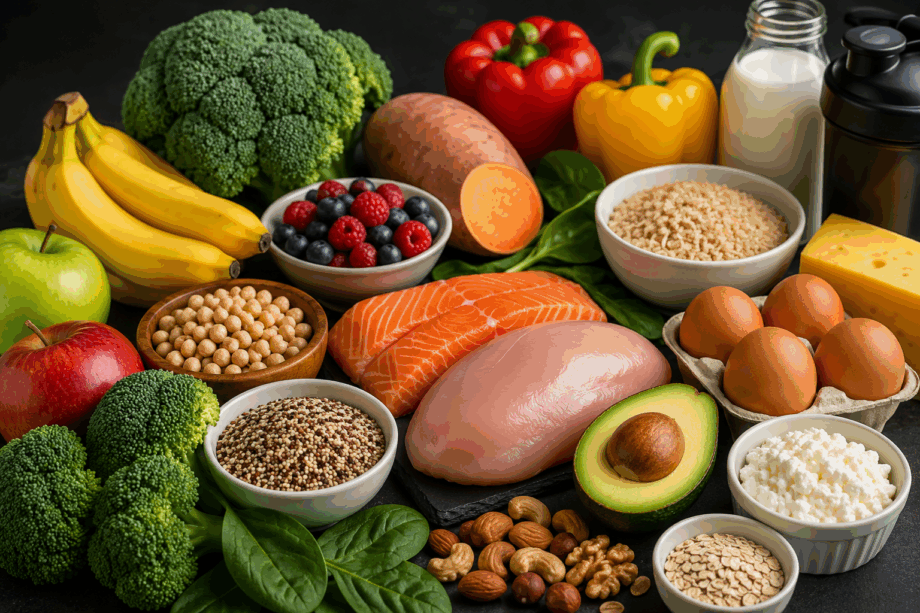
This means consuming a complete yet light meal based on easily digestible carbohydrates and proteins, while limiting fiber and fat intake, which may slow digestion and lead to gastrointestinal discomfort or reduced performance during exercise.”
What should athletes eat before a competition?
Nutrient timing is another essential factor in pre-competition preparation.
“The timing depends on the type of meal. A complete meal, low in fiber and fat to support digestion, should ideally be consumed about 3 to 4 hours before the competition.
As the start of the competition approaches, it becomes more appropriate to choose highly digestible and rapidly available carbohydrate sources, such as toast or jam, which may also be consumed 30 to 60 minutes before the event begins.
Immediately before or during competition, especially during long events, multi-round competition days, or situations where solid food is difficult to consume, practical solutions such as gels, sports drinks, or easily digestible snacks may be useful.
Products such as energy gels are specifically designed to meet athletes’ energy demands during competition. They may contain combinations of different sugars, such as glucose and fructose, in ratios designed to support energy delivery while avoiding saturation of intestinal transporters.
However, it is essential to test every strategy and supplement during training sessions, replicating the specific conditions of competition, because gastrointestinal tolerance is highly individual and must be trained to avoid adverse effects during competition.”
Hydration and sports performance
Hydration is essential for maintaining both physical performance and mental clarity during competition.
“Hydration is a cornerstone of performance. Arriving at competition in an optimal hydration state is extremely important for preserving both physical and mental performance.
Guidelines indicate that fluid losses equal to 2% of body weight may already lead to negative effects such as reduced concentration and early fatigue. Furthermore, greater losses, equal to or above 3 to 4% of body weight, are considered potentially dangerous for health.
Hydration strategies should be personalized according to the athlete’s sweat rate, the duration of activity, and environmental conditions.
For moderate activities lasting less than one hour, water alone may be sufficient. If duration or intensity increase, or if physical activity takes place in hot and humid environments, combining water with appropriate electrolyte supplementation, particularly sodium, may become necessary.
It is also important to take care of hydration during the days leading up to the competition, allowing the athlete to start the event in optimal condition.
Hydration during competition also remains essential to prevent performance decline related to dehydration and to support proper recovery afterward through adequate replacement of lost fluids, which may reach approximately 125 to 150% of the remaining fluid deficit.”
Differences between endurance sports and technical sports
Nutritional approaches vary depending on the metabolic and cognitive demands of each sport.
“In reality, the main energy sources remain the same. Carbohydrates are essential to guarantee adequate energy availability.
Although technical sports have different metabolic demands compared to endurance sports, low energy availability may negatively affect not only physical performance but also mental clarity and motor precision, leading to reduced concentration, which is crucial in disciplines such as equestrian sports.
Therefore, in endurance sports, the primary goal is to begin competition in an optimal energy condition and provide a constant energy supply capable of sustaining performance and delaying fatigue.
In technical sports, on the other hand, the goal is to arrive in optimal energy and hydration conditions to support cognitive abilities, promoting mental clarity, focus, and technical precision.”
Scientific references
The recommendations shared by the nutritionist are based on international scientific guidelines and literature related to sports nutrition:
- Kerksick, C. M., Arent, S., Schoenfeld, B. J., Stout, J. R., Campbell, B., Wilborn, C. D., … & Antonio, J. (2017). International Society of Sports Nutrition position stand: nutrient timing. Journal of the International Society of Sports Nutrition, 14(1), 33.
- Kerksick, C. M., Wilborn, C. D., Roberts, M. D., Smith-Ryan, A., Kleiner, S. M., Jäger, R., … & Kreider, R. B. (2018). ISSN exercise & sports nutrition review update: research & recommendations. Journal of the International Society of Sports Nutrition, 15(1), 38.
- Maughan, R. J., Burke, L. M., Dvorak, J., Larson-Meyer, D. E., Peeling, P., Phillips, S. M., … & Engebretsen, L. (2018). IOC consensus statement: dietary supplements and the high-performance athlete. International Journal of Sport Nutrition and Exercise Metabolism, 28(2), 104-125.
- McDermott, B. P., Anderson, S. A., Armstrong, L. E., Casa, D. J., Cheuvront, S. N., Cooper, L., … & Roberts, W. O. (2017). National Athletic Trainers’ Association position statement: fluid replacement for the physically active. Journal of Athletic Training, 52(9), 877-895.
- Thomas, D. T., Erdman, K. A., Burke, L. M., & American College of Sports Medicine. (2016). Nutrition and athletic performance. Medicine and Science in Sports and Exercise, 48(3), 543-568.
© Rights Reserved.