


Periodization in Fitness: Structuring Rider Physical Preparation Across the Competitive Season
In the equestrian world, considerable attention is devoted to the training schedule of the horse, while the structured rider physical preparation is addressed far less frequently. Yet the rider, like any other athlete, is exposed to training loads, physiological adaptations, and fluctuations in the efficiency of the neuromotor system.
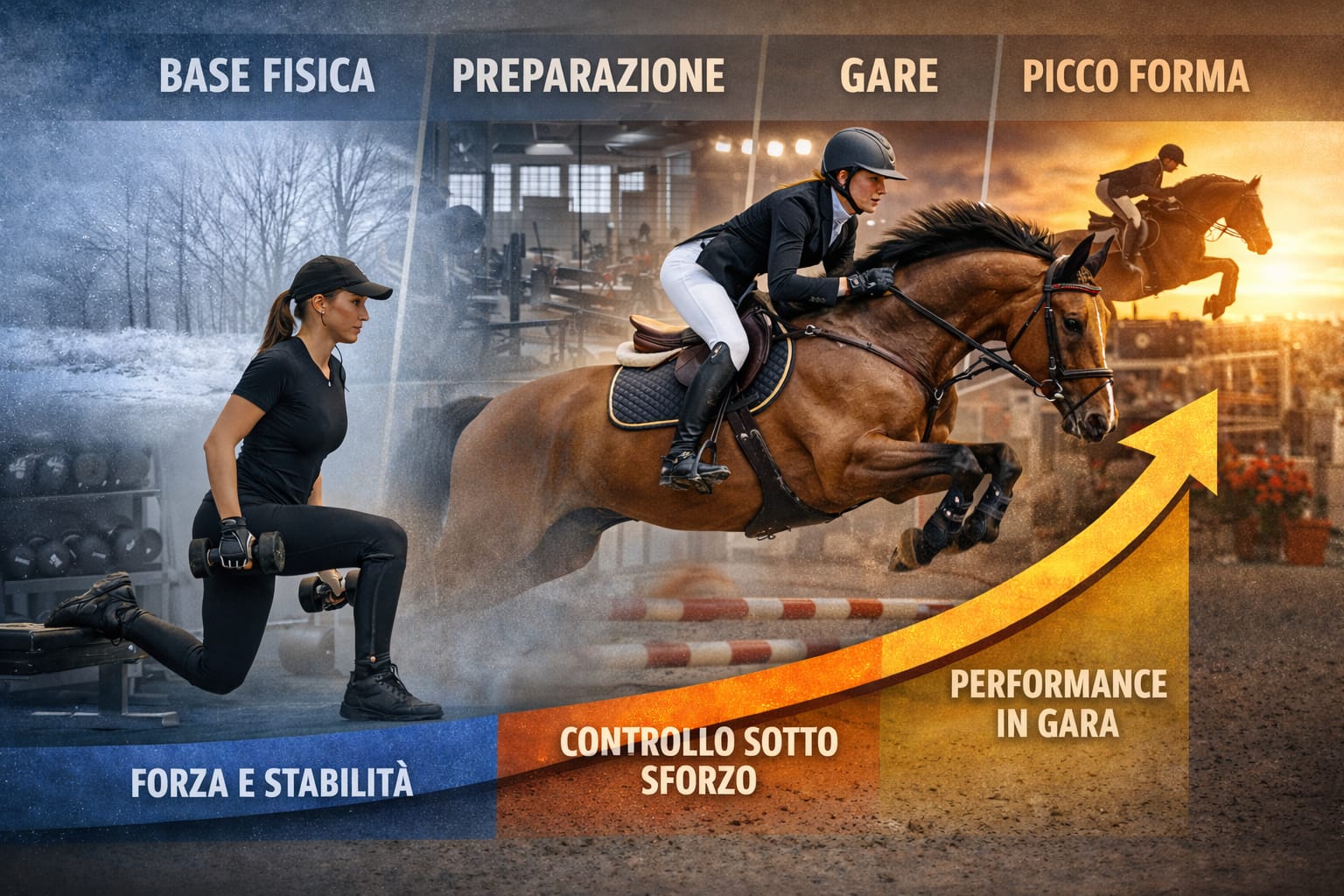
Training in exactly the same way throughout the entire year is one of the most common mistakes. Instead, a rider’s physical preparation should follow the principles of periodization—the strategic distribution of training stimuli over time according to specific goals and the competition calendar. In practical terms, this means that the nature of the training performed during the preparatory phase differs from that carried out during the main competitive season.
During periods with fewer competitions, physical preparation can focus on developing foundational qualities: strength, trunk control, pelvic stability, and coordination. This is the phase in which riders have the greatest opportunity to work on their own bodies without the immediate pressure of performance.
At this stage, for instance, it can be beneficial to include exercises that enhance control of the muscular chains involved in riding posture. Unilateral exercises—such as controlled lunges or single-leg squat variations—help improve pelvic stability and the management of asymmetric loading. This type of stimulus is particularly relevant because the equestrian gesture is never perfectly symmetrical and constantly requires the rider to adapt.
As the competitive season approaches, the objective of training gradually shifts. The goal is no longer simply to increase general physical capacity, but to make motor control more stable under load. In other words, the rider must be able to maintain precision, timing, and quality of movement even as fatigue accumulates.
A clear example can be observed during the final rounds of a competition day or at multi-day events. In such situations, it is not uncommon to notice progressive stiffness in the shoulders or a loss of continuity in the rider’s position. This is not necessarily a technical issue; more often it reflects a neuromotor system operating close to its limit. For this reason, developing motor control endurance becomes essential.
One effective strategy is to incorporate exercises that combine stability with controlled fatigue. Circuit training, for example, can alternate core stability exercises with dynamic lower-limb movements. In this way, riders learn to maintain control of the trunk and pelvis even when physical demands increase.
During the competitive season itself, however, the focus should not be on increasing training volume but rather on maintaining the quality of movement. The aim is to prevent the fatigue accumulated during competitions from compromising motor control and the precision of the aids. At this stage, physical preparation becomes more targeted and often shorter in duration, but no less important. Even brief, well-structured sessions can keep the neuromotor system active and help prevent the small compensations that, over time, may turn into visible errors in the saddle.
Viewing rider fitness through the lens of periodization therefore means shifting from a reactive approach to a preventive one. Rather than intervening only when stiffness or technical difficulties appear, the goal is to progressively build a system that is more resistant to fatigue and more stable in the demanding conditions of competition.
© Rights Reserved.