Avantea and the Montelibretti Military Equestrian Centre: “An equine athlete is not created by chance—it is developed”
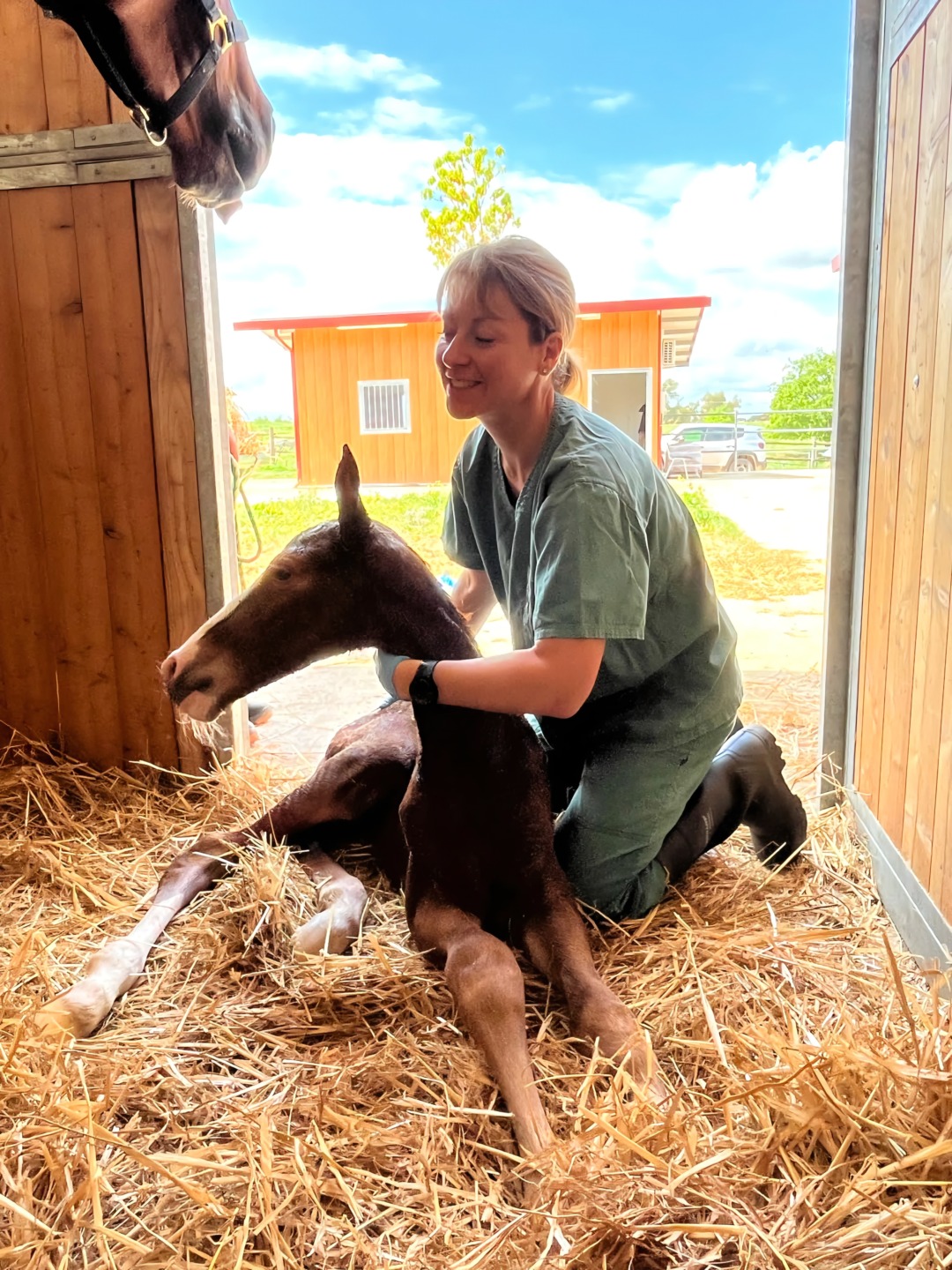
An interview with Lieutenant Colonel Alice Ducci, Head of the Centre’s Reproduction and Breeding Section
Genetic research and reproductive biotechnology are playing an increasingly pivotal role in breeding the equine athletes of tomorrow.
At the Montelibretti Military Equestrian Centre, a long-established Italian Army institution whose breeding programme focuses on quality, selection and the development of Italy’s equestrian heritage, this commitment is supported by a partnership with Avantea, a European leader in equine assisted reproduction.
The collaboration brings together scientific innovation, strategic breeding and the preservation of genetic resources, with the aim of breeding increasingly competitive sport horses capable of performing at the highest level.
Lieutenant Colonel Alice Ducci, Head of the Centre’s Reproduction and Breeding Section, offers an insight into an organisation where tradition, technology and sporting ambition work hand in hand every day.
Lieutenant Colonel Ducci, could you outline your role as Head of the Reproduction and Breeding Section at the Montelibretti Reproduction Centre and describe your main responsibilities?
“I oversee the day-to-day running of the breeding programme and am the Centre’s only veterinarian specialising in reproductive medicine and obstetrics. I care for the broodmares throughout their reproductive journey, monitoring them closely from their oestrous cycles through to the birth of their foals. I then oversee the young horses’ development until they are three years old, at which point they are entrusted to the specialist training staff in another section of the Centre. That is when the assessment of their sporting potential begins.”
The Centre’s daily work forms part of a broader vision that brings together military tradition, genetic quality and ambitious sporting objectives. It is a programme with its sights firmly set on major international competition.
What is the Centre’s mission, and how does it fit into Italy’s sport horse breeding sector? Could you give us an overview of the number of horses bred and the sporting objectives you pursue?
“The Centre embodies the historic tradition of Italian equestrianism, which reached its pinnacle with the D’Inzeo brothers. We uphold that tradition by concentrating our breeding expertise and resources on breeding horses of exceptional genetic quality. This will enable us to breed horses capable of meeting both the Armed Forces’ requirements and the demands of elite sport, right up to Olympic level. We currently breed approximately 40 foals a year, one-third through artificial insemination and two-thirds through embryo transfers carried out in collaboration with the AVANTEA Veterinary Clinic.”
One of the central themes of the interview is the importance of genetic selection, now an essential consideration in developing the modern equine athlete.
How significant is genetic selection in modern sport horse breeding, and what are the main criteria guiding your decisions?
“Today’s sport horses have tremendous potential, as demonstrated by the exceptionally high standard of competition. To achieve major goals, we need to study and work with each horse’s genetics, recognising that not every horse can realistically reach the Olympics. Effective breeding selection must be based on a carefully considered assessment of conformation, athletic ability and the health of both the mare and the stallion, with equal weight given to each.”
Within this framework, modern biotechnology provides a valuable means of accelerating progress and improving the quality of breeding programmes.
Advanced reproductive techniques are becoming increasingly widespread. Given that approximately 50% of the horses born at your Centre are conceived through OPU-ICSI, what significance do you attach to this figure in terms of breeding quality?
“I can say that our decision to use predominantly OPU-ICSI-derived embryos has tangible value, reflected in the quality of foals that display striking conformational qualities within their first days of life. Of course, these observations are based on our initial statistical findings, and we await the confirmation that I am confident will come during their training.”
More efficient management and increasingly precise breeding plans are further benefits of modern reproductive techniques.
In your view, what are the main advantages of OPU-ICSI compared with conventional reproductive methods?
“In my opinion, beyond improving genetic quality, OPU-ICSI enables better broodmare management. OPU can be performed throughout the year, and several oocytes can be collected in a single session and fertilised using very small quantities of semen, thereby making more economical use of the stallion’s semen. The embryos can then remain frozen until required, without the need to synchronise the embryo donor with the recipient mare. Finally, it offers a broad range of options to suit the needs of each breeding programme.”
This brings the role of Avantea, the Montelibretti Centre’s strategic scientific partner, into sharp focus.
The Centre works in partnership with Avantea. How important is the support of a scientific organisation of this calibre in achieving your objectives?
“Avantea is the undisputed leader in biotechnology, as demonstrated by its production methods, the quality of its services and its results. For a breeding programme such as ours, working with them is essential. Quite simply, we would otherwise have no way of breeding this number of foals each year with the potential required to meet the Armed Forces’ needs.”
The partnership between the Montelibretti Military Equestrian Centre and Avantea offers a tangible example of how breeding tradition and scientific innovation can converge around a shared objective: breeding high-performing sport horses selected according to increasingly rigorous criteria.
Looking ahead, Lieutenant Colonel Ducci emphasises that biotechnology is set to play an ever more central role in the development of sport horse breeding worldwide.
Looking to the future, what role do you believe techniques such as OPU-ICSI will play in sport horse breeding? Do you expect these technologies to become standard practice in the coming years?
“Historically, Italy has not ranked among Europe’s leading sport horse breeding nations. Countries that have been breeding quality horses for decades have long assessed genetics, conformation and health as part of their approach.
“Biotechnology has been widely used abroad for some time, and its value has already been demonstrated. I believe its adoption will continue to grow, particularly when we consider the scale and pace of technological development across every sector. An equine athlete is not created by chance—it is developed, with attention to every last detail. If the aim is to achieve outstanding quality, a carefully planned breeding programme must take into account the widespread use of techniques such as OPU-ICSI.”
Technological progress must, however, be accompanied by consideration of ethics and genetic conservation, issues of particular importance in contemporary breeding.
In your opinion, what are the main challenges the equine reproduction sector will face in the near future?
“In a world changing as rapidly as ours, as we see every day across all sectors, we cannot expect equine reproduction to remain unaffected. I am referring not only to breeding quality sport horses, but also to preserving pure breeds and safeguarding the integrity of their genetic heritage, without resorting to indiscriminate crossbreeding, as frequently happened in the past and, unfortunately, still happens today, albeit to a lesser extent.
“The opportunities before us are numerous, both in terms of technology itself and the practical decisions it enables. That is why I believe the greatest challenge will be to reconcile the use of new techniques with a breeding purpose that goes beyond financial gain and is directed towards safeguarding the equine species.”
© Rights Reserved.