


Horse Mental Health: Understanding Emotional Wellbeing in Horses
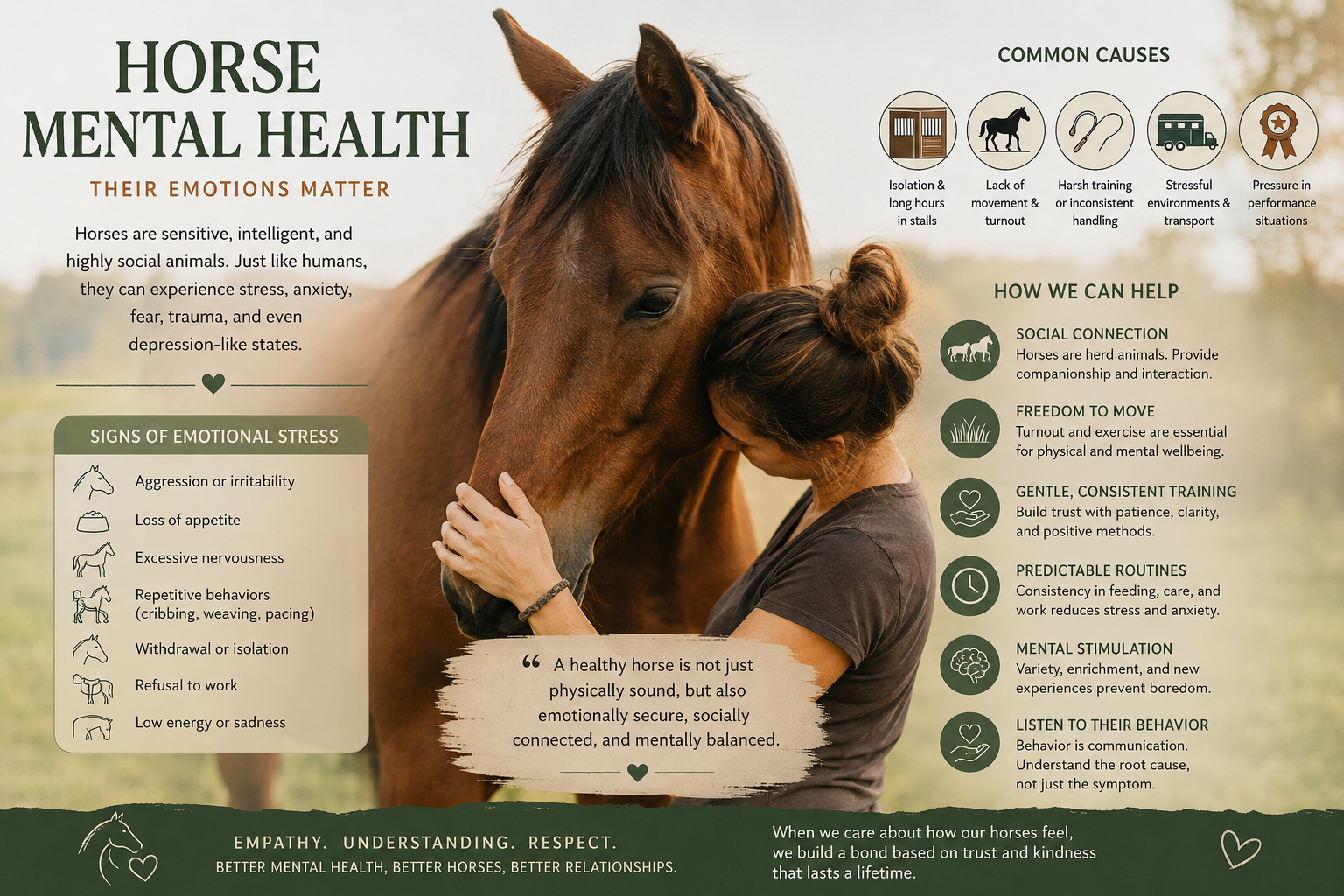
Horses are intelligent, emotional, and highly social animals. While horse owners often focus on physical health, nutrition, and performance, mental health in horses is just as important. Research and everyday observation now show that horses can experience stress, anxiety, trauma, loneliness, and depression-like behaviors.
Understanding horse mental health helps owners, trainers, and caretakers create healthier environments and stronger relationships with their horses.
Can Horses Have Mental Health Issues?
Yes, horses can experience mental and emotional distress. Horses react emotionally to their surroundings, treatment, social interactions, and daily routines. Since they cannot communicate verbally, their emotions often appear through behavior changes.
A horse struggling emotionally may show signs such as:
- Aggression
- Withdrawal
- Anxiety
- Loss of appetite
- Repetitive behaviors
- Fearfulness
- Low energy
- Resistance during training
Mental health issues in horses are becoming more recognized in veterinary science and equine behavior studies. Experts now understand that emotional wellbeing directly affects physical health and performance.
Why Horse Mental Health Matters
In the wild, horses live in herds, move freely for many hours a day, and constantly interact socially. Domestic life can sometimes limit these natural behaviors.
Long periods in stalls, isolation, intense competition schedules, harsh training methods, and lack of turnout can negatively affect a horse’s mental wellbeing.
Poor mental health can lead to:
- Behavioral problems
- Reduced performance
- Increased stress hormones
- Digestive issues
- Weight loss
- Weakened immune function
- Dangerous reactions under saddle
A mentally healthy horse is usually relaxed, curious, social, and responsive.
Common Mental Health Problems in Horses
Anxiety in Horses
Anxiety is one of the most common emotional issues in horses. Stressful environments, loud noises, transport, or inconsistent handling can keep a horse in a constant state of alertness.
Signs of anxiety include:
- Excessive sweating
- Spooking easily
- Restlessness
- Tension
- Fence pacing
- Rapid breathing
Chronic anxiety can affect both training and long-term health.
Separation Anxiety
Horses naturally depend on herd relationships for safety. When separated from companions, some horses experience severe distress.
Common signs include:
- Loud calling
- Refusing food
- Running fences
- Panic behaviors
- Difficulty focusing
This condition is especially common in horses kept alone for long periods.
Depression-Like Behavior in Horses
Studies suggest horses can display depression-like symptoms. These behaviors often appear in horses living in stressful or restrictive environments.
Signs may include:
- Standing still for long periods
- Lack of interest in surroundings
- Reduced interaction
- Low responsiveness
- Drooping posture
These symptoms should never be ignored.
Trauma and Fear Responses
Horses that experience abuse, accidents, neglect, or painful training methods can develop long-term emotional trauma.
Traumatized horses may become:
- Fearful of humans
- Reactive during handling
- Difficult to catch
- Defensive
- Emotionally shut down
Trust-building and patient rehabilitation are essential for recovery.
Signs Your Horse May Be Struggling Emotionally
Recognizing emotional stress early can prevent serious behavioral and health problems.
Watch for these warning signs:
- Sudden behavior changes
- Aggression or irritability
- Loss of appetite
- Excessive nervousness
- Repetitive movements like cribbing or weaving
- Isolation from other horses
- Lack of energy
- Refusal to work
- Difficulty relaxing
Always rule out physical pain first, since pain and emotional distress are closely connected in horses.
How to Improve Horse Mental Health
Increase Turnout Time
Horses need movement for both physical and emotional health. More turnout time reduces boredom, frustration, and stress.
Allow Social Interaction
Horses are herd animals. Safe interaction with other horses improves emotional stability and confidence.
Use Positive Training Methods
Calm, patient, and consistent training builds trust. Fear-based handling often increases anxiety and behavioral issues.
Create a Consistent Routine
Regular feeding, exercise, and care schedules help horses feel secure and relaxed.
Provide Mental Stimulation
Trail rides, toys, varied environments, and gentle challenges help prevent boredom and emotional shutdown.
Listen to Behavioral Signals
Behavior is communication. A horse acting out may be expressing fear, pain, confusion, or emotional overload.
Understanding the cause is more effective than punishment.
The Connection Between Humans and Horse Mental Health
Humans control almost every part of a horse’s daily life. That responsibility includes emotional wellbeing.
Modern horse care is slowly changing. More owners and trainers now prioritize:
- Natural turnout
- Social environments
- Gentle handling
- Emotional awareness
- Lower stress training methods
This shift improves both horse welfare and human-horse relationships.
Final Thoughts on Equine Mental Health
Horse mental health deserves the same attention as physical care. Horses experience emotional stress, fear, anxiety, and trauma just like many other animals. When owners recognize these signs early, they can improve the horse’s quality of life significantly.
A healthy horse is physically strong, emotionally balanced, socially connected, and mentally secure.
As awareness grows, the equestrian world continues moving toward more compassionate and informed horse care practices.
© Rights Reserved.