Longines EEF Series: The proving ground for tomorrow’s championship horses
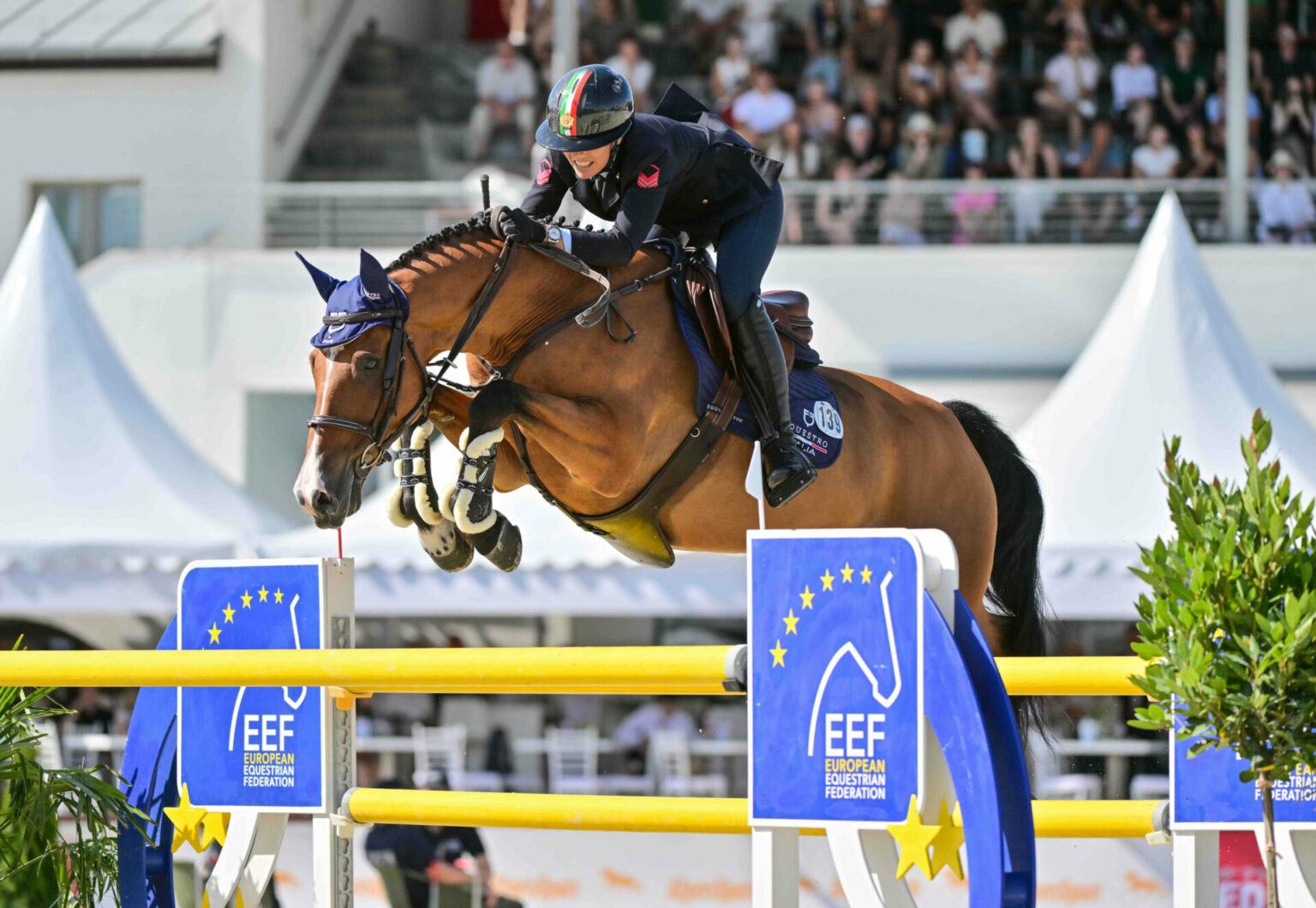
The Longines EEF Series has earned its reputation as one of Europe’s premier development pathways for emerging riders, but its contribution to producing future championship horses is equally significant.
By introducing promising horses to Nations Cup competition in technically demanding environments, prestigious venues and the unique pressure of representing their country, the Series provides a crucial stepping stone towards elite international sport.
Let the horse decide when it’s ready
According to Longines EEF Series Final Event Director and Turkish chef d’équipe Edwin Smits, there is no universal timeline.
“The horse tells you when it’s ready. We can’t decide that for the horse.”
While nine years old is generally considered the ideal age for a debut in the Series, some horses are capable of competing successfully at eight, provided they possess the right mentality, sufficient scope and natural rideability.
Danish chef d’équipe Bo K Moller agrees, warning against rushing a horse’s development.
“If you ask too much too early, there’s a much bigger chance you’ll ruin the horse instead of building it up.”
For that reason, Danish horses typically make their Nations Cup debut at nine before progressing towards higher-level championships at ten or eleven.
Experience before ambition
Selection for the Longines EEF Series requires more than raw talent.
Smits insists that horses must already demonstrate consistent performances at the relevant height before stepping into a 1.50m Nations Cup.
Equally important is their ability to cope with the atmosphere.
Today’s EEF venues feature imposing fences, larger crowds and far more demanding environments than many lower-level international competitions, making emotional maturity just as important as physical ability.
Learning to handle pressure
Belgian international Gudrun Patteet believes the Series offers young horses and riders an invaluable opportunity to experience the pressure of team competition before progressing to five-star Nations Cups.
“Even in the warm-up arena you can feel that everybody is more tense because your whole team is watching and wants you to do well.”
Importantly, she stresses that development is not measured solely by clear rounds.
“A horse can have one fence down or even a time fault and still come away having learned a lot.”
Captain Morgan’s development
Italian Olympian Giulia Martinengo Marquet highlighted the development of Captain Morgan, who gained invaluable experience through the Longines EEF Series before establishing himself internationally.
Competing in Gorla and later winning in Budapest, the gelding benefited enormously from the format.
“He was exactly the kind of horse that needed that step to develop at a higher level without being stressed.”
Martinengo Marquet described him as an exceptionally reliable Nations Cup horse whose confidence grew considerably throughout the Series.
Building future championship combinations
Swedish chef d’équipe AnnCatrin Carlsson believes the technical courses, varied venues and two-round format provide young horses with invaluable preparation for future five-star competitions and championships.
Bo K Moller also sees the second round as one of the clearest indicators of genuine championship potential.
“When a horse is actually stronger in the second round than it was in the first, that’s when you realise it can perform repeatedly at a high level.”
For countries outside the League of Nations circuit, the Longines EEF Series has become an indispensable development platform, enabling riders and horses to gain the experience required to become competitive on the world stage.
By bridging the gap between emerging talent and elite championship competition, the Longines EEF Series continues to play a vital role in shaping the next generation of both riders and horses.
Source: Longines EEF Series press release
Report: Emily Bevan
Photo credits: © Longines EEF Series / European Equestrian Federation (EEF)
© Rights Reserved.