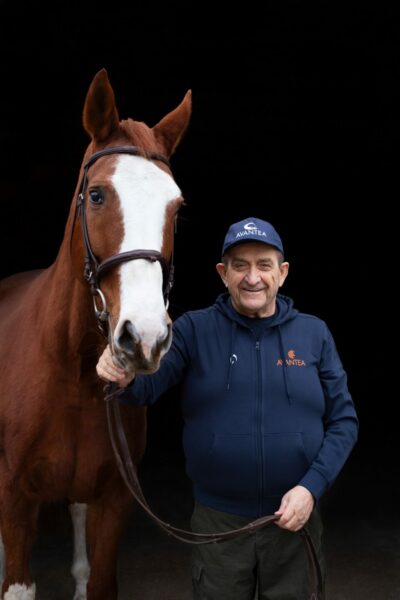
Avantea Legacy in Sport: Nicolò Viviani and Heavens Gate
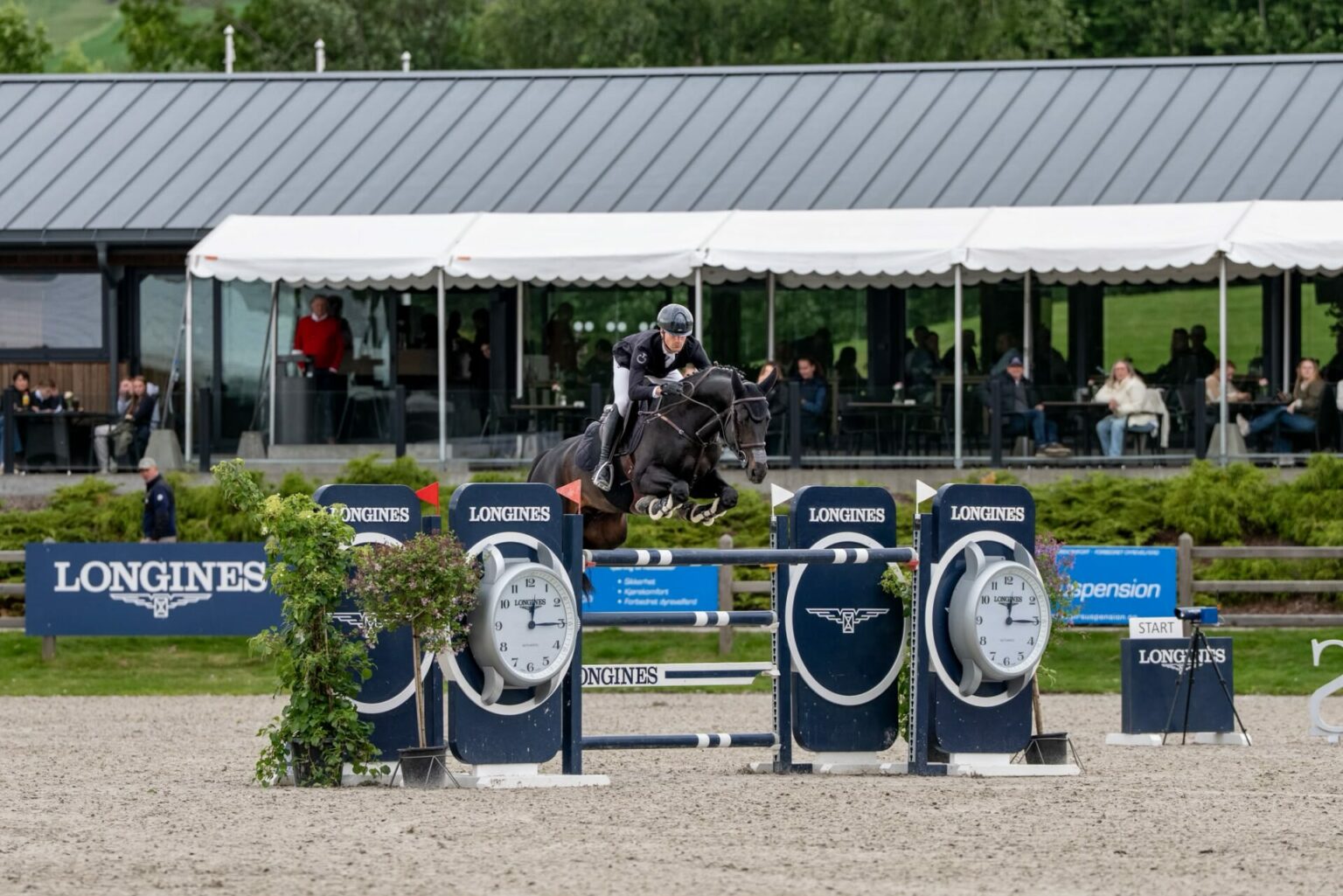
From young horse classes to international Grand Prix competition
In the third episode of Avantea Legacy in Sport, the project dedicated to horses born through assisted reproductive technologies and now making their mark in competition, we meet Nicolò Viviani and Heavens Gate. A partnership that has developed from the young horse classes all the way to a fifth-place finish in the Grand Prix at CSIO EEF Drammen.
When a horse born through assisted reproductive technologies goes on to compete over some of the most demanding courses on the international circuit, what we see in the arena is also the outcome of a journey that began many years earlier, with the selection of bloodlines and carefully considered breeding decisions. This is precisely the story at the heart of Avantea Legacy in Sport, the series through which Avantea showcases horses born thanks to its reproductive biotechnologies and now expressing their potential in the competition arena.
The protagonist of the third episode is Heavens Gate, a nine-year-old stallion ridden by Nicolò Viviani, his rider and owner, who has been by his side virtually since the beginning of his sporting career.
“I bought him at the beginning of his five-year-old year, and he had no competition career behind him at that stage. He had never even been to a show,” explains Nicolò Viviani.
Those early days called for patience above all else. Heavens Gate had a distinctive temperament, and Nicolò chose not to rush the process, focusing first on building trust.
“I spent quite a lot of time helping him relax and teaching him to trust the person he was spending most of his day with.”
From there, their progress was built step by step.
At six, Heavens Gate achieved one of his first significant results on the FISE circuit for young horses. At seven, he began stepping up to national Grand Prix classes, while at eight came his first major international appearances, including ranking classes and CSI2* Grand Prix competitions.
The 2026 season marked another significant step forward.
The pair began the year with a victory in a 1.45m national Grand Prix, followed by another placing. Their season then moved onto the international stage, with a third-place team finish on the Italian Champions Tour in Versilia and an appearance at the CSI4* Sagrantino at Le Lame, where they finished the 1.50m Small Grand Prix with just one fault.
Then came Drammen.
In Norway, Viviani and Heavens Gate finished seventh in the opening 1.45m class, immediately securing their place in the Grand Prix. On Sunday, the pair produced a double clear to finish fifth in the CSIO EEF Grand Prix, achieving one of the most important results of both their careers.
“To date, it has been the most satisfying and significant show of both Heavens Gate’s career and my own,” Nicolò says.
A pedigree built on performance
Behind Heavens Gate’s sporting career lies a pedigree of considerable distinction. The stallion is by Monti Obolensky out of Quana One de l’Eaugrenée, by Kannan GFE, and was born through Avantea’s assisted reproductive technologies.
It is precisely the opportunity to make the most of particularly valuable bloodlines that forms the basis of one of Viviani’s key observations.
“In my horse’s case, the breeding choices were based, at least on paper, on bloodlines with a highly significant performance record. Nothing was left to chance.”
Technology does not replace selection, breeding expertise, the horse’s development or the work required to produce an athlete. What it can do, however, is broaden the opportunities available to breeders by allowing them to make greater use of the genetic potential of outstanding stallions and, perhaps even more importantly, exceptional mares.
For Viviani, this becomes particularly significant when considering the maternal line.
“Today, semen from stallions is available virtually anywhere in the world. With mares, it is different: an exceptional mare is not nearly as accessible and, through conventional breeding, she can naturally only produce a limited number of foals. These technologies create more opportunities to make the most of the maternal line as well.”
This is one of the central principles behind Avantea’s work: using reproductive biotechnologies to enable breeders to plan targeted crosses while preserving and extending the genetic legacy of particularly valuable horses.
From genetics to the competition arena
Nicolò Viviani’s perspective is not based solely on his experience with Heavens Gate. Throughout his career, he has also ridden other young horses born through assisted reproductive technologies.
“I’ve been fortunate enough to ride some truly exceptional horses, even at just six or seven years old,” he says.
His experience has led him to recognise the opportunities offered by these technologies, while drawing an important distinction between careful selection and any guarantee of sporting success.
“You increase the chances of producing a good horse. Naturally, nobody can ever guarantee the outcome.”
And perhaps it is precisely this distinction that best captures the meaning of Avantea Legacy in Sport.
Reproductive biotechnologies do not artificially create champions. Rather, they provide breeders with advanced tools for selection, enabling them to work with bloodlines of particular genetic and sporting value and creating the conditions for that heritage to be passed on to a new generation.
What follows are years of development, education and training. Ultimately, it is the competition arena that provides the answers.
In the case of Heavens Gate, those answers are already beginning to emerge.
“We started out in the young horse classes and worked our way up to some major results, including fifth place in the Grand Prix at CSIO EEF Drammen,” concludes Nicolò Viviani.
At nine years old, Heavens Gate has reached international Grand Prix level, and his story provides tangible evidence of one of the most compelling aspects of Avantea’s work: horses born years ago through its reproductive technologies are now competing in sport, making it possible to observe their development and athletic potential directly in the arena.
This is where innovation, breeding and sport ultimately converge: no longer simply in the vision of a foal yet to be born, but in the performance of a horse entering the arena today to take on an international Grand Prix.
Alessandra Ceserani
Ph CSIO EEF Drammen
© Rights Reserved.