Michel Poncelet: 19 Years of Grass Arena Development at the Andalucía Sunshine Tour
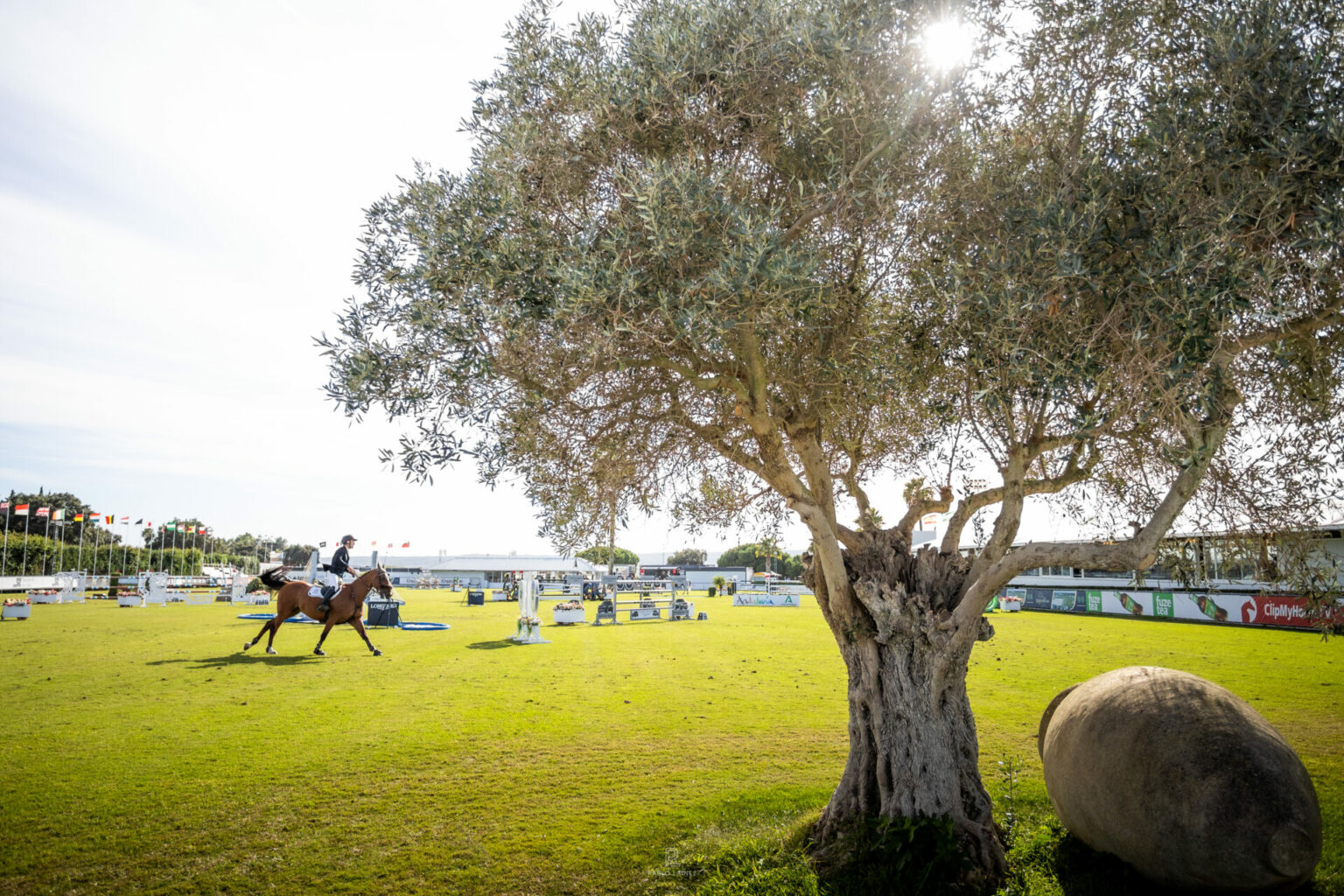
From his first visit to Dehesa Montenmedio 19 years ago to the ongoing development of its grass arenas, agronomist engineer Michel Poncelet has played an important role in the evolution of the Andalucía Sunshine Tour. Working with Green-Consult, he explains the science behind the surfaces, the importance of root development and why maintaining the arenas during the October Tour presents a particular challenge.
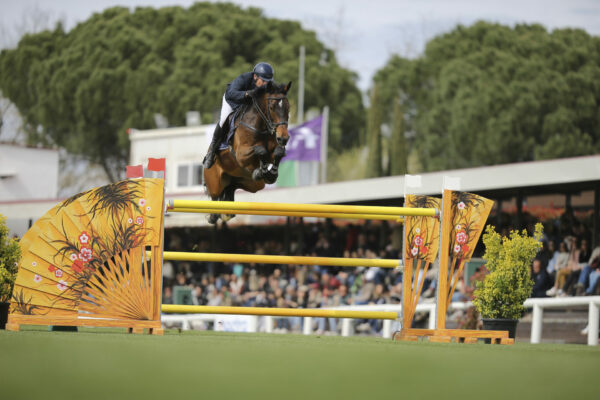
When riders compete on the grass arenas at Dehesa Montenmedio, they see the result of years of planning, technical expertise and continuous maintenance. For Michel Poncelet, an agronomist engineer at Green-Consult, the work behind these surfaces has been a long-term project, one that began almost two decades ago and continues to evolve with the venue.
His connection with the Andalucía Sunshine Tour dates back 19 years, when Antonio Blázquez asked him to assess the golf course at Montenmedio. At the time, Michel’s work already covered several types of sports surfaces, including golf courses, football pitches, polo fields and grass arenas for show jumping.
“I am an agronomist engineer. I’m working for the company Green-Consult. We are all agronomists, riders or drivers, so the horses are very close to us. We are working on golf courses and grass arenas for jumping horses, football fields, polo fields, et cetera. So, like you understand, our specialty is grass and grass.”
His first visit to Montenmedio was initially focused on the golf course. However, when he saw the condition of the grass arenas, he immediately recognised an opportunity to improve them.
“I was here for the first time 19 years ago on demand of the visionary man. He was Antonio Blázquez. On Antonio’s demand, I was here to control first the golf course, and we took a small look at the grass arena, and I told him, ‘I have an idea for your grass.’”
At the time, the arenas were struggling with significant grass loss and surface damage.
“The grass had completely disappeared, brown. A lot of damage, et cetera. So he told me, ‘You can make a test far from here, and not too close to my best grass arenas.’”
The test was successful, and the collaboration grew from there. Michel continued working with the team as Montenmedio developed, later collaborating closely with Teresa as she took on the role of general manager of the tour.
“We improved them very well. So it was part of the success of the Sunshine Tour, the quality of the grass arena.”
For Michel, the development of the grass arenas has always been part of a wider effort to improve the venue. He has seen considerable progress over the years, particularly through the work of Teresa, Armando and the greenkeeping team led by Francis.
“With Teresa and Armando, you can see a lot of improvement. A lot, a lot, a lot. And it’s the same for the grass arenas with the greenkeeper, Francis. We try to be always the best.”
His experience working on grass surfaces internationally also gives him a broader perspective on the quality achieved at Montenmedio.
“That’s the reason why the grass arenas from Montenmedio are certainly the best ones in the world. I’m working worldwide now, so I can make the comparison.”
The science behind the grass
Maintaining a grass arena for international show jumping involves more than keeping the surface looking green. Grass varieties respond differently to temperature, sunlight and moisture, and the competition calendar creates specific demands that need to be considered throughout the year.
At Montenmedio, one of the main challenges comes from the natural growth cycle of Bermuda grass, the variety that grows on the site.
Bermuda grass is well adapted to warm climates and dry conditions. However, as temperatures fall during autumn and winter, it enters dormancy, causing its colour to change from green to yellow or brown. During this period, its resistance to the repeated impact of horses can also decrease.
Michel identified this seasonal change as one of the first problems to address when he began working at Montenmedio.
“The existing grass, like you see here a little bit, is the indigenous grass, Bermuda grass. It is very resistant, very strong with the dryness. But in autumn and during the winter period, it takes on a yellow, brown colour. It goes into dormancy.”
He explains that this creates two separate problems. The first is the appearance of the arena, which becomes less attractive when the grass loses its colour. The second is the effect on the surface itself.
“That’s two problems. The colour is not very good for the look, and it loses its resistance. The roots break under the horses, and we have a lot of damage.”
To address this, Michel introduced a different approach to grass management, based on the timing of the competition calendar and the characteristics of the grass varieties used.
Preparing the arenas for the winter season
The main preparation process takes place in November, after the October Tour and before the winter competition season begins.
Rather than relying on Bermuda grass throughout the year, the team removes the existing leaves and reseeds the arenas with a different grass mixture selected for winter conditions.
“In fact, after this tour, in November, we take away all of the Bermuda leaves, and we reseed completely with another grass mix.”
The purpose is to establish grass that can grow quickly, develop a strong root system and maintain its colour during the winter months.
“This kind of grass develops, in a very short time, a lot of roots, and it is very dark green. It has a very dark green colour during the winter tour, during the Sunshine Tour. That’s the reason that we have amazing grass arenas.”
For Michel, root development is the essential element of the process. The visible appearance of the grass matters, but the underlying structure is fundamental to its ability to withstand the demands of competition.
When asked what matters most in achieving a successful grass surface, his answer was simple.
“It’s one word, roots.”
This focus on root development is consistent with Green-Consult’s wider approach to grass arena construction and maintenance. The company works with different types of underlying surfaces, including natural soil, existing sand arenas and Ebb & Flow systems. Each requires a specific technical approach, with soil analysis and grass selection adapted to the existing conditions.
The aim is to develop a surface in which the grass can establish itself successfully and remain resistant under the demands of equestrian sport.
Why the October Tour is more complicated
While the winter preparation process has become an important part of maintaining the arenas, the October Tour brings a different set of conditions.
At this time of year, Bermuda grass is beginning to enter dormancy, and the temperature may still be too high to establish an alternative grass mixture across the existing surface.
This makes it difficult to achieve the same green appearance that riders and spectators see during the winter tour.
“On the other side, there is the October Tour, and it’s very complicated for us because the Bermuda grass turns yellow at this moment. It’s starting its entrance into dormancy, like you can see. It’s a little bit brown, yellow.”
The timing is particularly difficult because grass needs suitable conditions to establish itself. Introducing another variety too early or when temperatures remain too high can make it harder to achieve the desired result.
“And it was too hot before to put a different kind of grass to turn all the grass arenas green.”
Weather conditions add another layer of uncertainty. Michel explains that the transition between seasons does not happen in exactly the same way every year, meaning that the team must continually assess the conditions before deciding how to proceed.
“So we are in a very complicated period. It depends on the weather, and it changes, like you know, with climate change. The conditions are changing every year. So sometimes it’s complicated to put another grass in the existing Bermuda grass to be ready with a perfect grass colour during the October Tour.”
Rather than accepting the current limitations, Michel and the Montenmedio team are testing different approaches to improve the results in future editions.
“For this moment, we have three different trials on other grass arenas. It’s all ready for next year, and we will see with Francis, the greenkeeper, how we will improve the actual situation.”
The trials will allow the team to assess which grass varieties and methods are best suited to the conditions experienced during the October Tour.
However, Michel stresses that the colour of the grass should not be confused with the performance of the surface. Even when Bermuda grass begins to turn yellow, its roots can remain strong and provide good resistance.
“We are speaking about the colour, but the grass resistance is very good. The Bermuda that we have here does not present the best colour, but the roots are very amazing. Very good.”
This distinction is important when assessing the arenas. The appearance of the grass is immediately visible, while the strength of the root system requires a more technical understanding of the surface.
A continuous process of improvement
After 19 years of working at Montenmedio, Michel’s involvement continues to be shaped by the same principles that guided his first project: understanding the conditions, testing solutions and finding ways to improve the grass.
His work with Green-Consult extends far beyond the Sunshine Tour, with projects across different countries and climates. That international experience allows him to compare how grass varieties and management techniques perform under different conditions.
At Montenmedio, the relationship between Michel, Teresa, Armando and greenkeeper Francis remains central to the ongoing development of the arenas. Their work involves both long-term planning and practical decisions based on the weather, the competition schedule and the condition of the grass.
The winter reseeding process has helped establish the quality for which the Sunshine Tour’s grass arenas are known, while the trials underway for the October Tour reflect the team’s continued efforts to improve the surfaces throughout the year.
For Michel, maintaining these arenas means understanding that every season brings different challenges. The grass must be selected and managed according to the conditions, and its performance depends on what happens beneath the surface as much as what can be seen from the stands.
His experience at Montenmedio demonstrates the level of technical work required to maintain grass arenas for international show jumping, and why the process continues long after the last horse leaves the arena.
As Michel puts it, the key remains the same: roots.
© Rights Reserved.