West Nile in Horses: Understanding the Risks and the Role of Prevention

The virus is monitored through an integrated surveillance system covering humans, animals and mosquitoes. Vaccination, insect control and appropriate stable management remain essential for protecting horses
West Nile disease has returned to the spotlight during the summer and autumn months. However, the figures should be interpreted without alarmism and within the context of Italy’s ongoing surveillance programme.
According to the Italian National Institute of Health (ISS) report updated on 16 September 2026, 657 human cases of infection have been confirmed since the start of the season. Human, veterinary and entomological surveillance has detected the virus in 82 provinces across 19 regions.
This figure does not mean that all those affected developed severe symptoms. Reported cases include febrile illness, asymptomatic infections identified through blood donor screening, and neuroinvasive disease. The ISS also notes that figures for the most recent weeks remain subject to subsequent additions and revisions.
An integrated surveillance system
Italy’s West Nile surveillance programme brings together information from humans, birds, horses and mosquitoes. This approach enables the early detection of viral circulation and the implementation of measures to protect public and animal health, while safeguarding blood donations and transplantation.
Human cases are monitored throughout the year. In areas where the virus has already been identified, surveillance is intensified from the beginning of May until the end of November.
The European Centre for Disease Prevention and Control (ECDC) also publishes regular updates on West Nile activity across European Union and European Economic Area countries.
How is West Nile transmitted?
West Nile virus is maintained in nature through a cycle involving primarily wild birds and mosquitoes, particularly those belonging to the genus Culex.
Mosquitoes can acquire the virus by feeding on an infected bird and subsequently transmit it to other animals. Humans and horses are considered incidental, “dead-end” hosts: they can become infected but do not normally develop sufficiently high levels of the virus in their blood to infect other mosquitoes.
There is therefore no direct transmission from horse to horse or from horses to humans. A horse testing positive may nevertheless indicate that the virus is circulating locally through mosquito vectors.
West Nile in horses: signs to watch for
Most infected horses show no symptoms or develop only mild, short-lived signs. A small proportion, however, may develop neurological signs, including weakness, impaired coordination, ataxia, tremors, behavioural changes, paresis or difficulty remaining standing.
If any suspicious signs appear, contact a veterinarian promptly rather than attempting to make a diagnosis yourself.
HSJ previously explored the disease and the main protective measures in its article “West Nile Disease”.
Vaccination and prevention in the stable
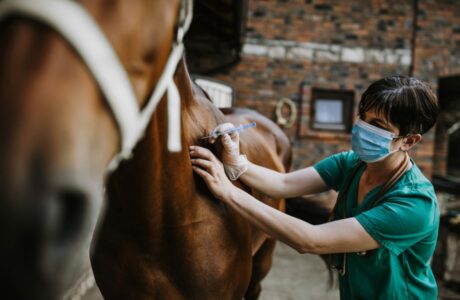
Vaccines against West Nile disease are available for horses. The vaccination schedule, booster doses and their timing should be agreed with a veterinarian, taking into account the horse’s age, geographical location and any planned travel.
Vaccination should be accompanied by appropriate stable management. Recommended measures include eliminating standing water; regularly cleaning water troughs, buckets, gutters and drainage channels; using authorised repellents; and, where appropriate, providing fly rugs, mosquito screens and ventilation systems.
Greater awareness of West Nile should not give rise to alarm. A national surveillance network makes it possible to track viral circulation, while vaccination, mosquito control and veterinary care remain the main tools for protecting horses.
West Nile in humans: what to know
The virus is transmitted primarily through the bites of infected Culex mosquitoes. It is not spread through everyday contact between people or from horses to humans. Most infected people experience no symptoms. When symptoms do occur, they may include fever, headache, nausea, vomiting, swollen lymph nodes and skin rashes.
Severe neurological disease is rare and is more likely to affect older people or those with underlying health vulnerabilities. The incubation period generally ranges from two to 14 days, although it can extend to 21 days in immunocompromised individuals.
According to the Italian National Institute of Health (ISS) report updated on 16 September 2026, Italy recorded 657 confirmed human cases: 345 cases of neuroinvasive disease, 224 cases of febrile illness, 80 asymptomatic infections identified among blood donors, and eight cases classified under other categories. Fifty-one deaths were reported, one associated with an infection acquired abroad. Figures for the most recent weeks remain subject to revision.
Is West Nile dangerous for dogs?
What about dogs?
Dogs can also become infected with West Nile virus through the bite of an infected mosquito. However, clinical disease is considered rare, and most infections produce no obvious symptoms.
Neurological disease has only occasionally been reported. Dogs are not considered a source of infection for humans or other animals, and the virus is not transmitted through normal contact. Unlike horses, dogs are not routinely vaccinated against West Nile, nor is vaccination recommended.
Prevention therefore centres on reducing exposure to mosquitoes and using repellents specifically authorised for dogs, selected in consultation with a veterinarian.
Alessandra Ceserani
© Rights Reserved.